
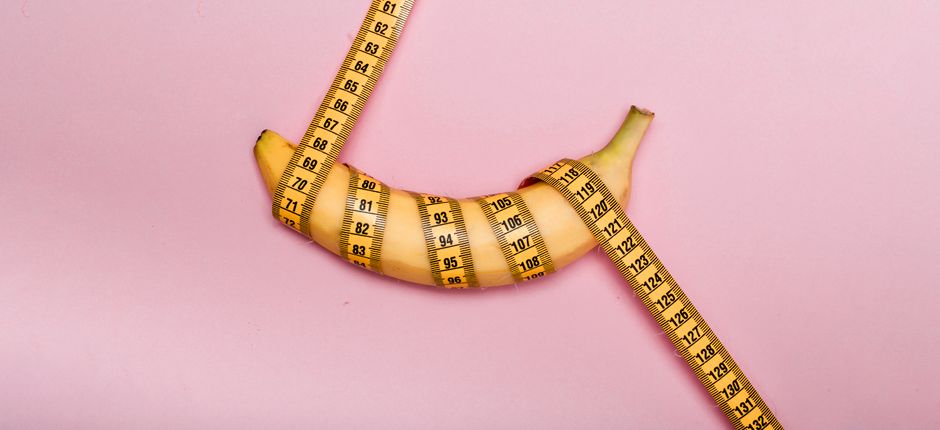
The question of what is normal when it comes to penis size is one of the most common and misunderstood topics in men’s health. Most of what men believe about average size comes from pornography, locker room talk, or internet forums—none of which are reliable sources. The medical reality is that the average erect penis size is between 5.1 and 5.5 inches, according to clinical studies that have measured thousands of men under standardized conditions. Flaccid size varies far more widely and is not a reliable predictor of erect size. Understanding the actual data can relieve a great deal of unnecessary anxiety, because the vast majority of men who worry about being small are actually within the normal range.
What Is The Normal Size Of A Man Pennis?
Clinical research consistently places the average erect penis length at roughly 5.1 to 5.5 inches (13 to 14 centimeters). This figure comes from studies where healthcare professionals measured men directly, rather than relying on self-reported numbers, which tend to be inflated. The average flaccid (non-erect) length is about 3.5 inches, though this varies substantially between men and is heavily influenced by temperature, stress, and physical activity.
Girth, or circumference, is another important measurement. The average erect girth is about 4.5 to 4.8 inches. Men often focus exclusively on length, but girth contributes significantly to both sexual sensation and partner satisfaction. What matters most is that these averages represent a range, not a strict cutoff. A penis measuring 4.5 inches erect is still within the normal spectrum, just as one measuring 6 inches is.
The most comprehensive analysis of penis size data, published in the medical journal BJU International, reviewed 17 studies involving over 15,000 men. The researchers found that the average erect length was 5.16 inches and the average erect girth was 4.59 inches. This remains the most frequently cited reference in urology for normal penis dimensions.
How Is Penis Size Actually Measured?
Measurement technique matters enormously when discussing normal size. Clinical studies use a specific protocol: the penis is measured along the top surface, from the pubic bone to the tip of the glans. The ruler is pressed firmly against the pubic bone to account for suprapubic fat, which can obscure up to an inch of length in men who carry excess weight.
Self-measurement at home often produces inaccurate results. Men tend to measure from the side or from underneath, which can overestimate length. They may also fail to press the ruler against the pubic bone, adding extra inches from abdominal fat. For a reliable measurement, stand straight, press a ruler against the pubic bone, and measure along the top of the erect penis to the tip.
Flaccid measurements are even less standardized. A “grower” may measure 3 inches flaccid but reach 6 inches erect, while a “shower” may measure 4.5 inches flaccid and only reach 5.5 inches erect. Neither pattern is abnormal. Flaccid size has essentially no bearing on erect function or sexual satisfaction.
What Percentage Of Men Are Below Average?
Penis size follows a statistical distribution similar to height and weight. Most men cluster near the average, with fewer men at the extremes. Based on the clinical data, roughly 68 percent of men fall within one standard deviation of the mean, meaning their erect length is between approximately 4.6 and 5.7 inches.
Only about 2.5 percent of men have an erect length below 3.6 inches, a condition sometimes referred to clinically as micropenis. This is a medical diagnosis defined as an erect length of less than 3 inches, or about 7.5 centimeters. True micropenis is rare and typically identified at birth or during childhood, not suddenly discovered in adulthood.
Men who believe they are “small” are frequently within the normal range. Body image distortion affects men just as it affects women. When men compare themselves to pornographic actors—who are selected for unusually large size and often filmed with camera angles that exaggerate dimensions—they develop unrealistic expectations. The gap between perception and reality is often substantial.





Does Penis Size Affect Sexual Satisfaction?
Research on sexual satisfaction consistently shows that size matters far less than technique, communication, and emotional connection. Studies surveying women about partner satisfaction rank penis size low on the list of priorities, behind emotional intimacy, foreplay, and overall attentiveness. Most women report being satisfied with their partner’s size, and the majority of women cannot accurately estimate their partner’s erect length.
Vaginal depth is typically 3 to 4 inches when unaroused, expanding to roughly 4 to 6 inches with arousal. The most sensitive nerve endings are concentrated in the outer third of the vagina and the clitoris. This means that a penis in the average range is fully capable of providing stimulation where it matters most. Longer does not automatically equate to more pleasure, and for some women, very long penises can cause discomfort or pain during deep penetration.
Girth may play a slightly larger role in physical sensation than length, because it creates more friction and stretching of the vaginal walls. Even so, the difference between average and slightly above average girth is unlikely to be noticeable to most partners. Sexual satisfaction depends far more on mutual arousal, communication, and a willingness to learn what the partner enjoys.
When Should A Man Be Concerned About Size?
Most men have no medical reason to be concerned about their penis size. A man should consider speaking with a urologist if his erect length is consistently below 3 inches, if he experiences pain or curvature during erection, or if he has difficulty achieving or maintaining an erection. These issues are distinct from size concerns and warrant professional evaluation.
Men who experience significant distress about their size despite being within the normal range may be dealing with body dysmorphic disorder. This condition involves persistent preoccupation with a perceived flaw that is either minor or nonexistent. It can cause substantial anxiety, avoidance of intimate relationships, and depression. Cognitive behavioral therapy has been shown to help men reframe these distorted beliefs.
Penis enlargement products—pills, pumps, extenders, and topical creams—are overwhelmingly ineffective and sometimes dangerous. The FDA has not approved any non-surgical product for penis enlargement. Vacuum pumps can cause bruising and tissue damage if used improperly. Surgical procedures carry risks of infection, scarring, and erectile dysfunction. No reputable urologist would recommend these approaches for a man within the normal size range.
How Common Is Penis Size Anxiety?
Penis size anxiety is extremely common, affecting men of all ages and backgrounds. Studies suggest that up to 45 percent of men are dissatisfied with their penis size, despite the fact that the vast majority are within the normal range. This dissatisfaction is often driven by social comparison rather than any objective deficiency.
The rise of internet pornography has likely intensified these concerns. Pornographic content is not representative of typical male anatomy, yet it shapes expectations for many young men. Additionally, the prevalence of “sph” (small penis humiliation) content and forums that mock smaller sizes can reinforce anxiety. These cultural factors create a feedback loop where normal men feel inadequate.
Men who are concerned about their size should remember that their partner chose to be with them. Sexual intimacy involves the whole person, not just one anatomical feature. If size anxiety is interfering with relationships or mental health, speaking with a therapist or sex counselor can be genuinely helpful. This is a treatable concern, and men do not need to suffer in silence.
Frequently Asked Questions
What is the average penis size in the United States?
The average erect penis size is approximately 5.1 to 5.5 inches, based on clinical measurements from large studies. Flaccid average length is about 3.5 inches.
Is 5 inches a good size?
Yes, 5 inches erect is within the normal range and falls very close to the clinical average. Most partners report satisfaction with partners in this range.
Can you increase your penis size naturally?
No clinical evidence supports any natural method for permanently increasing penis size. Exercises, supplements, and devices marketed for enlargement have not been proven effective in controlled studies.
Does penis size matter to women?
Research indicates that most women prioritize emotional connection, communication, and sexual technique over penis size. The majority of women report satisfaction with their partner’s size.
