
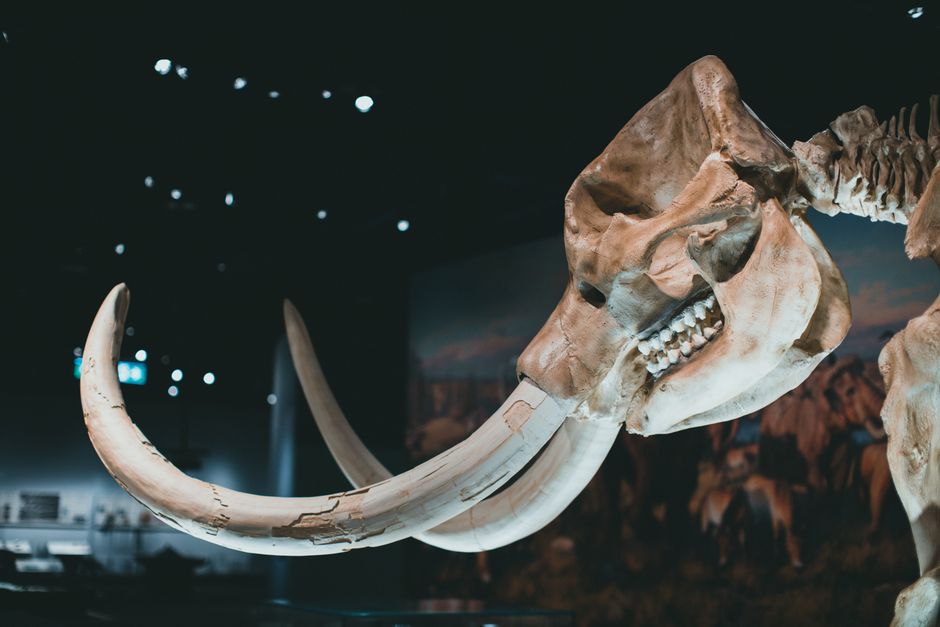
The Holocene extinction is the ongoing loss of plant and animal species happening right now, during the current geological epoch. Unlike the five mass extinctions before it, this one is caused primarily by human activity. Scientists also call it the sixth mass extinction or the Anthropocene extinction.
That name matters. The Holocene is the roughly 11,700-year stretch of stable climate that allowed human civilization to develop. Extinction rates during this period are estimated to be far higher than the natural background rate — the rate at which species would disappear without human influence. The causes are well documented: habitat destruction, overhunting, invasive species, pollution, and climate change.
What Is The Holocene Extinction And What Causes It?
The Holocene extinction is a period of elevated species loss driven by human population growth, land use, and resource consumption. It is not a single event but a process that has been accelerating for thousands of years.
The causes break down into five main categories. Each one is well established in the scientific literature.
- Habitat loss and degradation — the leading driver. Converting forests, wetlands, and grasslands for agriculture, cities, and roads removes the places species need to survive.
- Overexploitation — hunting, fishing, and harvesting at rates that outpace reproduction. The passenger pigeon and the dodo are historical examples. Overfishing remains a current one.
- Invasive species — organisms moved by human activity into new environments where they outcompete or prey on native species. Rats, cats, and certain snakes have driven island bird populations to extinction.
- Pollution — pesticides, industrial chemicals, plastics, and excess nutrients in waterways. These can kill directly or disrupt reproduction and development.
- Climate change — rising temperatures and shifting weather patterns alter habitats faster than many species can adapt or migrate.
These drivers overlap. A species already stressed by habitat loss may not survive a drought or a new predator. The combined effect is greater than any single cause.
How Is This Different From Previous Mass Extinctions?
Previous mass extinctions were caused by natural events. The end-Permian extinction, about 252 million years ago, is linked to massive volcanic activity and resulting climate shifts. The end-Cretaceous extinction, about 66 million years ago, followed a large asteroid impact.
The Holocene extinction is different in one key way: it has a single identifiable cause. Human activity. That means the trajectory is not fixed by geology or physics. It is shaped by choices about land use, consumption, and policy.
Another difference is speed. Past extinctions unfolded over thousands to millions of years. Current rates of species loss are estimated to be tens to hundreds of times higher than the natural background rate, based on comparisons of fossil records and modern observations. Some estimates put it higher still, though exact figures vary by method and taxonomic group.
When Did The Holocene Extinction Begin?
The timing is debated. Some researchers trace it to the late Pleistocene, when large mammals like mammoths and saber-toothed cats disappeared across continents following human migration. Others focus on the more recent acceleration tied to agriculture, colonization, and industrialization.
What is clear is that the pace has increased sharply in the last few centuries. Since 1500, documented extinctions have risen steadily. Since 1900, the rate has climbed further. The pattern holds across mammals, birds, amphibians, and invertebrates where records exist.
Island species have been hit hardest and earliest. Mainland extinctions tend to lag because larger, more connected populations can persist longer even under pressure.




Which Species Are Most At Risk?
Species with small populations, limited ranges, slow reproduction, or specialized needs are most vulnerable. That includes many amphibians, large mammals, island birds, and freshwater species.
Amphibians face a particular combination of threats. They are sensitive to water quality, temperature, and a fungal disease called chytridiomycosis that has caused declines and extinctions in multiple regions. The full role of that disease in global amphibian loss is still being studied, but its impact in specific outbreaks is well documented.
Large mammals reproduce slowly and need large territories. As habitats fragment, their populations shrink and isolate. Freshwater species — fish, mussels, amphibians — are affected by dams, pollution, and water extraction, often in ways that are hard to reverse.
Not all species decline. Some generalists — rats, pigeons, cockroaches, certain weeds — thrive alongside humans. The result is not total loss of life but a sharp drop in diversity. Ecosystems become simpler and more similar from place to place.
What Does Species Loss Actually Mean For Ecosystems?
Every species plays some role in its ecosystem, though the importance of that role varies. Some are redundant — their function is covered by others. Some are not.
When a keystone species disappears, the effects can cascade. Sea otters eat sea urchins. Without otters, urchin populations explode and graze kelp forests down to bare rock. The kelp loss then affects fish, invertebrates, and coastal protection. This chain is well documented on the Pacific coast.
Pollinators illustrate another dependency. Many flowering plants rely on specific insects, birds, or bats for reproduction. Lose the pollinator, and the plant may follow. Lose the plant, and everything that feeds on it is affected.
These cascades are hard to predict in advance. That uncertainty is itself a risk. Ecosystems can absorb pressure for a long time and then shift abruptly to a different state.
How Does Climate Change Fit In?
Climate change is both a cause of extinction and a multiplier of other causes. It does not act alone. It makes habitat loss worse, shifts disease patterns, and forces species to move or adapt faster than many can manage.
Warming temperatures push species toward the poles or up mountains. Species already at the top of a mountain have nowhere higher to go. Coral reefs are a clear example — prolonged heat stress causes bleaching, and severe or repeated bleaching can kill reefs that support thousands of species.
The relationship between climate and extinction is well established in principle. Specific projections for individual species vary widely depending on assumptions about future emissions, adaptation, and migration. Treat any single number for “species lost to climate change by year X” with caution. The direction is clear. The exact magnitude is not.
Is There Evidence This Is Really Happening?
Yes. The evidence comes from several independent lines.
- Documented extinctions — species confirmed gone, such as the golden toad and the Yangtze River dolphin.
- Population declines — widespread shrinkage in the range and number of monitored species, even where extinction has not yet occurred.
- Red List assessments — systematic evaluations by the International Union for Conservation of Nature, which classify species by extinction risk.
- Fossil and historical records — comparisons showing current loss rates exceed natural background rates.
These methods have limits. Not all species are monitored. Some declines go unnoticed until they are advanced. But the overall pattern is consistent across regions and groups. The disagreement among scientists is mostly about pace and magnitude, not about whether it is happening.
Can It Be Slowed Or Stopped?
Extinction is generally irreversible. A species that is gone does not come back. But the rate of loss is not fixed.
Conservation efforts have worked in specific cases. Protected areas, hunting bans, captive breeding, and habitat restoration have pulled some species back from the brink. The Arabian oryx, the California condor, and certain whale populations recovered after concerted action. These are exceptions, not the rule, but they show that intervention can change outcomes.
Reducing the main drivers — habitat conversion, overexploitation, pollution, and greenhouse gas emissions — addresses the causes rather than individual symptoms. How effective any particular policy will be is genuinely uncertain. The evidence on what works at scale is mixed and often context-dependent.
What is not uncertain is the mechanism. Less habitat, more exploitation, and faster climate change all increase extinction risk. Reducing those pressures reduces that risk.
Frequently Asked Questions
What is the Holocene extinction in simple terms?
It is the ongoing loss of species happening now, driven mainly by human activity. It is called the sixth mass extinction because the rate of loss is far above the natural background rate.
What is the main cause of the Holocene extinction?
Habitat loss is generally considered the leading driver, followed by overexploitation, invasive species, pollution, and climate change. These causes often work together rather than in isolation.
How many species have gone extinct during the Holocene?
Exact numbers are not known because most species have never been formally described or monitored. Documented extinctions since 1500 number in the hundreds, but the true total is likely higher.
Is the Holocene extinction the same as the sixth mass extinction?
Yes, the terms refer to the same phenomenon. “Holocene extinction” refers to the current geological epoch, while “sixth mass extinction” compares it to the five previous mass extinction events.
