
Your body burns a higher percentage of fat at lower exercise intensities, and more total calories as intensity rises. The zone where you burn the most fat calories overall usually falls somewhere in the moderate range — often around 60% to 70% of your maximum heart rate for many people. There is no single perfect number that applies to everyone, and the zone that matters most for lasting fat loss is the one you can sustain.
What Is the Best Heart Rate Zone to Burn Fat?
Fat oxidation — the process where your body breaks down fat for fuel — peaks at moderate intensities for most people. Exercise physiologists often describe this as the “Fatmax” zone. It typically sits between roughly 45% and 65% of your maximal oxygen uptake, which translates to a heart rate that feels comfortably challenging. You can talk in short sentences but not sing.
Here is the part most articles skip. Burning a higher percentage of fat during a workout does not mean you lose more body fat over time. What matters for fat loss is total energy expenditure and a sustained calorie deficit. High-intensity exercise burns a lower percentage of fat per minute but far more total calories. Over a full session, it can end up burning more fat calories than a long easy walk.
So the honest answer has two parts. If you want to maximize fat burned during the session itself, moderate intensity wins. If you want to maximize fat loss over weeks and months, total calories burned and consistent energy balance matter more than which zone you picked.
How Do You Find Your Fat-Burning Heart Rate Zone?
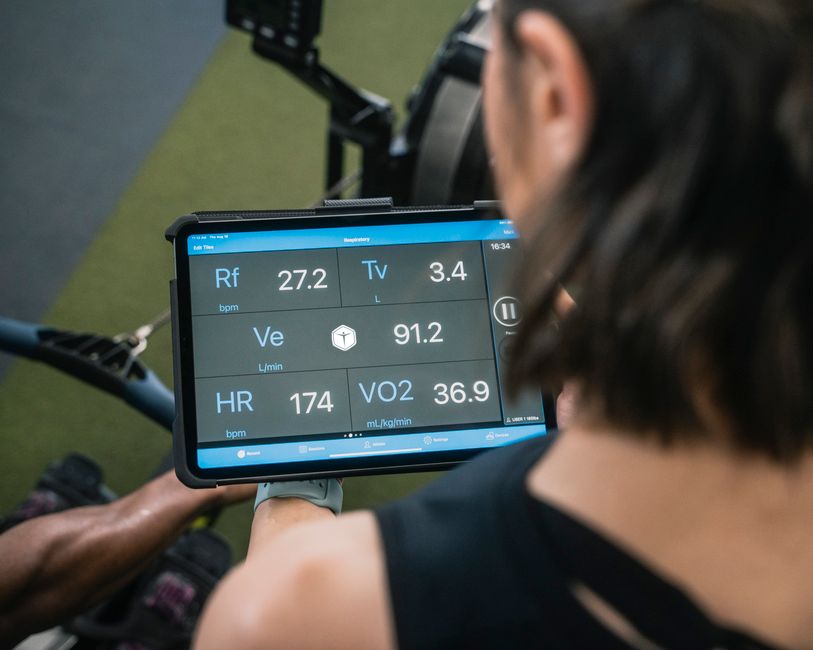
The most accurate way to find your zones is a lab test that measures your respiratory exchange ratio — the ratio of carbon dioxide you exhale to oxygen you inhale. That tells you exactly when your body shifts from mostly fat to mostly carbohydrate. Almost nobody does this, and you do not need to.
A practical estimate uses your maximum heart rate. The common formula is 220 minus your age. For a 45-year-old, that gives an estimated maximum of 175 beats per minute. A moderate zone of 60% to 70% would be about 105 to 123 bpm.
This formula has real limits. Research has shown it can be off by 10 to 12 beats per minute or more for a given person. Age is only one factor. Genetics, fitness level, medications, and body size all shift your true maximum. If you take a beta-blocker for blood pressure or a heart condition, your heart rate response is blunted and the formula will not work at all. Ask your doctor what target range makes sense for you.
Two better options exist:
- Talk test: At moderate intensity you can speak a full sentence but not carry a long conversation. This tracks your ventilatory threshold reasonably well without any device.
- Rate of perceived exertion: On a 1-to-10 scale, moderate intensity lands around 4 to 6. You feel warm and breathe harder but are not gasping.
If you use a heart rate monitor, wear it consistently and track how you feel at different numbers. Your personal zones will become clearer over a few weeks than any formula can predict.
Why Does Your Body Burn More Fat at Lower Intensities?
At rest and during easy movement, your muscles get most of their energy from fat. Fat is energy-dense and burns slowly. It works well when oxygen is plentiful and demand is low. As you push harder, your muscles need energy faster than fat metabolism can supply it. Your body shifts toward carbohydrate, which breaks down quicker and delivers energy more rapidly per unit of oxygen.
This shift is not a flaw. It is your body matching fuel source to demand. The crossover point — where carbohydrate starts to dominate — varies between people. Trained endurance athletes tend to burn fat at higher intensities than untrained people because their muscles adapt to use fat more efficiently.
One clarification worth knowing: the “fat-burning zone” printed on cardio machines is based on group averages. It is a rough guide, not a personalized prescription. Two people of the same age can have Fatmax zones 20 beats per minute apart.





Does High-Intensity Interval Training Burn More Fat?
High-intensity interval training burns more calories per minute than steady moderate exercise. Studies comparing HIIT to continuous moderate training for body fat reduction have produced mixed results. Some show HIIT slightly ahead, others show no meaningful difference when total calories and time are matched.
The reason HIIT gets attention is a concept called excess post-exercise oxygen consumption, or EPOC. After intense exercise, your body keeps burning extra calories for hours while it recovers. The effect is real but often overstated. For most sessions, EPOC adds a modest number of extra calories — not enough to outweigh the simple math of how many calories you burned during the workout itself.
What HIIT does offer is time efficiency. A 20-minute interval session can burn a similar number of calories to a 40-minute moderate session. That matters if time is your main barrier. What it does not offer is a shortcut around energy balance.
The best approach for most people is a mix. Moderate work builds your aerobic base and lets you accumulate volume without excessive fatigue. Higher-intensity work improves cardiovascular fitness and burns more calories per minute. Both have a place.
What Actually Determines Whether You Lose Body Fat?
Fat loss comes down to energy balance over time. If you consistently take in fewer calories than you burn, your body draws on stored fat for fuel. No heart rate zone changes that equation.
Exercise helps in two ways. It increases the calories you burn, and it preserves muscle mass while you lose fat — especially when paired with adequate protein and resistance training. That second point matters more than most people realize. Losing weight without resistance training often means losing muscle along with fat, which can slow your metabolism over time.
Three factors drive results more than zone selection:
- Total weekly activity: More movement burns more calories, regardless of intensity mix.
- Diet quality and portion size: It is far easier to reduce intake by a few hundred calories than to burn them off through exercise alone.
- Consistency over months: Sporadic intense workouts rarely match steady, sustainable habits.
Public health guidelines generally recommend at least 150 minutes of moderate-intensity aerobic activity per week for adults, along with muscle-strengthening activity on two or more days. That is a floor for health, not a ceiling for fat loss.
Which Heart Rate Zone Should You Actually Train In?
Train mostly in the moderate zone if you are new to exercise, returning after a break, or managing a heart condition. It is sustainable, easier on joints, and builds the aerobic base that makes harder work possible later.
Add higher-intensity sessions if you are already fit and want to burn more calories in less time. One or two interval sessions per week is a reasonable starting point for many people. More is not automatically better — recovery matters, and overtraining can stall progress.
If your goal is fat loss, do not overthink the zone. Pick an intensity you can repeat three to five times a week for months. That consistency will outperform any perfectly calculated heart rate target you cannot maintain.
If you have heart disease, high blood pressure, diabetes, or take medications that affect heart rate, talk to your doctor before starting a new exercise program. They can help you set a safe target range based on your specific situation.
Frequently Asked Questions
What heart rate zone burns the most fat?
Fat oxidation peaks at moderate intensity, often around 60% to 70% of your maximum heart rate for many people. However, total fat loss depends more on overall calorie balance than on which zone you train in.
Is the fat-burning zone on cardio machines accurate?
It is a rough estimate based on age formulas and group averages, not a personalized measurement. Your true fat-burning zone can differ significantly from what the machine displays.
Is it better to walk or run for fat loss?
Running burns more calories per minute, but walking for a longer time can burn a similar total. The better choice is whichever you will do consistently and can sustain without injury.
Can I burn fat without tracking my heart rate?
Yes. The talk test and perceived exertion scale are reasonable guides for moderate intensity without any device. Consistency and total activity matter more than precise heart rate numbers.
