
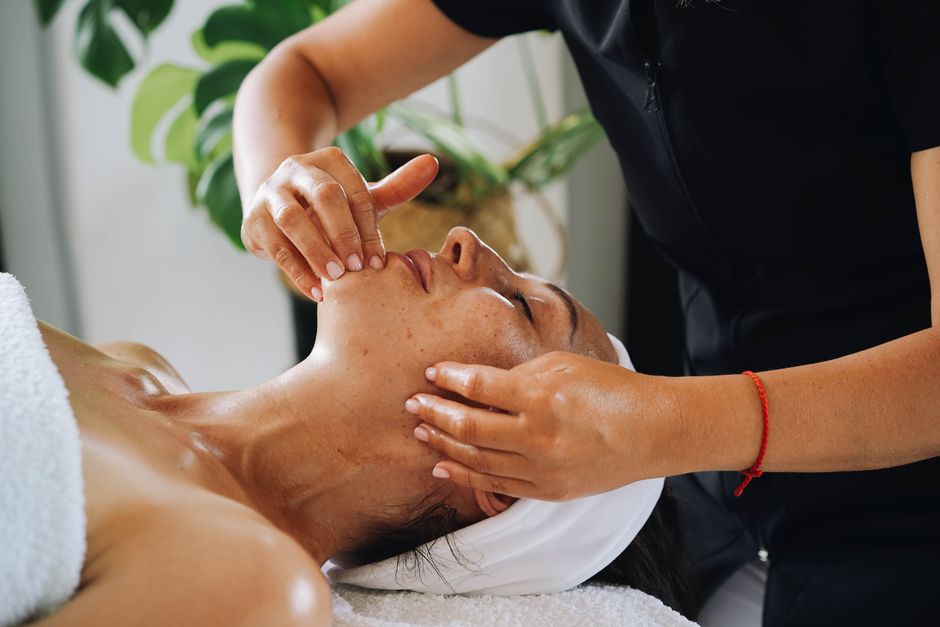
Facial rejuvenation is not a one-size-fits-all decision. The best treatment for you depends entirely on your skin concerns, your budget, your downtime tolerance, and what you want the result to look like. Some treatments relax wrinkles, some restore volume, and some resurface the skin’s surface. A dermatologist or plastic surgeon can help you match your goals to the right option, but understanding the main categories first will make that conversation far more productive.
What Are the Main Types of Facial Rejuvenation Treatments?
Facial rejuvenation treatments fall into three broad categories. Each targets a different layer of the skin and underlying tissue.
Neuromodulators like Botox and Dysport relax the muscles that cause expression lines. They work on dynamic wrinkles, such as crow’s feet and frown lines between the eyebrows. These treatments do nothing for skin texture, sun damage, or volume loss.
Dermal fillers restore volume that naturally diminishes with age. They can plump lips, soften nasolabial folds, and restore cheek volume. They do not tighten skin or improve wrinkles caused by muscle movement.
Energy-based devices such as lasers, radiofrequency, and ultrasound stimulate collagen production or remove damaged skin layers. These treatments address texture, tone, and mild to moderate laxity. They require recovery time ranging from none to several days depending on intensity.
Some people need only one category. Many need a combination. A 45-year-old with sun damage and early jowling has different needs than a 60-year-old with significant volume loss and deep wrinkles.
Neuromodulators: Are They Right for You?
Neuromodulators are the most popular nonsurgical cosmetic procedure in the United States. They work by blocking nerve signals to specific facial muscles. When the muscle cannot contract, the overlying skin smooths out.
Results appear within three to seven days and typically last three to four months. The effect is temporary because the body metabolizes the product over time. Regular treatments maintain the effect, and some people find they need fewer units over the years because the muscle becomes conditioned to rest.
This treatment is best for people whose main concern is dynamic wrinkles — lines that appear when you make a facial expression and disappear when your face is at rest. It is not effective for deep static wrinkles that remain visible even when the face is relaxed. Those require fillers, resurfacing, or both.
Common side effects include temporary redness, swelling, and bruising at the injection site. Headache can occur in the first 24 hours. Serious complications are rare when the procedure is performed by an experienced injector. Drooping eyelids can occur if the product migrates, but this is uncommon and resolves on its own within weeks.
Dermal Fillers: Restoring What Time Takes Away
Dermal fillers are gel-like substances injected beneath the skin to add volume, contour, and support. The most common type is hyaluronic acid, a molecule naturally present in the skin that attracts and holds water.
Fillers address different problems than neuromodulators. They fill static wrinkles, restore cheek volume, define the jawline, and plump lips. The effect is immediate, though swelling can mask the final result for a few days.
Hyaluronic acid fillers last anywhere from six months to two years depending on the product and the area treated. The lips metabolize filler faster than the cheeks. Some products are formulated to last longer, and your injector will choose based on the treatment area and your goals.
One advantage of hyaluronic acid fillers is reversibility. An enzyme called hyaluronidase can dissolve the filler if you are unhappy with the result or if a complication occurs. This is not true for other filler types such as calcium hydroxylapatite or poly-L-lactic acid, which are used less commonly and have different properties.
Bruising and swelling are the most common side effects. Lumps can occur if the filler is placed too superficially, though most can be massaged away or dissolved. Vascular occlusion — when filler blocks a blood vessel — is a rare but serious complication that requires immediate medical attention.





Laser and Energy-Based Resurfacing: Improving Skin Quality
Laser resurfacing and other energy-based treatments improve the skin’s surface rather than the muscles or volume beneath it. They treat sun damage, fine lines, uneven pigmentation, enlarged pores, and mild skin laxity.
Ablative lasers such as CO2 and erbium remove the top layer of skin. This produces dramatic results but requires significant downtime. The skin is raw and red for several days, and full healing can take one to two weeks. The results are long-lasting, and some patients see improvement for years.
Non-ablative lasers and intense pulsed light (IPL) heat the deeper layers of skin without removing the surface. They stimulate collagen production with minimal downtime. Results are more subtle and typically require multiple sessions. This option suits people who want gradual improvement without a visible recovery period.
Radiofrequency and focused ultrasound devices tighten skin by heating the deeper tissue layers. These treatments produce mild to moderate tightening with no downtime. The effect is gradual and varies significantly between individuals. Some people see meaningful improvement; others see little change.
Microneedling with radiofrequency combines collagen stimulation with heat delivery. It improves texture, fine lines, and mild laxity. Multiple sessions are usually needed, and results develop over several months as new collagen forms.
How Do Surgical Options Compare?
Nonsurgical treatments can do a great deal, but they have limits. A facelift remains the gold standard for significant jowling, deep nasolabial folds, and pronounced skin laxity in the lower face and neck.
A facelift physically repositions the deeper facial tissues and removes excess skin. The results are dramatic and can last a decade or more. Recovery takes two to four weeks, and the procedure carries surgical risks including bleeding, infection, nerve injury, and scarring.
Blepharoplasty, or eyelid surgery, removes excess skin and fat from the upper or lower eyelids. This is the only reliable way to address hooded upper eyelids that can interfere with vision. Recovery is one to two weeks.
Nonsurgical treatments cannot replicate surgical results. A thread lift, which uses temporary sutures to lift sagging tissue, produces a modest effect that lasts one to two years. It is not a substitute for a facelift and carries its own risks including visible threads, infection, and irregular contours.
What Is The Best Facial Rejuvenation Treatment For You?
The honest answer is that the best treatment is the one that matches your specific concerns and your tolerance for downtime and cost. No single treatment addresses everything.
If your primary concern is dynamic wrinkles, a neuromodulator is the most effective option. If you have lost facial volume, fillers are the direct answer. If your concern is skin texture, sun damage, or fine lines, laser resurfacing or microneedling is more appropriate. If you have significant sagging, only surgery will produce a dramatic and lasting result.
Many people benefit from combining treatments. A common approach is neuromodulators for the upper face, fillers for the midface, and a laser or microneedling series for skin quality. This is often called a liquid facelift or nonsurgical facelift, though those terms are marketing phrases rather than medical definitions.
The most important factor is the skill of the person performing your treatment. An experienced injector or dermatologist will assess your anatomy, discuss realistic outcomes, and recommend the right combination. They should also tell you what a treatment cannot do. Be cautious of anyone who promises dramatic results from a single nonsurgical session.
Cost varies widely by region, provider, and product. Neuromodulators are typically priced per unit. Fillers are priced per syringe. Laser treatments are priced per session. Insurance does not cover cosmetic procedures, so budget accordingly. Many practices offer financing, but do not let financial pressure push you into a treatment you do not need.
What to Expect During a Consultation
A proper consultation should take at least 15 to 30 minutes. The provider should examine your face at rest and in motion, ask about your medical history and medications, and discuss your goals in detail.
Be honest about any previous cosmetic procedures, allergies, and medications you take. Blood thinners, including aspirin and some supplements like fish oil and vitamin E, increase bruising risk. Your provider may ask you to stop these before treatment.
Ask about the provider’s experience with the specific treatment you are considering. Ask to see before-and-after photos of their patients. Ask about complications and how they handle them. A confident provider will answer these questions directly.
You should also ask about the product itself. Which specific product will be used and why? How long will it last? What is the total cost including any follow-up visits? Get everything in writing before you commit.
Frequently Asked Questions
How long do facial rejuvenation results last?
Neuromodulators last three to four months, hyaluronic acid fillers last six months to two years, and laser resurfacing results can last for years. Surgical results are the longest-lasting, often a decade or more.
Can I combine Botox and fillers in one session?
Yes, many people receive both in the same visit. The treatments address different concerns and are commonly combined for a more complete result.
What is the best treatment for sagging skin without surgery?
Radiofrequency and focused ultrasound devices produce mild tightening, but results are modest and vary by individual. For significant sagging, a facelift remains the only reliable option.
Are facial rejuvenation treatments painful?
Most treatments involve some discomfort, but topical numbing cream and ice are used to minimize it. Fillers often contain lidocaine, and laser treatments use cooling devices to protect the skin.
