
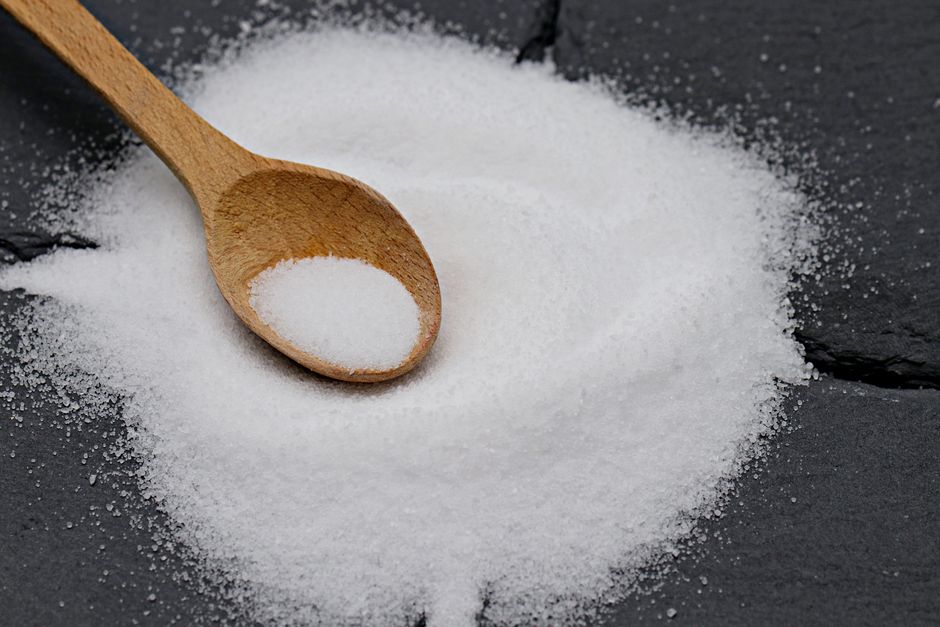
Sodium erythorbate is a food additive made from a sugar-related compound. It is chemically very close to vitamin C. Food makers use it mostly in cured meats to keep color stable and slow the formation of certain compounds that form during curing. Regulators in the United States and several other countries permit it in food, and the amounts used are generally considered safe for most people at the levels found in foods.
If you have seen it on a hot dog or deli meat label and wondered whether it is something to avoid, the short answer is that it is not a preservative of major concern for most healthy adults. The longer answer involves what it actually does, how it differs from related additives, and who may want to pay closer attention.
What Is Sodium Erythorbate And Is It Safe To Eat?
Sodium erythorbate is the sodium salt of erythorbic acid. Erythorbic acid is a stereoisomer of ascorbic acid, which is the scientific way of saying it has the same chemical formula as vitamin C but a different 3D arrangement of its atoms. That mirror-image structure matters. It means erythorbic acid can do some of the same chemical work as vitamin C, but your body does not use it as a vitamin.
In food, it acts as an antioxidant. It reacts with oxygen and with other molecules that would otherwise cause unwanted changes in the product. In cured meats, its main jobs are to speed up the curing reaction and to help hold the pink color that people expect from bacon, ham, and hot dogs.
On safety, the picture is fairly settled. The U.S. Food and Drug Administration lists sodium erythorbate as a substance generally recognized as safe when used according to good manufacturing practice. That is the same regulatory category applied to many common food ingredients. The European Food Safety Authority has also evaluated erythorbic acid and its sodium salt and did not find safety concerns at permitted use levels.
One clarification worth making: “generally recognized as safe” is not a claim that a substance is harmless in unlimited amounts. It means that at the levels used in food, the available evidence does not show a health risk for the general population.
Why Is Sodium Erythorbate Added To Cured Meats?
Curing is an old technique that uses salt, nitrite, and time to preserve meat and give it a distinct flavor and color. Sodium erythorbate makes that process faster and more predictable.
Nitrite is the key curing agent. When nitrite reacts in meat, it produces nitric oxide, which binds to the muscle protein myoglobin and creates the stable pink color of cured meat. Sodium erythorbate speeds up that reaction. Without an accelerator like erythorbate or its close relative sodium ascorbate, the color can develop unevenly and the curing step takes longer.
There is a second, more important reason it is used. During curing and cooking, nitrite can react with certain compounds in meat to form nitrosamines. Nitrosamines are a class of compounds that have been linked to cancer in animal studies, and some are classified as probable human carcinogens. Adding erythorbate or ascorbate inhibits the formation of nitrosamines. This is one reason regulators and meat processors consider these additives useful rather than merely cosmetic.
So the additive is doing two things at once: making the product look right and reducing the formation of a compound that is best kept to a minimum.
Is Sodium Erythorbate The Same As Vitamin C?
They are close chemical relatives, but they are not the same thing in your body.
Vitamin C, or ascorbic acid, is an essential nutrient. Your body needs it for making collagen, for immune function, and for absorbing iron. You must get it from food because humans cannot make it. Erythorbic acid has the same formula but a different shape, and that shape means it does not work as a vitamin. It does not correct a vitamin C deficiency.
What it can do is act as an antioxidant in food and in some laboratory settings. In the human body, erythorbic acid is handled differently from vitamin C. It is absorbed and then largely excreted in urine rather than retained and used.
This distinction is why you should not think of a cured meat containing sodium erythorbate as a source of vitamin C. It is not.



How Does Sodium Erythorbate Compare To Sodium Nitrite And Sodium Ascorbate?
These three additives often appear together on the same label, and people sometimes confuse them. They play different roles.
| Additive | Main Role | Key Point |
|---|---|---|
| Sodium nitrite | Curing agent | Creates cured color and flavor; also inhibits bacterial growth, including Clostridium botulinum |
| Sodium erythorbate | Cure accelerator and antioxidant | Speeds curing and helps block nitrosamine formation |
| Sodium ascorbate | Cure accelerator and antioxidant | The sodium salt of vitamin C; does a similar job to erythorbate |
The practical takeaway is that erythorbate and ascorbate are largely interchangeable in cured meat production. Both accelerate curing and both reduce nitrosamine formation. Nitrite is the one that actually cures the meat and provides the antimicrobial protection that makes cured meats safer to store.
People sometimes assume that “nitrate-free” or “uncured” meats avoid these compounds. In most cases they do not. Products labeled uncured typically use celery juice or celery powder, which naturally contains nitrate. Bacteria or enzymes convert that nitrate to nitrite during processing. The end result is a product that still contains nitrite from a plant source. The U.S. Department of Agriculture has rules about how these products can be labeled, and the labeling can be misleading to shoppers who assume “uncured” means “no nitrite.”
Are There Any Health Concerns With Sodium Erythorbate?
For most people eating typical amounts of cured meat, the additive itself is not the main health consideration. The evidence does not point to sodium erythorbate as a significant risk at permitted levels.
The larger issue with cured meats is the meat and the nitrite, not the erythorbate. Processed meats are classified by the World Health Organization’s cancer research agency as carcinogenic to humans, based largely on evidence linking them to colorectal cancer. That classification is about processed meat as a category. It is not a statement about sodium erythorbate specifically.
A few points are worth keeping in perspective:
- Sodium erythorbate adds sodium to the product, though the amount is small compared with the salt used in curing.
- Some people report sensitivity to sulfites and other preservatives in processed meats, but erythorbate is not a sulfite and is not typically implicated in those reactions.
- There is no established evidence that sodium erythorbate causes allergic reactions in the general population at food levels.
If you are watching your sodium intake for blood pressure or heart reasons, the sodium in cured meats comes mostly from salt, not from erythorbate. Cutting back on processed meats reduces both.
Who Might Want To Limit Cured Meats Containing Sodium Erythorbate?
This is less about the erythorbate and more about the food it is in.
People who eat a lot of processed meat may want to cut back for reasons that have nothing to do with this one additive. The WHO classification and other research link high processed meat intake to colorectal cancer risk. The American Institute for Cancer Research and other health organizations generally suggest limiting processed meats.
If you have high blood pressure or are sensitive to sodium, cured meats are a meaningful source of salt. If you are pregnant, public health guidance generally advises avoiding certain deli meats unless heated, due to concerns about Listeria, a bacterium that can cause serious illness. That guidance is about the meat and the pathogen, not the erythorbate.
For anyone with a specific medical condition or dietary restriction, a doctor or registered dietitian can give advice tailored to your situation. No clinical guidelines single out sodium erythorbate as something to avoid.
How Can You Tell If A Product Contains Sodium Erythorbate?
Check the ingredient list. It will appear as “sodium erythorbate” or sometimes “erythorbate.” It is most common in cured and processed meats such as hot dogs, bacon, ham, sausage, and deli meats. It is far less common in other types of food.
If you are trying to reduce processed meat in your diet, reading labels for both nitrite and erythorbate can help you spot cured products. But remember that “uncured” and “no added nitrates or nitrites” labels do not mean the product is free of the compounds that form during curing.
If a product does not list sodium erythorbate, it may use sodium ascorbate instead, or it may not use a cure accelerator at all.
Frequently Asked Questions
Is sodium erythorbate bad for you?
At the levels used in food, sodium erythorbate is not considered a health risk for most people. The bigger health concern with cured meats is the meat itself and the nitrite, not the erythorbate.
Is sodium erythorbate the same as vitamin C?
No. It has the same chemical formula as vitamin C but a different molecular shape, so your body does not use it as a vitamin. It acts as an antioxidant in food but does not treat or prevent vitamin C deficiency.
Does sodium erythorbate contain nitrates or nitrites?
No. Sodium erythorbate is a separate additive that speeds up curing and helps reduce the formation of nitrosamines. It is not a source of nitrite or nitrate.
Is sodium erythorbate safe for people with allergies?
There is no established evidence that sodium erythorbate causes allergic reactions at food levels. It is not a sulfite, so it is not part of the sulfite sensitivity concern some people have with certain foods.
