
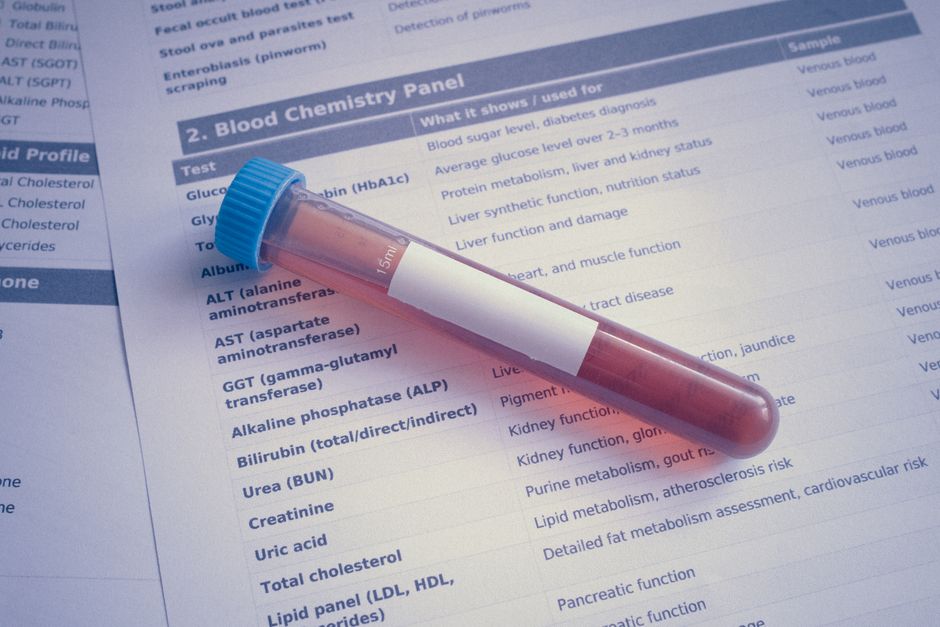
RDW stands for red cell distribution width. It is a number on a complete blood count (CBC) that measures how much your red blood cells vary in size. A normal result usually falls between about 11.5% and 14.5%, though the exact reference range depends on the lab that ran your test.
Most people have never heard of it. It often sits quietly on a lab report next to hemoglobin and hematocrit, and doctors frequently ignore it when it is only slightly off. But RDW can be an early clue to a range of conditions, from iron deficiency to vitamin problems to chronic disease. Here is what it actually measures, what a high or low result can mean, and why it sometimes matters more than the other numbers on the page.
What Does RDW Actually Measure?
RDW measures the spread of sizes among your red blood cells. A low RDW means your cells are close to the same size. A high RDW means there is a wide mix of sizes in your bloodstream.
Red blood cells are made in your bone marrow. In a healthy person, they come out roughly uniform, like cookies cut from the same mold. When something disrupts production — a missing nutrient, a chronic illness, a genetic condition — the marrow starts releasing cells of different sizes. The RDW catches that variation before it shows up anywhere else.
The test is reported as a percentage. It is calculated by dividing the standard deviation of red cell volume by the average red cell volume, then multiplying by 100. You do not need to know the math. What matters is the concept: it is a measure of consistency, not of how many red blood cells you have or how much hemoglobin they carry.
This is why RDW is different from the other red cell numbers. Hemoglobin tells you how much oxygen-carrying protein you have. Hematocrit tells you what percentage of your blood is red cells. MCV (mean corpuscular volume) tells you the average size. RDW tells you whether those sizes are all over the place.
What Is RDW On Lab Results and What Is a Normal Range?
A normal RDW generally falls between 11.5% and 14.5%. Values above that range are considered elevated. Reference ranges vary slightly between laboratories, so the range printed on your own report is the one to use.
There is no meaningful “low RDW” in most clinical settings. A result at the bottom of the range is not a concern. Red cells cannot really be more uniform than uniform. In rare cases, a low RDW can appear alongside certain anemias where all the cells are uniformly small or uniformly large, but on its own it carries little significance.
What doctors pay attention to is a high RDW, especially when it appears alongside a low MCV or a low hemoglobin. That combination often points toward a specific cause.
| Test | What It Measures | Typical Reference Range |
|---|---|---|
| RDW | Variation in red cell size | 11.5% to 14.5% |
| MCV | Average red cell size | 80 to 100 fL |
| Hemoglobin | Oxygen-carrying protein | 13.5 to 17.5 g/dL (men); 12.0 to 15.5 g/dL (women) |
| Hematocrit | Percent of blood that is red cells | 38.8% to 50.0% (men); 34.9% to 44.5% (women) |
These ranges come from standard hematology references. Your lab may use slightly different cutoffs, and some labs adjust ranges by age or population.
What Causes a High RDW?
A high RDW means your body is producing red blood cells of inconsistent sizes. That happens for several broad reasons, and the pattern of your other results usually narrows it down.
Nutritional deficiencies are the most common cause. Iron deficiency is the classic one. When iron runs low, the marrow struggles to build normal hemoglobin, and it starts releasing smaller, uneven cells. Vitamin B12 and folate deficiencies do something similar but push cells larger instead of smaller. In both cases, RDW often rises before hemoglobin drops, which is why it can be an early warning sign.
Mixed deficiencies can produce a high RDW with a normal MCV. If you are low on both iron and B12 at the same time, the small cells and large cells average out to a normal-looking size, but the RDW reveals the mismatch.
Chronic disease can raise RDW too. Inflammation from conditions like kidney disease, autoimmune disorders, heart failure, and some cancers affects how the bone marrow uses iron, even when your iron stores look adequate on paper. Research has consistently linked a higher RDW to worse outcomes in heart failure and kidney disease, though the reason is still being studied.
Recent blood loss or treatment can also shift the number. After a transfusion, or after starting iron or B12 supplements, the marrow starts producing new cells while older ones are still circulating. That mix temporarily raises RDW. It usually settles back down over weeks to months as the older cells are cleared.
Genetic conditions such as thalassemia and some hemoglobin variants can raise RDW as well, though the pattern often looks different from iron deficiency.
One thing worth knowing: RDW is not specific. A high result does not tell you what is wrong. It tells you something is worth investigating.





Can RDW Be High With Normal Hemoglobin?
Yes, and this is where RDW earns its keep. A high RDW with a normal hemoglobin and normal MCV is a common finding, and it is not always harmless.
In early iron deficiency, the body pulls iron from storage to keep hemoglobin steady. Hemoglobin stays normal, MCV stays normal, but the marrow is already starting to produce uneven cells. RDW rises first. This is sometimes called iron-deficient erythropoiesis — the marrow is starved of iron even though the blood count still looks fine.
The same pattern can show up early in B12 or folate deficiency, in chronic inflammatory conditions, and in people who are developing anemia slowly over months.
That does not mean every isolated high RDW is serious. Mild elevations are common and often have no clear cause. Some people simply run a little higher than the reference range. But when RDW is clearly elevated and there is no obvious explanation, most clinicians will look further — usually with iron studies, B12 and folate levels, and sometimes a reticulocyte count.
What About a Low RDW?
A low RDW is rarely a concern on its own. It means your red blood cells are unusually uniform in size.
In some anemias, all the cells are uniformly small (as in mild thalassemia trait) or uniformly large (as in some cases of aplastic anemia). In those situations, RDW can be normal or even low. But the diagnosis comes from the other numbers, not from RDW itself.
If your RDW is at the low end of normal and everything else looks fine, there is generally nothing to act on. If it is low alongside an abnormal hemoglobin or MCV, your doctor will look at the whole picture.
How Is an Abnormal RDW Evaluated?
An abnormal RDW is never interpreted alone. It is read alongside the rest of the CBC, and often alongside a few follow-up tests.
The most useful pairing is RDW with MCV. A high RDW with a low MCV points strongly toward iron deficiency or thalassemia. A high RDW with a high MCV points toward B12 or folate deficiency, or sometimes alcohol use, liver disease, or certain medications. A high RDW with a normal MCV is the murkiest pattern and often requires the most investigation.
Typical follow-up tests include:
- Ferritin and iron studies, to check iron stores
- Vitamin B12 and folate levels
- Reticulocyte count, to see how actively the marrow is making new cells
- Peripheral blood smear, to look at the cells under a microscope
- Inflammation markers, if chronic disease is suspected
If you have been told your RDW is high and everything else is normal, ask your doctor whether iron studies and B12 have been checked. Those are the two most common explanations, and both are easy to test for.
Does a High RDW Mean Something Serious?
Not by itself. A high RDW is a signal, not a diagnosis. Many people with a mildly elevated RDW have a simple nutritional deficiency or no identifiable cause at all.
That said, RDW has been studied as a marker of overall health. Large population studies have found that a higher RDW is associated with a greater risk of cardiovascular events, hospitalization, and mortality, even after adjusting for other factors. That does not mean RDW causes those outcomes. It likely reflects underlying biological stress — inflammation, nutritional gaps, or chronic disease — that shows up in red cell production before it shows up anywhere else.
What this means practically: a high RDW is worth taking seriously enough to investigate, but it is not a reason to panic. It is a reason to look at the whole picture with your doctor.
Frequently Asked Questions
What does RDW mean on a blood test?
RDW stands for red cell distribution width. It measures how much your red blood cells vary in size, reported as a percentage.
What is a normal RDW level?
A normal RDW is generally between 11.5% and 14.5%. Your lab’s reference range may differ slightly, so use the range printed on your own report.
Is a high RDW dangerous?
A high RDW is not dangerous by itself — it is a signal that something may need investigation. It is most often linked to iron deficiency, vitamin B12 or folate deficiency, or chronic disease.
Can RDW be high with normal hemoglobin?
Yes. RDW often rises before hemoglobin drops, especially in early iron deficiency. This is why a high RDW with a normal hemoglobin is still worth looking into.
