
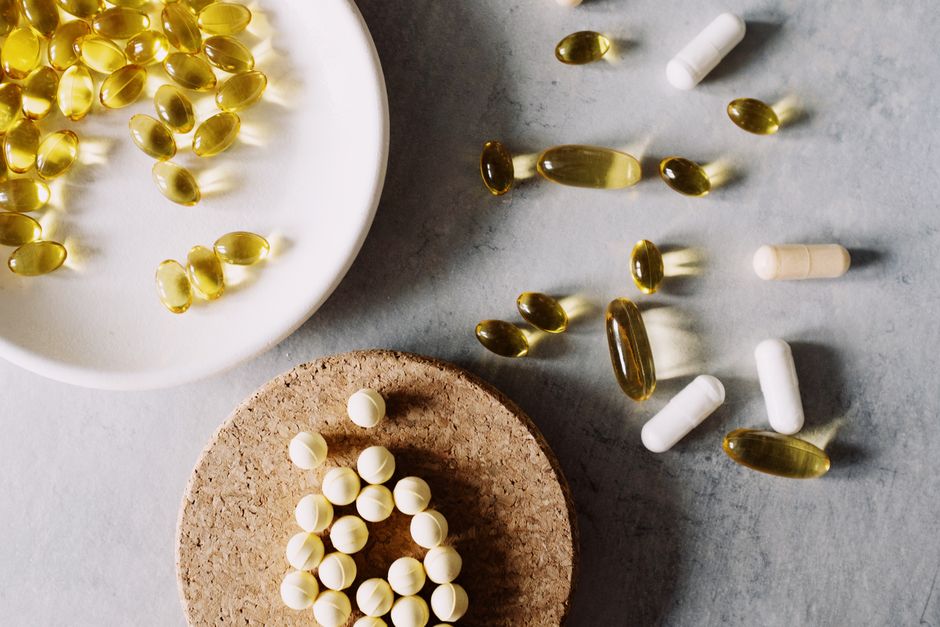
NAD is a molecule your cells need to turn food into energy and to repair DNA. Your NAD levels decline with age, and that decline is one reason researchers study it in relation to aging. NAD supplements are sold widely, but the evidence that they slow aging or treat disease in healthy people is limited.
What Is NAD and What Does It Do in the Body?
NAD stands for nicotinamide adenine dinucleotide. It is a coenzyme found in every cell of your body. You cannot make energy without it.
Its main job is to carry electrons during cellular respiration. When your cells break down glucose and fat, NAD picks up electrons and delivers them to the mitochondria, where they help produce ATP. ATP is the energy currency your cells run on. Without NAD, that process stops.
NAD does a second job that has drawn more research attention. It serves as a substrate for enzymes called sirtuins and PARPs. Sirtuins are involved in regulating gene expression, stress responses, and metabolism. PARPs help repair DNA damage. Both consume NAD when they work.
So NAD is not just a fuel molecule. It is also a raw material that specific enzymes use to carry out maintenance tasks inside cells.
What Is NAD Function Aging And Supplements?
NAD function, aging, and supplements are linked by one observation: NAD levels fall as we get older. Researchers have measured this decline in animal tissues and in some human studies. The drop is real and reproducible.
What is less clear is what the decline means. It could be a cause of age-related decline. It could be a consequence of other aging processes. It could be both. Scientists have not settled this question.
Several mechanisms have been proposed. Chronic inflammation, which increases with age, may drive PARP activity up and consume more NAD. Declining levels of an enzyme called NAMPT, which cells use to recycle NAD, may reduce production. DNA damage accumulating over decades may also play a role.
This is where supplements enter the picture. If low NAD contributes to aging, the reasoning goes, raising NAD might slow or reverse some of it. That reasoning is plausible. It is also unproven in humans.
Does NAD Decline With Age?
Yes. Research consistently shows that NAD levels are lower in older organisms than in younger ones. This has been measured across multiple species, including rodents and humans.
The exact rate of decline in humans is not well established. Some studies suggest tissue levels may drop substantially between young adulthood and older age. Others show more modest changes. Measurement is difficult because NAD is unstable and hard to sample accurately in living human tissue.
What matters more than the exact number is whether the decline causes harm. That question remains open.



What Do NAD Supplements Actually Contain?
Most NAD supplements do not contain NAD itself. They contain precursors — molecules your body can convert into NAD through a series of enzymatic steps.
- Nicotinamide riboside (NR): a form of vitamin B3 that enters the NAD salvage pathway.
- Nicotinamide mononucleotide (NMN): a direct precursor that converts to NAD in cells.
- Nicotinamide (niacinamide): a form of B3 used in some supplements.
- Niacin (nicotinic acid): another B3 form, though it works through a different pathway.
Oral NR and NMN have been shown to raise blood NAD levels in humans. That part is not in dispute. What is disputed is whether raising NAD levels produces meaningful health benefits.
Do NAD Supplements Work for Aging?
The honest answer: we do not know. No large, long-term human trial has shown that NAD supplements slow aging, extend lifespan, or prevent age-related disease.
Animal studies have produced encouraging results. In mice, raising NAD levels has improved some metabolic markers and, in certain studies, extended lifespan. But mice are not humans. Many interventions that work in mice fail in people.
Human trials so far have been short and small. Some have shown modest improvements in markers like insulin sensitivity or blood pressure. Others have shown no measurable effect. The results are mixed, and no trial has been long enough or large enough to answer the question that matters most: does this actually change health outcomes?
This is a case where biological plausibility is not the same as proven benefit. The mechanism makes sense. That does not mean the supplement works.
Are NAD Supplements Safe?
Short-term use of NR and NMN appears to be well tolerated in the studies done so far. Reported side effects are generally mild and include nausea or digestive discomfort.
Long-term safety data is limited. Most human trials have run for weeks to a few months, not years. We do not have good information on what happens with prolonged use.
One concern researchers have raised is theoretical. NAD feeds into many cellular processes, including some that cancer cells rely on. Whether raising NAD could affect cancer risk in humans is unknown. No human evidence currently confirms harm, but the question has not been adequately studied.
People who are pregnant, breastfeeding, or being treated for cancer should talk to a doctor before taking these supplements. No clinical guidelines exist for these groups.
What Actually Raises NAD Levels?
Several lifestyle factors influence NAD metabolism, though the effects are generally smaller than what supplements produce.
Caloric restriction and fasting have been shown to raise NAD levels in animal studies. Exercise may also have an effect, though human data is limited. Sleep disruption appears to lower NAD in some research.
None of these lifestyle changes has been proven to slow aging through an NAD mechanism in humans. The connection is plausible but not established.
What is well established is that regular physical activity, adequate sleep, and a diet rich in vegetables and whole grains support metabolic health through many pathways — not just NAD.
Should You Take an NAD Supplement?
That is a personal decision to make with a healthcare provider, not a recommendation this article can make.
What the evidence supports: NR and NMN raise NAD levels in the blood. What the evidence does not support: that this translates into slower aging, longer life, or prevention of disease in healthy people.
If you are considering a supplement, it is worth asking what outcome you expect and whether any trial has demonstrated that outcome. For NAD precursors, the answer so far is no.
Frequently Asked Questions
What is NAD and why does it matter?
NAD is a coenzyme every cell needs to produce energy and repair DNA. Without it, cellular respiration and key maintenance enzymes cannot function.
Do NAD supplements really slow aging?
No human trial has shown that NAD supplements slow aging or extend lifespan. Animal studies have shown some benefits, but these have not been confirmed in people.
What is the best way to increase NAD levels?
NAD precursors like NR and NMN raise blood NAD levels, and caloric restriction has done so in animal studies. No method has been proven to produce health benefits through NAD in humans.
Are NAD supplements safe to take daily?
Short-term use appears well tolerated, with mostly mild side effects. Long-term safety data is limited, and effects on cancer risk in humans are unknown.
