
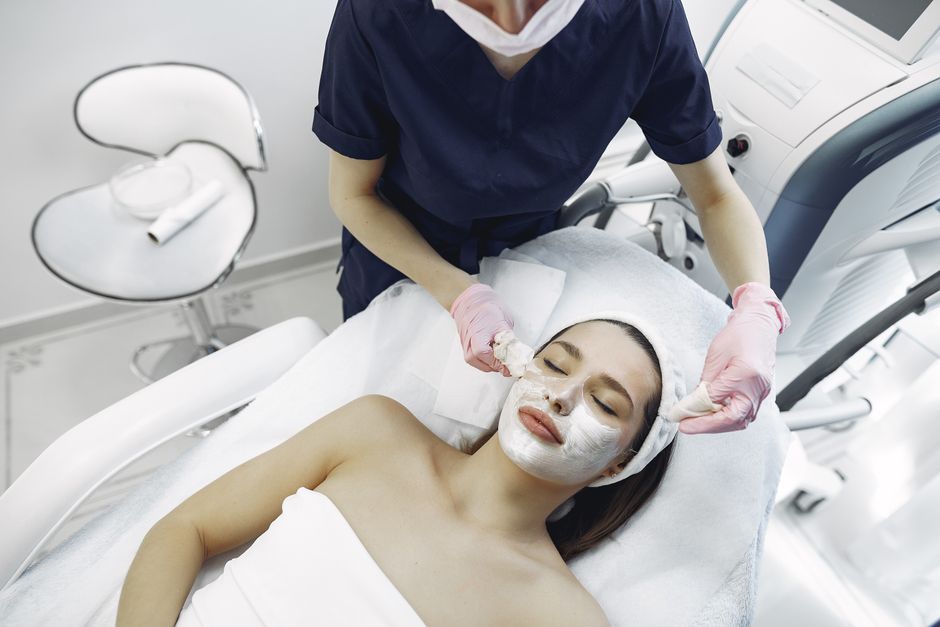
Microneedling with PRP is a cosmetic procedure that combines two techniques. First, a device with tiny needles creates controlled micro-injuries in the skin. Second, platelet-rich plasma (PRP) made from your own blood is applied to the treated area. The goal is to stimulate collagen production and use growth factors from your blood to help the skin repair and rejuvenate itself.
How Does Microneedling With PRP Work Step by Step?
You start with a blood draw, similar to a routine lab test. The blood goes into a centrifuge machine that spins it to separate the plasma rich in platelets from other blood components. This process takes about 10 to 15 minutes. The resulting PRP is a concentrated liquid containing growth factors that signal your cells to repair and regenerate.
While the PRP is being prepared, the provider applies a numbing cream to your skin. The microneedling device is then passed over the target area. Each pass creates hundreds of microscopic punctures in the epidermis and upper dermis. These micro-injuries trigger your body’s natural wound healing response. The PRP is then applied topically or injected into specific areas. The idea is that the growth factors in the PRP soak into the channels created by the needles, potentially boosting the healing and collagen response.
Research published in the Journal of Cutaneous and Aesthetic Surgery explains that the micro-injuries release growth factors from the skin itself, and the added PRP may amplify this effect. The entire procedure typically takes 60 to 90 minutes depending on the area being treated.
What Skin Concerns Does Microneedling With PRP Treat?
Microneedling with PRP is most commonly used for facial rejuvenation. People seek it for fine lines, wrinkles, and overall skin texture. The American Academy of Dermatology notes that microneedling can improve the appearance of acne scars, surgical scars, and stretch marks. PRP is added to potentially enhance these results.
Some clinics use it for hair restoration. The PRP is injected into the scalp to stimulate hair follicles. Evidence from a 2020 review in Dermatologic Surgery suggests that PRP injections can increase hair density in people with androgenetic alopecia. However, the results vary significantly between individuals.
Other reported uses include reducing dark circles under the eyes, improving skin laxity on the neck and chest, and treating large pores. The evidence for these specific uses is less robust. Most studies focus on facial rejuvenation and scar treatment.
What Does Research Show About Microneedling With PRP?
A 2018 study in the Journal of Drugs in Dermatology compared microneedling alone to microneedling with PRP for facial rejuvenation. The group that received PRP showed greater improvement in skin texture, pore size, and overall appearance after three sessions. Another study in Dermatologic Surgery found that combining microneedling with PRP led to a 30% greater reduction in acne scar depth compared to microneedling alone.
However, the quality of evidence is not uniform. Many studies are small, with fewer than 50 participants. Some lack control groups. The American Society for Dermatologic Surgery states that while PRP appears promising, there is no standardized protocol for preparation or application. Different clinics use different centrifuge speeds, different volumes of PRP, and different methods of application. This makes it difficult to compare results across studies.
The bottom line from current research is that microneedling with PRP likely offers a modest benefit over microneedling alone for certain conditions. It is not a dramatic transformation. Most people need a series of three to six sessions spaced four to six weeks apart to see noticeable results.



What Are the Side Effects and Risks?
Side effects are generally mild and temporary. Immediately after treatment, you can expect redness, swelling, and a sunburn-like sensation. These typically resolve within 24 to 48 hours. Some people experience pinpoint bleeding or bruising, especially if the needles penetrate deeper.
Because PRP is made from your own blood, the risk of allergic reaction is extremely low. This is one of the main selling points of the procedure. However, infection is still possible if the equipment is not properly sterilized or if you touch the treated area with dirty hands.
Less common risks include hyperpigmentation or hypopigmentation, particularly in people with darker skin tones. A 2019 review in the Journal of Clinical and Aesthetic Dermatology noted that post-inflammatory hyperpigmentation occurs in about 1 to 5 percent of cases. Scarring is rare but possible if the device is used incorrectly or if the skin is picked at during healing.
You should avoid the procedure if you have an active skin infection, are pregnant or breastfeeding, or have a bleeding disorder. People on blood thinners should consult their doctor first.
What Does Recovery Look Like?
Recovery is relatively quick compared to more invasive procedures like laser resurfacing or chemical peels. Most people can return to work the next day, though some redness may persist. Makeup can be applied after 24 hours, but mineral makeup is gentler.
Your provider will give you specific aftercare instructions. General guidelines include avoiding direct sun exposure for at least one week, using a gentle cleanser, and applying a moisturizer. You should not use retinol, glycolic acid, or other exfoliating products for at least five to seven days. Sweating and strenuous exercise should be avoided for 48 hours to prevent irritation.
Results are not immediate. Collagen production takes time. Most people start to see improvements in skin texture and tone after the second or third session. Full results can take three to six months as the collagen continues to remodel.
How Much Does Microneedling With PRP Cost?
The cost varies widely by location, provider experience, and the area being treated. A single session on the face typically ranges from $300 to $800. A package of three sessions might cost between $900 and $2,400. Adding PRP usually adds $100 to $300 per session compared to microneedling alone.
Insurance does not cover this procedure because it is considered cosmetic. Some clinics offer financing options or membership programs. It is worth asking about package deals, as multiple sessions are usually needed.
Be skeptical of extremely low prices. If a clinic offers microneedling with PRP for under $200, ask questions. They may be using low-quality devices, insufficient PRP, or inadequately trained staff. Your skin is not the place to bargain hunt.
Comparison: Microneedling Alone vs. Microneedling With PRP
| Factor | Microneedling Alone | Microneedling With PRP |
|---|---|---|
| Procedure time | 30-60 minutes | 60-90 minutes (includes blood draw) |
| Cost per session | $200-$600 | $300-$800 |
| Downtime | 24-48 hours redness | 24-48 hours redness |
| Evidence for scars | Moderate | Moderate to strong |
| Evidence for wrinkles | Moderate | Moderate |
| Risk of reaction | Low | Very low (autologous) |
| Number of sessions needed | 3-6 | 3-6 |
What to Look For in a Provider
Choose a licensed medical professional. Dermatologists and plastic surgeons are the most common providers. Nurse practitioners and physician assistants with specialized training also perform this procedure. Avoid spas or salons where non-medical staff operate the device.
Ask about the device being used. Medical-grade devices have adjustable needle depth and are sterilized between patients. At-home devices are not comparable and can cause injury if used incorrectly. The provider should use a new, sterile needle cartridge for each patient.
Ask how the PRP is prepared. Some clinics use a double-spin method that produces a higher concentration of platelets. Others use a single-spin method. There is no consensus on which is best, but the provider should be able to explain their process. A study in the Aesthetic Surgery Journal found that platelet concentration varies significantly between preparation methods, which may affect results.
During the consultation, the provider should discuss realistic expectations. They should not promise dramatic results after one session. They should also review your medical history and discuss any contraindications.
Common Misconceptions About Microneedling With PRP
Myth: PRP is a “vampire facial” that uses your blood directly. The term “vampire facial” is a marketing phrase. PRP is not whole blood. It is a concentrated component of your blood. The process is sterile and controlled.
Myth: One session is enough. Most people need multiple sessions. Collagen production is a slow process. One session may produce subtle results, but significant improvement usually requires a series.
Myth: It works for everyone equally. Individual results vary. Factors like age, skin type, overall health, and the specific condition being treated all influence outcomes. Some people see minimal improvement.
Myth: At-home microneedling with PRP is just as effective. At-home devices do not penetrate deeply enough to trigger significant collagen production. They also carry a higher risk of infection because proper sterilization is difficult. PRP preparation at home is not recommended and can introduce bacteria.
Frequently Asked Questions
Does microneedling with PRP hurt?
Most people feel minimal discomfort because a numbing cream is applied beforehand. You may feel a prickling sensation during the procedure and mild soreness afterward.
How long do results from microneedling with PRP last?
Results typically last 6 to 12 months depending on your age, skin condition, and lifestyle. Maintenance sessions every 6 to 12 months can help sustain the effects.
Can microneedling with PRP be done on any skin type?
Yes, it is generally safe for all skin types. However, people with darker skin have a higher risk of hyperpigmentation and should be treated by an experienced provider.
Is there any downtime after microneedling with PRP?
Downtime is minimal. You can expect redness and swelling for 24 to 48 hours. Most people return to normal activities the next day.
