
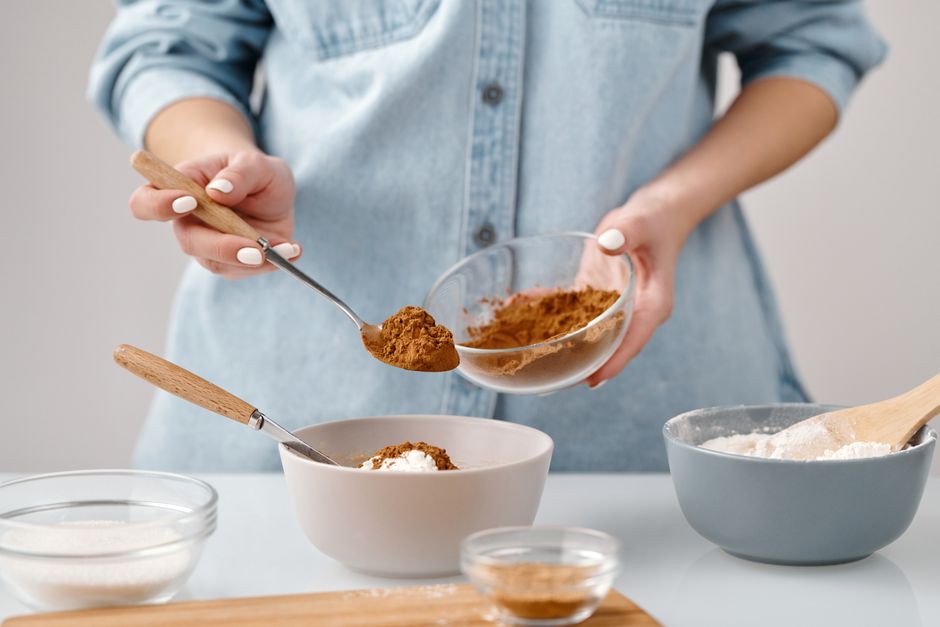
Baking soda is a white, crystalline powder that chemists call sodium bicarbonate. Its chemical formula is NaHCO₃. In simple terms, it is a salt made from sodium, hydrogen, carbon, and oxygen. This single compound is the entire ingredient — baking soda is not a blend of multiple substances.
What Is Made Of Baking Soda? Definition
Baking soda is pure sodium bicarbonate. The name “bicarbonate” is an older term for the hydrogen carbonate ion. Each tiny crystal contains one sodium atom, one hydrogen atom, one carbon atom, and three oxygen atoms. That arrangement gives the powder its unique ability to react with acids and release carbon dioxide gas.
This gas release is what makes baked goods rise. When baking soda meets an acidic ingredient like buttermilk, lemon juice, or yogurt, it produces bubbles of carbon dioxide. Those bubbles expand in the heat of the oven, creating the light texture in cakes, muffins, and quick breads.
How Is Baking Soda Produced?
Most commercial baking soda comes from a process called the Solvay method. This industrial process combines salt, ammonia, and carbon dioxide to create sodium bicarbonate. The raw materials are abundant and inexpensive, which is why baking soda is so affordable.
Some baking soda is also mined from natural deposits. The mineral form is called nahcolite, and it is found in underground rock formations. Regardless of the source, the final product is chemically identical. Food-grade baking soda meets strict purity standards before it reaches grocery store shelves.
How Baking Soda Works in Cooking
Baking soda is a leavening agent. Leavening means producing gas that makes dough or batter rise. Unlike baking powder, which contains its own acid, baking soda requires an external acid to activate.
Common acidic ingredients that activate baking soda include:
- Buttermilk
- Plain yogurt
- Lemon juice
- Vinegar
- Molasses
- Brown sugar
The reaction happens quickly. Once baking soda meets moisture and acid, it begins producing gas immediately. That is why recipes tell you to bake the batter right away. Waiting too long lets the gas escape, and the final product falls flat.
Using too much baking soda leaves a bitter, metallic taste. Recipes are carefully balanced so the acid neutralizes the soda completely. If a recipe calls for both baking soda and baking powder, each serves a different purpose. The baking powder provides additional lift while the baking soda neutralizes specific acids in the batter.





Chemical Properties of Sodium Bicarbonate
Sodium bicarbonate is a mild base. Its pH in solution is around 8.3, which is slightly alkaline. This mild alkalinity is why it neutralizes acids and also why it can absorb odors.
Heat changes baking soda’s chemistry. At temperatures above about 150°F (65°C), it begins to decompose. It releases carbon dioxide and water, leaving behind sodium carbonate, which is a stronger alkali. This is why baking soda can act as a leavening agent even in recipes without an acid, though the effect is weaker and slower than the acid reaction.
At very high temperatures, around 400°F (200°C), the sodium carbonate can break down further. This thermal decomposition is useful in some industrial applications but rarely matters in home cooking.
Is Baking Soda the Same as Baking Powder?
No. This is one of the most common kitchen confusions. Baking soda is pure sodium bicarbonate. Baking powder contains sodium bicarbonate plus one or more acid salts and a starch to absorb moisture.
Baking powder is a complete leavening system. It already contains the acid it needs, so it only requires moisture and heat to work. There are two types: single-acting and double-acting. Double-acting baking powder releases some gas when wet and more gas when heated. Most commercial baking powders sold in the United States are double-acting.
You cannot substitute one for the other in equal amounts. If a recipe calls for baking powder and you only have baking soda, you would need to add an acid to the recipe. If a recipe calls for baking soda and you use baking powder, the result may not rise properly because the acid balance is wrong.
Common Uses Beyond Baking
Baking soda is a versatile household product. Its mild alkalinity and gentle abrasiveness make it useful for cleaning. It can scrub surfaces without scratching, neutralize acidic spills, and absorb odors in refrigerators and carpets.
In personal care, baking soda appears in some toothpastes and deodorants. Its abrasive texture helps remove plaque, and its alkaline nature can neutralize odor-causing acids. However, some dental professionals caution against using baking soda alone as toothpaste because it lacks fluoride. Prolonged use may also wear down enamel because of its abrasiveness.
Baking soda is also used as an antacid. It neutralizes stomach acid and can relieve heartburn. The FDA lists it as a safe and effective antacid for short-term relief. But it is not meant for long-term use. Regular consumption can lead to metabolic alkalosis, a condition where the blood becomes too alkaline. It also contains sodium, which matters for people on low-sodium diets.
Health and Safety Considerations
Baking soda is generally recognized as safe for cooking and household use. The FDA classifies it as a food additive that is safe for consumption in normal amounts. The average recipe uses about 1 to 2 teaspoons, which is well within safe limits.
But baking soda is not harmless in large quantities. Accidental overdose can cause serious problems. Symptoms of baking soda overdose include nausea, vomiting, abdominal pain, and diarrhea. Severe cases can lead to seizures, kidney failure, or cardiac arrest. This is especially dangerous for children, who may mistake the powder for something edible.
Some internet trends recommend drinking baking soda water for weight loss or athletic performance. No clinical evidence supports these uses. Drinking baking soda in large amounts can be dangerous. The body tightly regulates blood pH, and forcing it outside the normal range can have serious consequences. If you are considering using baking soda for any health purpose beyond occasional heartburn relief, talk to a doctor first.
How to Store Baking Soda
Baking soda has an indefinite shelf life if stored properly. The key is keeping it dry. Moisture triggers the chemical reaction that makes it less effective as a leavening agent.
Store baking soda in an airtight container in a cool, dry place. Avoid keeping it near the stove or dishwasher where humidity is high. An open box in the refrigerator absorbs odors, but that same box should not be used for baking later. The absorbed odors and moisture change its properties. Keep one box for baking and a separate one for odor control.
To test if baking soda is still active, add a small amount to vinegar. If it fizzes vigorously, it is still effective. A weak or absent fizz means it has lost its potency for baking purposes.
Frequently Asked Questions
Is baking soda the same as sodium bicarbonate?
Yes, baking soda is simply the common name for sodium bicarbonate. The chemical formula is NaHCO₃.
Is baking soda natural or synthetic?
Both. Some baking soda is mined from natural mineral deposits, and some is manufactured through the Solvay process. The chemical result is identical either way.
Can I drink baking soda water every day?
No. Baking soda water is only appropriate for occasional heartburn relief. Regular daily consumption can disrupt your body’s acid-base balance and is not safe.
Does baking soda expire?
Baking soda does not spoil, but it loses potency over time. An open box absorbs moisture and odors, which weakens its leavening ability. Test it with vinegar to check if it is still active.
