
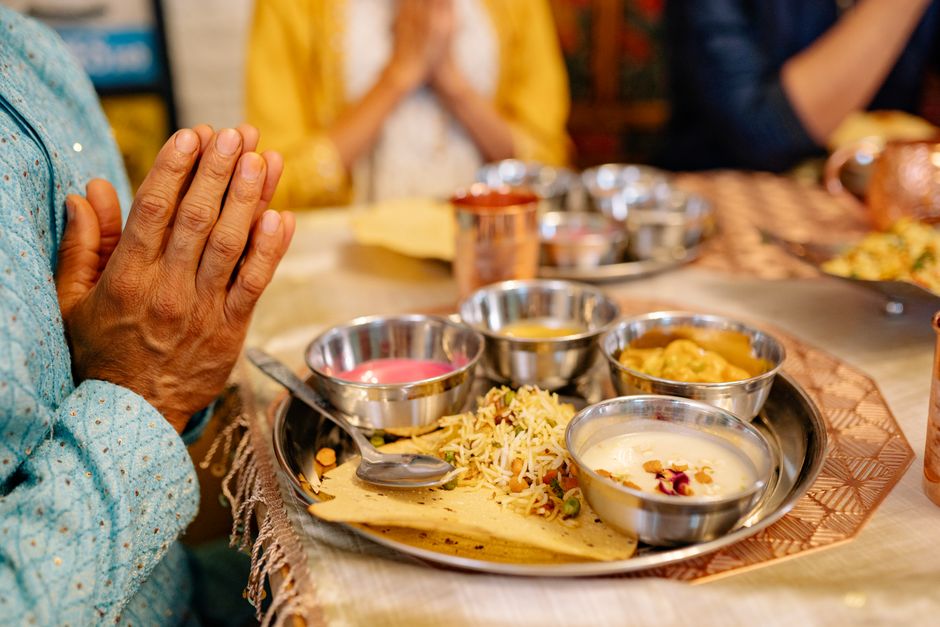
An Indian thali is a round metal plate that holds several small bowls of different dishes, and the tradition behind it is one of the oldest working examples of building a complete meal from parts. The idea is simple. Instead of eating one big portion of one food, you eat smaller amounts of many foods that fill different nutritional gaps. A typical thali brings together a grain, a legume or lentil, a vegetable, a source of fat, something fermented or raw, and a condiment or two. That combination is not random. It tends to cover protein, fiber, vitamins, minerals, and healthy fats in a single sitting.
What makes the thali worth understanding is that the balance is built into the format, not calculated on a nutrition app. The plate itself does the portioning. Whether that balance holds up depends on what you actually put in those little bowls.
What Is Indian Thali Tradition Balance Nutrition?
The thali tradition is a serving system that pairs grains with legumes, adds vegetables, and finishes with fat, salt, and fermented elements in small amounts. Nutritionally, this matters because different plant foods carry different amino acids, vitamins, and minerals. Grains like rice and wheat are low in the amino acid lysine. Lentils, chickpeas, and beans are low in methionine. Eat them together and the gaps partly cancel out.
This pairing is called complementary protein. It is a real and well-established concept in nutrition science. What is often overstated is the urgency of it. The human body maintains a pool of amino acids, so you do not have to combine the exact right foods at the exact same meal to get adequate protein. Eating a variety across the day works too. Still, the thali tradition nudges you toward that variety at every meal, which is a practical advantage.
The second pillar is fiber. Legumes, whole grains, and vegetables all contribute. A thali built around these foods tends to deliver far more fiber than a plate of white rice and meat alone. Fiber supports digestion, feeds gut bacteria, and helps with blood sugar and cholesterol. That part is well supported by research.
The third pillar is fat. Ghee, oil, coconut, or seeds appear in small amounts. Fat helps you absorb fat-soluble vitamins like A, D, E, and K from the vegetables on the same plate. This is a genuine biochemical reason the tradition works, not just a flavor preference.
What Does a Balanced Thali Actually Contain?
A balanced thali usually has five or six components, each doing a specific job. The classic structure looks like this:
- Grain — rice, roti, or millet, providing energy and some protein
- Legume — dal, chickpeas, or beans, providing protein and fiber
- Vegetable — cooked or raw, providing vitamins, minerals, and fiber
- Fat — ghee, oil, or seeds, aiding vitamin absorption
- Fermented or raw element — yogurt, pickle, or a fresh salad
- Condiment — chutney or pickle in small amounts for flavor and some micronutrients
Not every thali hits all six. A thali of rice, dal, and a vegetable is already a strong meal. Adding yogurt brings calcium and probiotics. Adding a raw salad brings vitamin C, which helps you absorb the iron from the lentils. That iron-and-vitamin-C interaction is well established and is one reason the raw element is not just decoration.
Portion is where most thalis succeed or fail. The traditional format uses small bowls, which naturally limits how much of any one dish you eat. When those bowls get bigger, the balance tilts toward whichever dish is most calorie-dense, usually the grain or the fried item.
How Does the Thali Compare to a Standard Western Plate?
The comparison is not about which cuisine is healthier. It is about what each format makes easy. The thali format makes plant variety easy because you are already serving multiple dishes. A standard Western plate often centers on one protein, one starch, and one vegetable.
Here is a rough comparison of what each format tends to emphasize:
| Element | Typical Thali | Typical Western Plate |
|---|---|---|
| Plant variety per meal | High — several dishes | Moderate — usually fewer |
| Legume presence | Near-daily | Occasional |
| Fiber sources | Multiple | Often one or two |
| Fermented foods | Common | Less common |
| Portion control | Built into small bowls | Depends on plating |
None of this makes the thali automatically superior. A thali loaded with white rice, fried snacks, and sweetened yogurt is not a balanced meal. A Western plate of salmon, quinoa, and roasted vegetables is excellent. The format is a tool. What you put in it decides the outcome.




Is the Thali Always Balanced?
No. The thali format makes balance easier, but it does not guarantee it. Several common versions fall short.
A thali built mostly around white rice or refined flour with little dal and few vegetables is heavy on fast-digesting carbohydrate and light on protein and fiber. A thali dominated by fried items — pakoras, puris, fried snacks — adds a lot of fat and calories without much nutritional return. A thali with a large sweet course at every meal pushes sugar up.
There is also a common misconception worth correcting. Many people assume that because a thali has many bowls, it must be nutritionally complete. Variety and balance are not the same thing. Six bowls of starchy or fried food are still six bowls of starchy or fried food. The bowls need to contain different types of food for the balance to be real.
A thali can be made more balanced with small changes. Swap some white rice for millet or brown rice. Increase the dal portion. Add a raw salad. Keep the fried item occasional rather than daily. None of these changes require giving up the tradition.
What About Protein in a Vegetarian Thali?
A vegetarian thali can meet protein needs, but it takes attention. Plant proteins are spread across the plate rather than concentrated in one item. Dal, chickpeas, beans, paneer, yogurt, nuts, and seeds each contribute. Add them up and the total can be substantial.
The concern is not that plant protein is inferior. It is that many vegetarian thalis are lighter on legumes than people assume. A small bowl of dal may provide only a modest amount of protein. If most of the plate is rice and roti, the meal leans carbohydrate-heavy.
Increasing the legume portion is the simplest fix. A larger bowl of dal or a side of chickpeas changes the protein profile of the whole meal. Pairing legumes with grains also improves the amino acid balance, as noted earlier.
For people who eat dairy, yogurt and paneer add complete protein along with calcium. For those who do not, combining legumes, grains, nuts, and seeds across the day covers the same ground.
Does the Thali Tradition Have Health Benefits Beyond Nutrients?
There are a few advantages that go beyond the nutrient list, and they are worth naming honestly.
The first is portion structure. Small bowls create natural limits. Research on plate and portion size generally supports the idea that people eat more when more is in front of them. The thali format works against that by design.
The second is meal rhythm. A thali is a sit-down meal with multiple components, which tends to slow eating compared to a single large plate. Slower eating is associated with better satiety in some studies, though the evidence is not uniform.
The third is fermented foods. Yogurt, pickles, and some breads bring live cultures and fermentation byproducts. Research on fermented foods and gut health is active but still developing. Some studies suggest benefits for digestion and immune function. The evidence is promising but not settled, and it would be wrong to present fermented foods as a proven treatment for any condition.
What the thali tradition does not do is prevent or cure disease on its own. No eating pattern does that in isolation. The thali is a framework for eating a varied, mostly plant-based meal. Its value comes from what that framework makes easy, not from any special property of the plate itself.
Frequently Asked Questions
Is an Indian thali a healthy meal?
It can be, depending on what is on the plate. A thali with whole grains, generous legumes, vegetables, and modest fat is a balanced meal, while one dominated by white rice and fried items is not.
How much protein is in a typical thali?
It varies widely with portion size and ingredients, so no single figure applies. The main protein sources are dal, chickpeas, beans, paneer, yogurt, nuts, and seeds.
Can a vegetarian thali provide enough protein?
Yes, if legumes and dairy or nuts are eaten in adequate amounts. Plant proteins are spread across several dishes, so the total depends on how much of each you eat.
Do you have to combine rice and dal at the same meal for protein?
No. Combining them improves the amino acid balance of that meal, but the body maintains an amino acid pool, so eating a variety across the day also works.
