
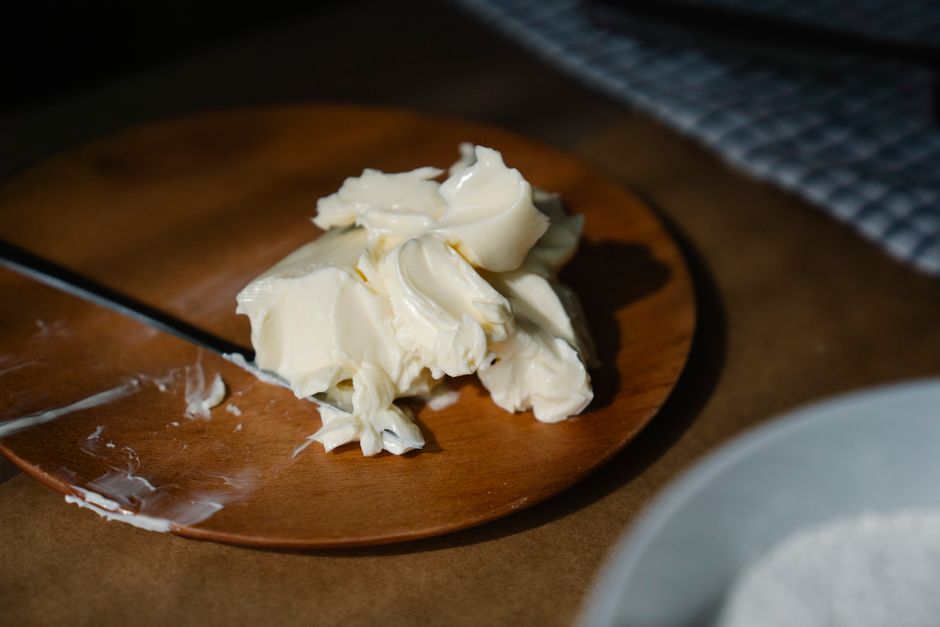
Fake butter is a spread made from vegetable oils instead of dairy cream, and it shows up on labels as margarine, vegetable oil spread, or plant-based butter. The taste comes mostly from added salt, flavor compounds, and sometimes a small amount of real butter or milk solids. Nutrition varies widely by brand, but most products are built around the same idea: replace butterfat with liquid vegetable oil that has been hardened into a solid.
That swap changes the fat profile, the calorie count, and the ingredient list. Some versions are lower in saturated fat than butter. Some are not. The word “butter” on a package tells you almost nothing about what is inside.
What Is Fake Butter Types Taste And Nutrition Facts?
Fake butter is any spreadable fat that looks and behaves like butter but is not churned from cream. The category includes traditional margarine, vegetable oil spreads, and newer plant-based butter alternatives made with oils like coconut, avocado, or olive.
The reason these products exist at all comes down to melting behavior. Real butter is roughly 80 percent butterfat, which is why it holds its shape at room temperature and melts at body temperature. Manufacturers can only call a product “margarine” if it meets a similar fat threshold. Spreads with less fat and more water are usually labeled “vegetable oil spread” instead. That label difference is not marketing fluff. It reflects a real difference in what is in the tub.
Nutrition numbers swing a lot across the category. A standard stick margarine and a light tub spread can differ by more than a hundred calories per tablespoon. Fat content, sodium, and whether the product contains any dairy at all can all change from brand to brand. This is why reading the Nutrition Facts panel matters more here than it does for butter, where the numbers are fairly consistent.
How Is Fake Butter Made?
Most fake butter starts with a liquid vegetable oil, often soybean, canola, palm, or a blend. Liquid oil does not spread like butter, so manufacturers change its structure. The classic method is hydrogenation, which adds hydrogen to the oil and makes it more solid.
Partial hydrogenation was the standard method for decades. It also created trans fats, which turned out to be the most harmful type of fat for heart health. That finding led to major changes in the food supply. In 2015, the FDA determined that partially hydrogenated oils were no longer generally recognized as safe, and companies were required to remove them from most products. Most mainstream spreads in the US no longer use partial hydrogenation.
Today, manufacturers often blend fully hydrogenated oil (which does not create trans fat) with liquid oil, or they use palm oil and palm kernel oil for structure. The result is a spread that holds together in the tub without the trans fat problem.
After the fat base is set, the rest is about taste and texture. That usually means water, salt, emulsifiers like lecithin to keep water and oil mixed, natural or artificial flavors, and often a yellow color. Some products add a small amount of butter or milk solids for flavor. Others stay fully plant-based and use cultured plant ingredients to mimic a buttery tang.
What Does Fake Butter Taste Like?
Good fake butter tastes close to butter. Cheap fake butter tastes like salt and oil. The gap between those two outcomes is mostly about fat content, water content, and how the flavor is built.
Butter gets its flavor from two main sources: the fat itself and diacetyl, a compound produced during fermentation that gives butter its characteristic buttery note. Many margarines add diacetyl or similar flavor compounds to copy that. The result can be convincing in baked goods or on toast, where the flavor is mixed with other ingredients.
Where fake butter tends to fall short is in cooking that depends on butter’s specific behavior. Butter browns, foams, and carries a nutty aroma when heated. Most spreads contain water and emulsifiers that change how they behave in a hot pan. They may spatter, burn faster, or fail to brown the same way. For sautéing at high heat, many cooks find that butter or a high-smoke-point oil works better than a spread.
Texture matters too. Spreads with higher water content feel thinner on the tongue. Stick margarine feels closer to butter. Tub spreads are softer and easier to spread straight from the fridge, which is the main reason many people buy them.
Fake Butter vs. Butter: How Do the Nutrition Facts Compare?
The table below compares typical values per tablespoon for regular butter, stick margarine, and a light tub spread. These are approximate ranges based on standard USDA data. Actual products vary, so check the label.
| Nutrient (per 1 tbsp) | Butter | Stick Margarine | Light Tub Spread |
|---|---|---|---|
| Calories | ~100 | ~100 | ~50 |
| Total fat | ~11 g | ~11 g | ~6 g |
| Saturated fat | ~7 g | ~2–3 g | ~1–2 g |
| Trans fat | 0 g | 0 g (most US brands) | 0 g (most US brands) |
| Sodium | ~2 mg (unsalted) | ~90 mg | ~60–100 mg |
| Vitamin A | Present naturally | Often added | Often added |
The headline difference is saturated fat. Butter is high in it. Most margarines and spreads are lower because their fat comes from vegetable oils. That is the main nutritional argument for choosing a spread over butter.
But that argument only works if the spread is actually lower in saturated fat. Some plant-based butters made with coconut oil and palm oil are high in saturated fat, sometimes close to butter. Coconut oil is roughly 80 to 90 percent saturated fat by weight. A product built mostly on coconut oil is not a low-saturated-fat food, no matter how it is marketed.
Both butter and most spreads are low in trans fat now. That was not always true, and it is one of the biggest changes in this category over the past two decades.
Which Is Healthier, Butter or Fake Butter?
There is no single answer, because it depends on the product and the person. What the evidence supports is narrower than most marketing suggests.
Replacing butter with a spread lowers saturated fat intake, and lower saturated fat intake is associated with lower LDL cholesterol in many people. That is a well-established relationship. Whether that swap reduces heart disease risk over a lifetime is harder to prove, and the evidence is mixed. Some studies suggest replacing saturated fat with unsaturated fat is beneficial. Others show the picture is more complicated than a simple swap.
What is clearer is that trans fats are harmful, and the removal of partially hydrogenated oils from the food supply was a meaningful public health change. That part is not in dispute.
A few practical points:
- Compare saturated fat on the label, not the front of the package. “Plant-based” does not mean low in saturated fat.
- Watch sodium. Spreads often contain added salt that butter does not.
- Check the ingredient list for palm oil and coconut oil if saturated fat is your concern.
- For baking and high-heat cooking, butter and spreads behave differently. Substituting one for the other can change results.
For most people, the bigger question is not butter versus spread. It is how much of either you use and what the rest of your diet looks like. A tablespoon of butter in a diet full of vegetables and whole grains is not the same as a tablespoon of butter on top of a diet full of processed food.
Are There Ingredients in Fake Butter to Watch For?
Most ingredients in modern spreads are there for texture, shelf life, or flavor, and they are considered safe at the levels used. A few are worth knowing about.
Palm oil is high in saturated fat. It is not harmful in small amounts, but products that rely on it heavily may not deliver the saturated fat reduction people expect.
Sodium adds up. A tablespoon of salted spread might have 90 to 100 milligrams. Use several tablespoons a day and that is a meaningful share of the recommended daily limit, which is 2,300 milligrams for most adults.
Added flavors and colors are common and regulated. Some people prefer to avoid artificial versions, which is a personal choice rather than a health requirement.
Milk or dairy solids appear in some products. Anyone with a dairy allergy should check the label, since “butter-flavored” does not always mean dairy-free.
None of these ingredients are dangerous for the general population at typical intake. The point is that “fake butter” is not one product. It is a category, and the details inside it matter.
Frequently Asked Questions
Is fake butter healthier than real butter?
It depends on the product. Spreads lower in saturated fat than butter may help lower LDL cholesterol when they replace butter in the diet, but plant-based butters made with coconut or palm oil can be nearly as high in saturated fat as butter.
Does fake butter still contain trans fat?
Most mainstream spreads in the US no longer contain partially hydrogenated oils, which were the main source of trans fat. Check the Nutrition Facts panel, since small amounts can still appear in some products.
Can you cook and bake with fake butter the same way as butter?
Not always. Spreads with higher water content behave differently in a hot pan and may not brown the same way butter does. For baking, results vary by recipe and product.
Is fake butter vegan?
Some brands are fully plant-based, but others contain milk solids, butter, or dairy-derived flavors. The label is the only reliable way to know.
