
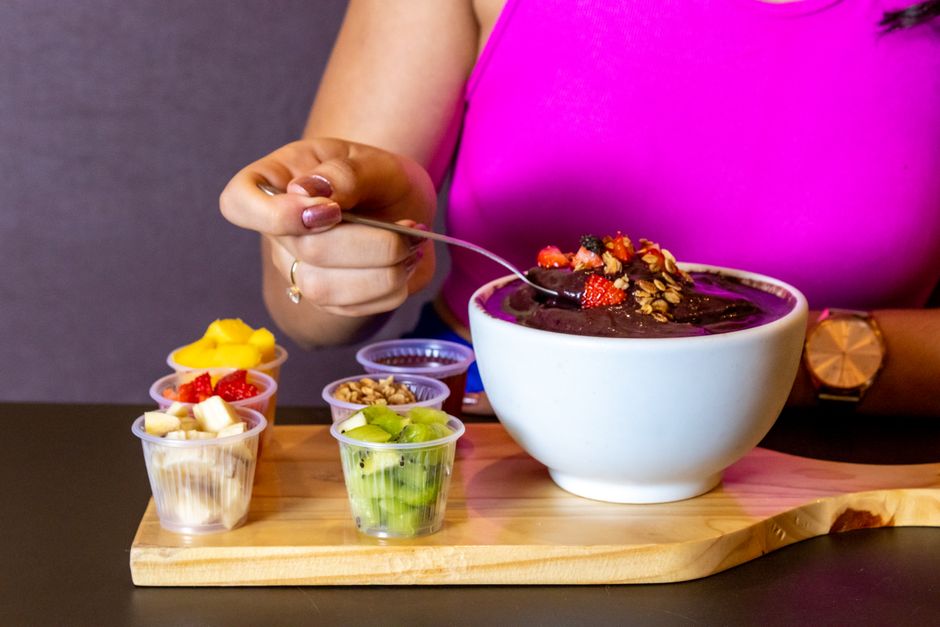
An acai bowl is a thick blended smoothie made from frozen acai berry pulp, typically served in a bowl and topped with granola, fresh fruit, and other crunchy or creamy additions. The base is acai puree mixed with a liquid like almond milk or juice to create a sorbet-like texture. Toppings usually include sliced banana, berries, coconut flakes, nuts, seeds, and a drizzle of honey or agave. It is not a juice or a shake — it is meant to be eaten with a spoon.
What Is In A Acai Bowl Exactly?
The core of every acai bowl is the acai berry. Acai berries come from acai palm trees native to Central and South America. The fruit is harvested, mashed, and flash-frozen quickly because fresh acai spoils within 24 hours of picking. You almost never find fresh acai berries in US grocery stores. What you find is frozen puree or powder.
Most acai bowls start with a frozen acai pack. These packs often contain acai puree and sometimes a small amount of added sugar or guar gum for texture. The frozen pack is broken into pieces and blended with a small amount of liquid — usually almond milk, coconut water, or apple juice. The goal is a thick, scoopable consistency, not a drinkable smoothie.
After blending, the puree goes into a bowl. Then comes the toppings. Common toppings include sliced banana, fresh strawberries, blueberries, granola, shredded coconut, chia seeds, hemp seeds, and a drizzle of honey or agave syrup. Some bowls add peanut butter, cocoa nibs, or bee pollen. The toppings provide texture and flavor contrast against the smooth, cold base.
Is An Acai Bowl Actually Healthy?
An acai bowl can be healthy, but it depends entirely on what goes into it. The acai berry itself is rich in antioxidants called anthocyanins, which give the berry its dark purple color. Research published in the Journal of Agricultural and Food Chemistry has found that acai berries contain higher antioxidant activity than blueberries, cranberries, and blackberries. That is a real finding, not marketing hype.
However, many acai bowls sold in cafes are more like dessert than health food. A typical 12-ounce bowl from a chain can contain 400 to 600 calories and 40 to 60 grams of sugar. That sugar comes mostly from the added juice in the base and the honey or agave drizzled on top. The granola also adds sugar and refined carbohydrates. The fruit toppings add natural sugar, which is less concerning but still adds to the total.
The American Heart Association recommends no more than 36 grams of added sugar per day for men and 25 grams for women. One large acai bowl can exceed that limit before lunch. That does not mean acai bowls are bad. It means you need to know what is in yours.
What Does Research On Acai Bowls Show?
Most research on acai focuses on the berry itself, not the bowl. A 2016 study in Nutrition Journal found that consuming acai pulp reduced blood sugar and insulin levels after a meal in overweight adults. That is promising, but the study used acai pulp alone, not a bowl loaded with granola and honey.
Another study in PLOS ONE found that acai extract reduced inflammation markers in rats. Human studies are still limited. The antioxidant effects of acai are real, but the amounts in a typical bowl vary widely. Some frozen packs contain very little actual acai and more filler like grape juice or sugar.
Evidence indicates that acai bowls are not a miracle food. They are a nutrient-dense option when made with minimal added sugar and whole food toppings. But the health halo around acai bowls has been inflated by marketing. The berry is good for you. The bowl may or may not be, depending on how it is built.




How Many Calories Are In An Acai Bowl?
Calories vary dramatically. A homemade acai bowl made with unsweetened acai puree, a splash of almond milk, and topped with a small handful of berries and one tablespoon of granola can be around 250 to 300 calories. That is a reasonable meal or snack.
A cafe acai bowl is a different story. A survey of popular chains found bowls ranging from 350 to over 800 calories. The largest bowls often include multiple servings of granola, full-fat coconut milk, nut butter, and heavy drizzles of honey. Some also add chocolate or candy-like toppings.
Here is a rough comparison of what changes the calorie count:
| Ingredient | Typical Amount | Calories |
|---|---|---|
| Frozen acai pack (unsweetened) | 1 pack (100g) | 70-80 |
| Almond milk (unsweetened) | 1/4 cup | 8 |
| Banana (sliced) | 1 medium | 105 |
| Granola (store-bought) | 1/4 cup | 120-150 |
| Honey drizzle | 1 tbsp | 64 |
| Peanut butter | 1 tbsp | 95 |
Notice that the granola and honey often add more calories than the acai itself. If you are watching calories, the toppings are where you have control.
What Are The Side Effects of Acai Bowls?
Acai bowls are generally safe for most people. The main side effects come from the sugar content. A high-sugar acai bowl can cause a blood sugar spike followed by a crash, leaving you tired and hungry within an hour or two. People with diabetes or insulin resistance should be especially careful about the added sugar.
Some people report digestive discomfort after eating acai bowls. This can happen because the bowl is high in fiber from the fruit, seeds, and granola all at once. If you are not used to high-fiber meals, a large bowl can cause bloating or gas.
There is no clinical evidence of toxic effects from acai itself. The FDA has not issued any warnings about acai. However, acai bowls are sometimes served in very large portions. Eating 800 calories of fruit and granola in one sitting is a lot of sugar and fiber for your system to handle at once.
How To Make A Healthier Acai Bowl At Home
Making your own acai bowl gives you full control over what goes in it. Start with unsweetened frozen acai puree. Check the ingredients list — it should say acai and nothing else, or acai with a tiny amount of citric acid. Avoid packs that list added sugar, grape juice, or syrup as the second ingredient.
Use unsweetened almond milk or plain water as your liquid. A splash of unsweetened coconut milk works too. Blend just enough liquid to get the blender moving. You want a thick, soft-serve texture, not a runny smoothie.
For toppings, focus on whole fruits first. Berries, banana slices, and kiwi add natural sweetness and fiber. Keep granola to one or two tablespoons. Sprinkle chia seeds or hemp seeds for healthy fats and protein. Skip the honey or agave entirely — the fruit is already sweet enough. If you need sweetness, try a few drops of stevia or a small amount of mashed ripe banana blended into the base.
Here are simple swaps to cut sugar without losing flavor:
- Use water or unsweetened almond milk instead of apple juice or coconut water
- Skip the honey drizzle — the banana and berries provide enough sweetness
- Choose plain granola without added sugar or dried fruit
- Add protein powder or Greek yogurt to the base for staying power
- Limit toppings to three or four items instead of piling everything on
Common Misconceptions About Acai Bowls
One widespread claim is that acai bowls are a weight loss food. There is no evidence that acai itself causes weight loss. A 2011 study in Nutrition Journal found that overweight adults who ate acai pulp daily for 30 days did not lose significant weight. They did see improvements in cholesterol and blood sugar, but weight loss was not among the findings.
Another myth is that acai bowls are a complete meal replacement. They are not. A typical acai bowl is low in protein. Without protein, you will feel hungry again quickly. If you want it as a meal, add a scoop of protein powder or plain Greek yogurt to the base.
Some people believe that acai bowls are always raw or vegan. Most are vegan, but not all. Some cafes add honey, which some vegans avoid. And the granola sometimes contains butter or honey. Always ask if that matters to you.
Frequently Asked Questions
Is acai bowl good for weight loss?
There is no evidence that acai itself causes weight loss. A bowl can fit into a weight loss plan if you control portion sizes and avoid sugary toppings.
How much sugar is in a typical acai bowl?
A cafe acai bowl often contains 40 to 60 grams of total sugar. Much of that is added sugar from juice, honey, and granola.
Can I eat an acai bowl every day?
You can eat one daily if you make it with unsweetened acai and minimal added sugar. Watch the total sugar and calorie count for the rest of your day.
Are acai bowls healthier than smoothies?
Neither is inherently healthier. Both depend on ingredients. An acai bowl tends to have more toppings and more sugar than a simple fruit smoothie.
