
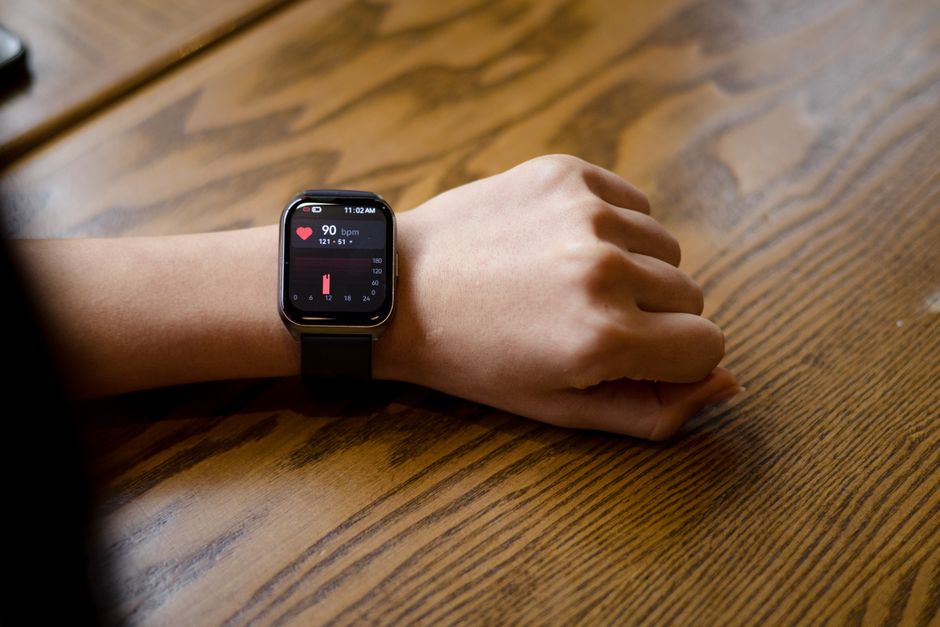
Your body burns a mix of fat and carbohydrates for fuel at every heart rate, including when you are sitting still. The “ideal” heart rate for fat burning is a range — often cited as roughly 60% to 70% of your maximum heart rate — where the percentage of calories coming from fat is highest. But here is the part most people miss: burning a higher percentage of fat during a workout does not mean burning more total fat over time.
That distinction matters. It changes how you should think about your workouts, your intensity, and what a heart rate monitor is actually telling you.
What Is the Ideal Heart Rate for Fat Burning?
The commonly used fat-burning zone is about 60% to 70% of your maximum heart rate. At this intensity, the proportion of energy you draw from fat tends to be higher than at harder efforts.
To find your maximum heart rate, the most widely used estimate is 220 minus your age. A 45-year-old would estimate a maximum of about 175 beats per minute. Their fat-burning zone would then fall around 105 to 122 beats per minute.
This formula is a population average, not a personal measurement. Individual maximum heart rates can vary by 10 to 15 beats per minute or more from the estimate. Age, genetics, medications, and fitness level all shift the number. A heart rate monitor gives you real data, but the 220-minus-age figure is only a starting point.
Why Does Lower Intensity Burn More Fat as a Percentage?
At low and moderate intensities, your body can meet its energy needs using oxygen-dependent processes that draw heavily on fat. Fat is a slow fuel. It takes time to break down and deliver to working muscles.
As intensity climbs, your muscles need energy faster than fat metabolism can supply it. Your body shifts toward carbohydrates, which can be broken down quickly with or without oxygen. This is why the percentage of calories from fat drops as you push harder.
At rest, fat supplies the majority of your energy. During a brisk walk, fat still contributes a large share. During a sprint, carbohydrates dominate and fat’s share becomes small — even though your total calorie burn is much higher.
This relationship is well established in exercise physiology. What is often misunderstood is what it means for body composition.
Does Burning a Higher Percentage of Fat Mean Losing More Fat?
No. This is the most important point in the entire topic, and it trips up a lot of people.
What matters for fat loss over weeks and months is your total energy balance — how many calories you take in versus how many you burn. A workout that burns a higher percentage of fat but fewer total calories can result in less fat loss than a harder workout that burns more total calories.
Consider two sessions. One hour of easy cycling might burn a moderate number of calories, mostly from fat. Thirty minutes of vigorous intervals might burn a similar number of calories, mostly from carbohydrate. Over the full day, the total energy deficit is what drives fat loss, not the fuel mix during the session.
Some research suggests higher-intensity exercise may also produce effects on appetite and metabolism that support fat loss, though the evidence on those specific mechanisms is mixed. The reliable principle is simpler: total calories burned and total calories consumed determine whether you lose fat.





How Do You Actually Find Your Personal Fat-Burning Zone?
The most accurate methods require a lab. A metabolic cart measures the ratio of carbon dioxide you exhale to oxygen you inhale, which reveals your fuel mix in real time. That is how researchers identify the exact intensity where fat oxidation peaks for an individual.
Few people have access to that. Practical alternatives include:
- The talk test. At a comfortable fat-burning intensity, you can hold a conversation but could not sing. If you are gasping, you are above the zone.
- Perceived effort. On a scale of 1 to 10, the fat-burning zone lands around a 4 to 6 — moderate, sustainable, not straining.
- Heart rate monitors. Useful for tracking trends, but the zone calculations built into most devices rely on the same age-based estimate.
None of these is exact. They are good enough to keep you in a moderate range, which is the practical goal.
What Heart Rate Zones Exist and What Are They For?
Most training systems divide intensity into five zones based on percentage of maximum heart rate. Each zone serves a different purpose, and fat burning is only one of them.
| Zone | % of Max Heart Rate | Primary Use |
|---|---|---|
| 1 | 50–60% | Warm-up, recovery |
| 2 | 60–70% | Base endurance, higher fat percentage |
| 3 | 70–80% | Aerobic fitness, moderate effort |
| 4 | 80–90% | Threshold training, higher total calorie burn |
| 5 | 90–100% | Peak effort, short intervals |
Zone 2 is what most people mean by the fat-burning zone. Zones 4 and 5 burn more total calories per minute, even though fat supplies a smaller share of them.
A balanced routine often uses several zones across the week. Spending all your time in Zone 2 is not required for fat loss, and spending all your time in Zone 5 is not sustainable.
Does the Fat-Burning Zone Work for Everyone?
The general pattern holds across most healthy adults, but the exact numbers shift with fitness, age, sex, and diet.
Trained endurance athletes oxidize more fat at any given intensity than untrained people. Their bodies have adapted to use fat efficiently. This means their personal fat-burning zone may sit at a higher percentage of maximum heart rate than the standard estimate suggests.
Diet also matters. A person eating a very low-carbohydrate diet will draw on fat differently during exercise than someone eating a high-carbohydrate diet. None of this changes the core principle — total energy balance still governs fat loss — but it does mean the zone is not a fixed target.
Certain medications, particularly beta blockers, lower heart rate and can make zone calculations unreliable. Anyone taking heart rate–altering medication should not rely on standard formulas.
Is the Fat-Burning Zone the Best Way to Exercise for Fat Loss?
No single intensity is the best choice. The best workout is the one you will do consistently and that fits your overall calorie needs.
Moderate-intensity exercise in the fat-burning zone has real advantages. It is easier to sustain for longer periods. It puts less stress on joints and the heart. It is often more comfortable for beginners. These factors make it a reasonable foundation for many people.
Higher-intensity exercise has its own advantages. It burns more calories per minute. It improves cardiovascular fitness more efficiently. It can be done in less time. The trade-off is that it is harder to recover from and harder to sustain daily.
For fat loss specifically, the total calories you burn and the total calories you eat matter more than which zone you train in. A workout plan that includes both moderate and higher-intensity sessions, paired with a sensible eating pattern, tends to serve most people well. Anyone with heart conditions, joint problems, or other health concerns should talk to a doctor before starting a new routine.
Frequently Asked Questions
What is the ideal heart rate for fat burning?
The commonly cited range is 60% to 70% of your maximum heart rate. For most people, that is a moderate intensity where you can talk but not sing.
Does the fat-burning zone actually burn more fat?
It burns a higher percentage of calories from fat, but not necessarily more total fat. Total calorie burn and overall energy balance drive fat loss over time.
Is it better to work out at low or high intensity for fat loss?
Both can support fat loss if they contribute to a calorie deficit. Higher intensity burns more calories per minute, while lower intensity is easier to sustain for longer.
Can I calculate my fat-burning zone without a heart rate monitor?
Yes. The talk test and perceived effort are reasonable substitutes. If you can hold a conversation but feel you are working, you are likely in the right range.
