
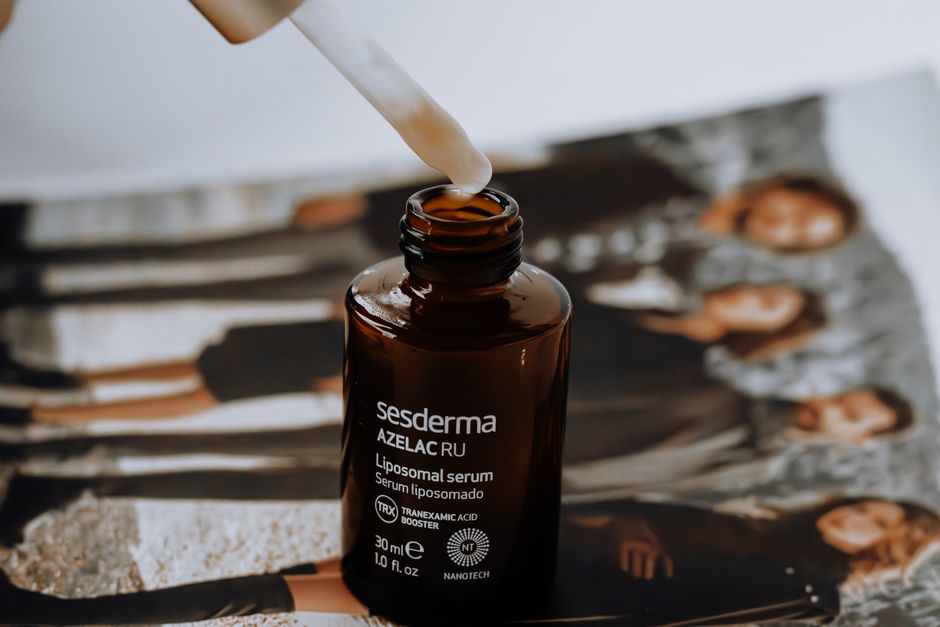
Hyaluronic acid is a sugar molecule that occurs naturally throughout your body, and in skincare products it is used as a topical ingredient that draws in and holds water. It belongs to a class of compounds called glycosaminoglycans, and it is found in high concentrations in your skin, connective tissue, and the fluid inside your joints and eyes. In a cream or serum, it works as a humectant — a substance that attracts water — which is why it shows up in so many moisturizers and serums marketed for dry or aging skin.
That basic description is accurate. What gets murky is everything that follows: how well it actually works, whether the molecule can penetrate skin, and why product labels list so many different versions of it. This article separates what research supports from what marketing implies.
What Is Hyaluronic Acid In Skincare Products?
In skincare, hyaluronic acid is used primarily as a moisturizing ingredient. Its defining chemical property is that it binds water — a single molecule can hold many times its own weight in water. That property is well established in biochemistry and is not in dispute.
The ingredient you see on a label is usually not pure hyaluronic acid. It is more often sodium hyaluronate, a salt form that is more stable and dissolves more readily in water-based formulas. Companies use both names, sometimes interchangeably, and sometimes list several forms at once.
Here is the part most marketing skips: the hyaluronic acid in your skin is not the same as the hyaluronic acid in the jar. Your body produces large, long-chain molecules. Skincare manufacturers often break those chains into smaller fragments, called low molecular weight hyaluronic acid, on the theory that smaller pieces penetrate better. Whether that translates into better results is exactly where the evidence gets thin.
How Does Hyaluronic Acid Hold So Much Water?
The water-binding capacity comes from the molecule’s structure. Hyaluronic acid is a long chain of repeating sugar units, and along that chain are chemical groups that attract and hold water molecules. This is straightforward chemistry, not a marketing claim.
What matters for skincare is what happens after you apply it. A humectant draws water toward itself. If there is moisture in the air and a way to hold it against your skin, that helps. If the air is very dry, a humectant can theoretically pull water from deeper layers of your skin toward the surface instead. This is why formulators usually pair hyaluronic acid with an occlusive ingredient — something like petrolatum, dimethicone, or certain oils — that sits on top and slows water loss.
A product that lists hyaluronic acid as its star ingredient but contains no occlusive agent may not do what you expect in a dry climate. That is a formulation issue, not a flaw in the ingredient itself.
Can Hyaluronic Acid Actually Penetrate Your Skin?
This is the central scientific question, and the answer is genuinely complicated. The outer layer of your skin, the stratum corneum, is built to keep large molecules out. Intact, high molecular weight hyaluronic acid is a large molecule. Most evidence indicates it largely stays on the surface, where it can hold water and temporarily improve the look and feel of skin.
Smaller fragments may penetrate further into the upper layers. Some studies suggest low molecular weight hyaluronic acid reaches deeper than the large form. But penetrating deeper is not the same as producing a better clinical result, and that link has not been firmly established.
There is also a counterintuitive wrinkle. Some research suggests that fragmented, low molecular weight hyaluronic acid can trigger inflammatory signaling in skin, while the large, intact form tends to be more inert or even protective. This is an active area of research, and the findings are not settled. It does mean the assumption that “smaller is better” deserves skepticism rather than acceptance.





What Does the Evidence Show About Results?
Topical hyaluronic acid reliably improves skin hydration in the short term. That is the best-supported claim, and it is a modest one. Hydration makes skin look plumper and can temporarily soften the appearance of fine lines caused by dryness.
Claims about reducing wrinkles, stimulating collagen, or reversing signs of aging are weaker. Some studies report improvements in fine lines with regular use, but these studies tend to be small, short, and often funded by manufacturers. That does not make them false. It means the evidence is not strong enough to state the effect as established fact.
Hyaluronic acid does not replace collagen or elastin, and it does not stop the biological processes behind skin aging. No topical ingredient does. What it can do is hold water in the upper skin layers, which affects appearance without changing skin structure.
One clarification worth making: injectable hyaluronic acid fillers are a completely different category. Those are placed by a clinician into the skin or beneath it, and their effects on volume and wrinkles are well documented. Topical products do not do what fillers do. Confusing the two is one of the most common sources of inflated expectations.
Why Do Labels List Different Types of Hyaluronic Acid?
Formulators use multiple molecular weights in one product, often described as a “multi-weight” or “layered” system. The idea is that larger molecules hydrate the surface while smaller ones reach slightly deeper. This is a reasonable formulation strategy, though the claim that it produces superior results is not strongly supported by independent trials.
You may also see related ingredients with similar names:
- Sodium hyaluronate — the salt form, most common in water-based products
- Hydrolyzed hyaluronic acid — broken into smaller fragments
- Hyaluronic acid crosspolymer — chemically linked to last longer on skin
These are variations on the same molecule, not different active ingredients. A long ingredient list featuring several of them is not automatically better than a product listing one.
Who Should Use It and Who Should Be Careful?
Topical hyaluronic acid is generally well tolerated. It is a substance your body already makes, and allergic reactions are uncommon. Most people can use it without issue.
People with very dry skin or those in low-humidity environments may find that a hyaluronic acid serum used alone leaves skin feeling tight or drier than before. Adding a moisturizer or occlusive layer on top usually solves this. If a product stings or irritates, stop using it — irritation can come from other ingredients in the formula, not the hyaluronic acid itself.
For anyone with a diagnosed skin condition, or who is pregnant or breastfeeding and considering a new product, the honest position is that specific guidance depends on the full formulation and your individual situation. A dermatologist can give advice that a general article cannot.
How Should You Use It In a Routine?
Hyaluronic acid fits best in a simple sequence: apply it to slightly damp skin, then seal it with a moisturizer. Applying it to bone-dry skin in a dry room is the setup most likely to backfire.
It layers well with most other ingredients, including retinoids and vitamin C, and it is often used to offset the dryness those ingredients can cause. There is no established rule about how long results take, because the main effect — hydration — is immediate and temporary. It lasts hours, not weeks.
If you are choosing between products, the concentration number on the label is a poor guide. Higher percentages do not reliably mean better results, and very high concentrations can feel tacky or pill under other products. Formula quality and the presence of an occlusive ingredient matter more than the percentage.
Frequently Asked Questions
Is hyaluronic acid the same as collagen?
No. Hyaluronic acid is a sugar molecule that holds water, while collagen is a protein that provides structural support. They are different substances with different roles, and topical hyaluronic acid does not build or replace collagen.
Does hyaluronic acid really reduce wrinkles?
It can temporarily make fine lines look softer by adding hydration, which plumps the skin’s surface. Evidence that it produces lasting structural change or reduces deeper wrinkles is limited and not firmly established.
Can I use hyaluronic acid every day?
Yes, daily use is common and generally well tolerated. If your skin feels tight or dry after applying it, follow with a moisturizer or occlusive product to hold the water in.
Is low molecular weight hyaluronic acid better?
Not necessarily. Smaller fragments may penetrate further, but some research suggests they can also trigger irritation, and deeper penetration has not been shown to produce better clinical results.
