
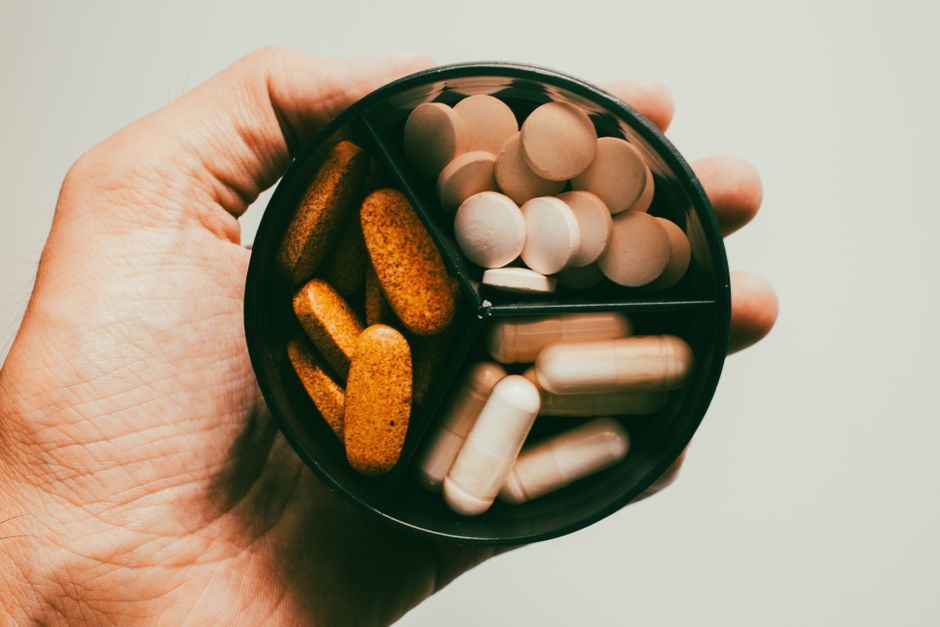
HMB stands for beta-hydroxy beta-methylbutyrate. It is a metabolite your body makes when it breaks down the amino acid leucine, and it is also sold as a dietary supplement, most often as a calcium or free-acid powder and capsule. People take it mainly for one reason: to try to preserve or build muscle, especially during periods of hard training or reduced activity.
The sales pitch is simple. Leucine helps trigger muscle protein synthesis. HMB is a breakdown product of leucine. So the reasoning goes that taking HMB should build muscle and slow its loss. That logic sounds clean. The human trial record behind it is much messier, and that gap between mechanism and real-world results is the most important thing to understand before you spend money on it.
What Is HMB and How Does It Work in the Body?
HMB is a small molecule produced naturally when your body processes leucine, one of the three branched-chain amino acids. Your body makes it in small amounts every day, and it is present in tiny quantities in foods like alfalfa, catfish, and some citrus. The amounts in food are very small, which is why supplement doses are far higher than what you would get from eating.
The proposed mechanism centers on muscle protein breakdown. In laboratory and animal work, HMB appears to influence pathways that regulate whether muscle tissue is being built up or broken down. Some of this research suggests HMB may act partly by supporting the signaling that leucine itself triggers, and partly by influencing how the body handles muscle damage after stress.
Here is the non-obvious part. Much of the early enthusiasm for HMB came from studies in untrained people starting a new exercise program, and from animal models. When untrained people begin resistance training, almost anything that supports recovery can look impressive. The results in trained lifters have been far less consistent. A supplement that seems to help a beginner adapt to training is not the same as one that adds muscle to someone who has been lifting for years. That distinction matters, and it is where a lot of the marketing quietly blurs the line.
What Does the Evidence Actually Show for HMB Supplement Benefits?
The honest summary is that the evidence is mixed, and it depends heavily on who is taking it and why.
In people new to resistance training, some studies suggest HMB may modestly improve gains in strength and lean mass compared with placebo. In trained individuals, results vary widely, and several well-controlled trials have found little to no added benefit over placebo when protein intake and training are already adequate.
The area with somewhat more consistent signals is muscle preservation during periods of reduced activity or calorie restriction — for example, during immobilization after an injury or during deliberate weight loss. Some studies indicate HMB may help slow the loss of lean mass in these situations. That is a narrower and more specific use than “builds muscle,” and the evidence, while interesting, is not strong enough to call it established.
A few points worth keeping in perspective:
- Many positive studies used doses well above what most people would take, and some were funded or conducted by parties with commercial interest in the outcome.
- When protein intake is already high — which it is for most people seriously training — the added value of HMB tends to shrink or disappear.
- No large, long-term human trials have confirmed meaningful benefits in trained athletes or in general healthy adults.
- HMB is not a substitute for adequate protein, calories, and progressive training. No supplement is.
So when someone asks whether HMB works, the accurate answer is: it may help in specific situations, the evidence is not strong enough to recommend it broadly, and for most well-fed, well-trained people the effect is likely small to nonexistent.
What Forms of HMB Are Sold and Does the Form Matter?
HMB is sold in a few main forms, and the differences are worth knowing because they affect how much you actually absorb.
- Calcium HMB — the most common form in capsules and powders. It is HMB bound to calcium. It is well studied and generally the form used in most clinical trials.
- Free acid HMB — HMB not bound to a mineral. It is absorbed somewhat faster and is often used in ready-to-drink products and some powders.
- HMB combined with other ingredients — many products bundle HMB with creatine, amino acids, or vitamins. These blends make it impossible to know which ingredient is doing what, and they are usually more expensive.
One practical clarification: calcium HMB is roughly 80 percent HMB by weight, while free acid HMB is essentially all HMB. That means the same milligram number on two labels does not deliver the same amount of the active compound. If you are comparing products, check which form is listed, not just the total milligrams.




Is HMB Safe and What Are the Known Risks?
In short-term studies, HMB has generally been well tolerated by healthy adults. Reported side effects are usually mild and include stomach upset or digestive discomfort in some people. Most trials have run for a few weeks to a few months, so the safety picture beyond that window is not well established.
There are real gaps in what is known:
- Long-term safety data in humans are limited. No large trials have tracked users for years.
- Safety in pregnant or breastfeeding women has not been established, and no clinical guidelines exist for these groups. It should not be assumed safe.
- Safety in children and adolescents is not established. No clinical guidelines exist for these populations.
- People with kidney disease, liver disease, or conditions affecting calcium handling should talk to a clinician before using it, because calcium HMB adds to calcium intake and the effects in these groups are not well studied.
- Supplement products are not tightly regulated for purity in the US, so third-party testing matters. Independent testing programs exist, and choosing a product that carries one is a reasonable precaution.
None of this means HMB is dangerous. It means the safety record is short and incomplete, and that is a different statement from “safe.”
How Does HMB Compare With Protein and Other Supplements?
This is where the practical picture gets clearer. For most people trying to build or keep muscle, total daily protein intake and resistance training do the heavy lifting. Research consistently shows that adequate protein — spread across the day — supports muscle protein synthesis. HMB is a minor player next to that.
Compared with creatine monohydrate, another widely used muscle supplement, the evidence base is quite different. Creatine has a much larger and more consistent body of human trial evidence for strength and lean mass gains across trained and untrained people. HMB’s evidence is smaller, more mixed, and more dependent on the population studied. That does not make HMB useless, but it does mean the two are not on equal footing.
If your protein intake is low, fixing that will almost certainly do more for your muscles than adding HMB. If your protein is already adequate and you train consistently, the expected benefit from HMB is small at best. That is the honest comparison.
Should You Consider HMB?
This is a personal decision, and it belongs between you and a qualified clinician or registered dietitian who knows your health history. What the evidence supports is a narrow, uncertain case: possibly some help preserving lean mass during reduced activity or calorie restriction, with weaker and inconsistent support for building muscle in trained people.
What the evidence does not support is the broad claim that HMB reliably builds muscle or boosts performance for everyone. That claim is marketing, not established science.
If you do try it, a few sensible steps apply to any supplement. Check the form and the actual HMB content. Look for independent testing. Tell your clinician, especially if you take medications or have any chronic condition. And keep expectations realistic — no supplement replaces food, sleep, and consistent training.
Frequently Asked Questions
What is HMB supplement used for?
It is used mainly to try to preserve or build muscle, especially during hard training or periods of reduced activity. The evidence for these uses is mixed and strongest only in narrow situations.
Does HMB actually build muscle?
Some studies suggest modest gains in untrained people, but results in trained individuals are inconsistent and often show little benefit over placebo. It is not a reliable muscle builder for well-trained, well-fed people.
Is HMB safe to take every day?
Short-term studies in healthy adults generally show it is well tolerated, with mild digestive upset in some people. Long-term safety data are limited, and safety in pregnancy, breastfeeding, and children is not established.
What is the difference between calcium HMB and free acid HMB?
Calcium HMB is HMB bound to calcium and is about 80 percent HMB by weight, while free acid HMB is essentially all HMB and absorbs somewhat faster. The same milligram label does not deliver the same amount of active compound.
