
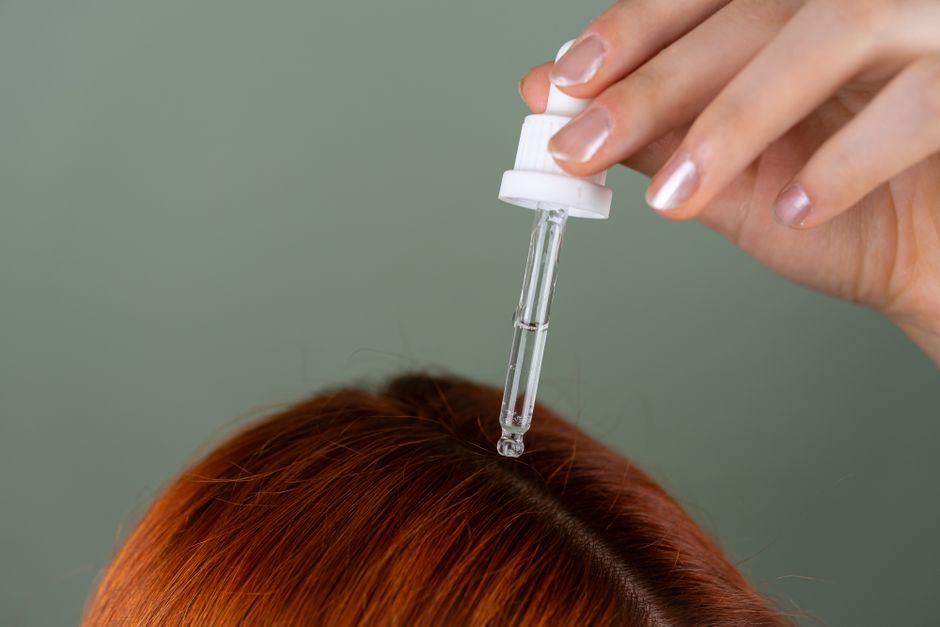
Hair grows from a follicle, a tiny organ under the scalp that cycles through growth, transition, and rest. What is good for hair growth comes down to a short list: enough protein and key nutrients, a scalp that is not inflamed or scarred, hormones in a normal range, and no ongoing damage from harsh styling or untreated medical conditions. Most healthy adults grow about half an inch of hair per month, and no product changes that rate.
That last point matters. The internet is full of oils, supplements, and devices that promise faster growth. Very few have solid evidence behind them. This article separates what the biology actually supports from what is marketing.
How Does Hair Actually Grow?
Each follicle runs its own cycle, independent of the follicles next to it. That is why you do not shed all your hair at once.
The cycle has three main phases. The growth phase, called anagen, lasts anywhere from two to several years depending on the person. The transition phase, catagen, lasts a few weeks. The resting phase, telogen, lasts around three months, ending when the old hair falls out and a new one begins to form.
Because follicles cycle separately, shedding 50 to 100 hairs a day is normal. More than that, or a visible change in density, usually points to something disrupting the cycle rather than a lack of a growth product.
Two structures matter for how hair looks and grows. The dermis, the deeper layer of skin, holds the follicle and its blood supply. The hair shaft itself is already dead tissue once it emerges. Nothing you apply to the visible strand can make it grow thicker from the root. Products can smooth, coat, or reduce breakage, but they cannot change the follicle’s output.
What Nutrients Does Hair Growth Depend On?
Hair is mostly protein, and building it takes energy and specific nutrients. A deficiency in any of these can slow growth or increase shedding. Correcting a deficiency can help; taking extra when you are not deficient generally does not.
Protein matters most. Hair is largely made of keratin, a protein. Very low protein intake, whether from dieting or illness, shifts follicles into the resting phase and increases shedding a few months later.
Iron is needed for the follicle’s energy use. Low iron stores are a common and treatable cause of shedding, particularly in people who menstruate. Ferritin, the stored form of iron, is what clinicians typically check.
Other nutrients with a clear role include zinc, vitamin D, and B vitamins including biotin. The catch with biotin is important: it only helps if you are genuinely deficient, which is rare in people eating a normal diet. Taking high-dose biotin when you are not deficient has not been shown to grow hair, and it can interfere with certain lab tests, including some thyroid and cardiac tests.
Here is the honest position. If your diet is varied and you have no diagnosed deficiency, a hair-growth supplement is unlikely to change your growth rate. Blood testing by a clinician is the way to find out whether a deficiency exists.
Which Medical Conditions Cause Hair Loss?
Hair loss has several distinct causes, and they need different approaches. Identifying which one you have matters more than any product.
Androgenetic alopecia, often called pattern hair loss, is the most common form. It is driven by genetics and hormones and affects both men and women, though the pattern differs. It is progressive without treatment.
Telogen effluvium is a temporary shedding triggered by a stressor such as illness, surgery, major weight loss, or severe emotional stress. It typically appears a few months after the trigger and often resolves on its own as the trigger passes.
Alopecia areata is an autoimmune condition where the body attacks its own follicles, causing smooth round patches. It can affect any hair-bearing area.
Other causes include thyroid disorders, scalp infections, and traction alopecia from tight hairstyles. Some scalp conditions, if left untreated, can scar the follicle permanently, after which hair cannot regrow there. That is why persistent scalp symptoms deserve a medical evaluation rather than a cosmetic fix.




What Is Good For Hair Growth: Proven Options
A small number of treatments have real evidence behind them. Everything else is either supportive or unproven.
- Minoxidil is a topical treatment with evidence for pattern hair loss in both men and women. It can slow loss and, in some people, prompt regrowth. Results vary, and it must be used consistently.
- Finasteride is an oral prescription for men with pattern hair loss. It works on the hormone pathway involved. It is not used in women of childbearing age because of risks in pregnancy.
- Treating the underlying cause — correcting an iron deficiency, managing a thyroid condition, or stopping a triggering medication with a clinician’s guidance — can reverse shedding when that cause is the driver.
- Gentle hair care reduces breakage, which is not the same as growth but preserves the length you have.
Notice what is absent. Most oils, shampoos marketed for growth, and “hair vitamins” do not appear here because the evidence does not support them as growth treatments. Some may improve how hair feels. That is a different claim.
One clarification worth making: minoxidil and finasteride have the strongest evidence for pattern hair loss specifically. They are not general-purpose growth boosters for someone whose shedding has another cause.
Do Supplements and Oils Actually Work?
For most people, no. This is where marketing and evidence diverge most sharply.
Biotin supplements are heavily marketed. In people who are not deficient, studies have not shown they increase hair growth. Deficiency is uncommon because the body needs very little and gut bacteria plus diet usually supply it.
Essential oils such as rosemary and peppermint appear in many “natural growth” products. Some small studies suggest rosemary oil may perform comparably to a low-concentration minoxidil in certain cases of pattern hair loss, but the evidence base is limited and the studies are small. That is not the same as proven.
Carrier oils like coconut and argan oil can reduce breakage and make hair look shinier. They do not speed up the follicle’s growth rate. There is no strong evidence that any oil applied to the scalp makes hair grow faster.
The pattern to notice: a product that improves the appearance of hair is not the same as a product that changes growth. Those are different claims, and the second one is rarely supported.
What Everyday Habits Support Healthy Hair?
Daily habits do not accelerate growth, but they prevent losses that make growth look slower than it is.
Avoid tight hairstyles that pull on the roots. Repeated tension can cause traction alopecia, and if it continues long enough the damage can become permanent.
Be careful with heat and chemical treatments. Very hot tools and strong chemical processes can weaken the shaft and cause breakage. Breakage shortens the visible length even when the follicle is growing normally.
Manage stress and treat illness promptly. Since telogen effluvium often follows a stressor by a few months, the shedding you see now may reflect something that happened earlier.
Eat enough protein and enough total calories. Severe restriction is a well-recognized trigger for shedding.
See a clinician for sudden, patchy, or scarring hair loss, or for scalp pain, itching, or scaling that does not settle. These are not cosmetic problems, and some are treatable only if addressed early.
How Long Before You See Results?
Hair grows slowly, so any real change takes time. Because the growth phase lasts years and the resting phase around three months, a treatment that works typically takes several months before you notice a difference. Many clinicians suggest giving a proven treatment at least four to six months before judging it.
This timeline is why patience matters and why quick-fix claims are a red flag. A product that promises visible growth in a week is not describing how hair biology works.
| Approach | Evidence Level | Best For |
|---|---|---|
| Minoxidil (topical) | Established for pattern loss | Androgenetic alopecia |
| Finasteride (oral, men) | Established for pattern loss | Male pattern hair loss |
| Correcting a deficiency | Established when deficiency exists | Deficiency-related shedding |
| Biotin supplements | Not supported if not deficient | Only true deficiency |
| Rosemary oil | Limited, small studies | Uncertain |
| Carrier oils | Cosmetic only | Reducing breakage |
Frequently Asked Questions
What is the single best thing for hair growth?
For most people, it is addressing the underlying cause rather than adding a product. If you have pattern hair loss, evidence-based treatments like minoxidil or finasteride, guided by a clinician, are the strongest options.
Does biotin really help hair grow?
Only if you have a genuine biotin deficiency, which is uncommon in people eating a normal diet. In people who are not deficient, studies have not shown biotin increases hair growth.
How fast does hair grow in a month?
About half an inch per month for most healthy adults. This rate is set by the follicle and is not changed by shampoos, oils, or most supplements.
Can rosemary oil grow hair like minoxidil?
Some small studies suggest rosemary oil may perform comparably to a low-concentration minoxidil in certain cases of pattern hair loss. The evidence is limited and the studies are small, so it is not established as an equivalent treatment.
