
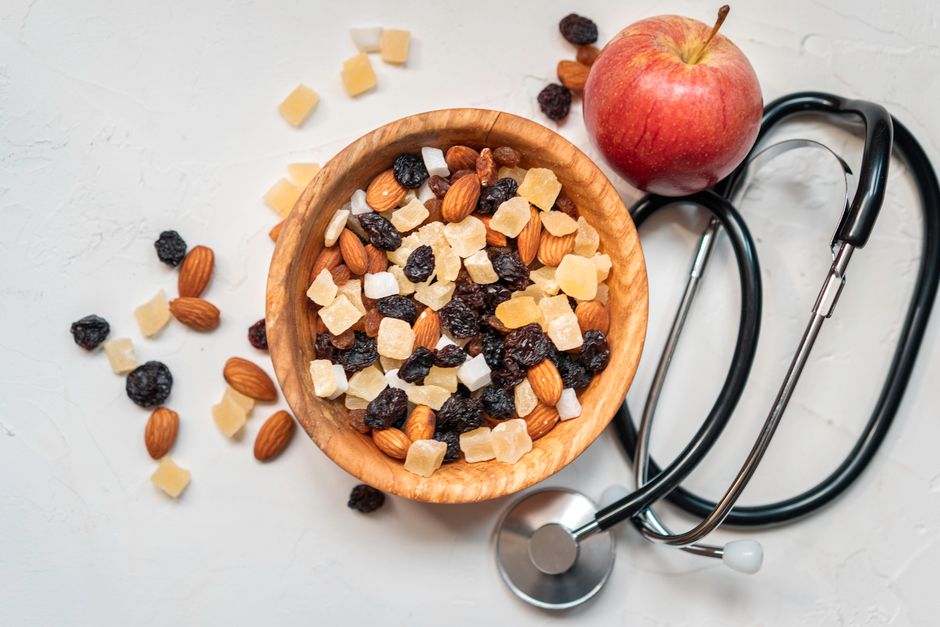
Freeze drying is a preservation method that removes water from food by freezing it first, then pulling the ice out as vapor — without ever letting the food thaw. The process is called lyophilization. It preserves food’s structure, color, and most nutrients far better than canning or standard dehydration, because it never uses high heat. That is the basic science. What follows is how it actually works, what the evidence says about nutrition, and where the marketing gets ahead of the facts.
What Is Freeze Dried Food And How Does It Work?
Freeze drying works through a process called sublimation. Water normally goes from solid (ice) to liquid (water) to gas (steam). Sublimation skips the liquid stage entirely — ice turns directly into vapor.
Here is the sequence in plain terms:
- Freezing: The food is frozen solid, usually well below 0°F. This locks the water inside the food’s cells as ice.
- Vacuum: The frozen food goes into a chamber where most of the air is removed. Lower pressure changes the rules of physics — ice can turn to vapor at temperatures well below boiling.
- Sublimation: Gentle warming under vacuum causes the ice to convert directly to vapor. The vapor is pulled away and collected. Roughly 95% or more of the food’s water content is removed this way.
- Secondary drying: A final stage removes the remaining bound water molecules that cling to the food itself.
The result is a dry, lightweight product that can sit on a shelf for years if sealed properly. Add water back and it rehydrates close to its original form.
The key difference from other drying methods is the absence of heat during the main drying phase. Heat damages cell walls and degrades certain vitamins. Freeze drying avoids most of that damage, which is why the texture and nutrient profile hold up better.
How Is Freeze Drying Different From Regular Dehydration?
Regular dehydration uses heat and air movement to evaporate water. Freeze drying uses cold and vacuum to sublimate it. That single difference drives almost every other distinction between the two.
Heat-based dehydration causes food to shrink, toughen, and darken. Cell walls collapse as water leaves. Some heat-sensitive vitamins — particularly vitamin C and certain B vitamins — degrade during the process. The food is still nutritious, but it changes more.
Freeze drying preserves the original cell structure. Food stays porous and light rather than dense and leathery. Rehydration is faster and more complete. The trade-off is cost and time — freeze drying is significantly slower and more expensive to run than hot-air dehydration.
| Feature | Freeze Dried | Heat Dehydrated |
|---|---|---|
| Water removal method | Sublimation (ice to vapor) | Evaporation (heat) |
| Heat exposure | Minimal | Moderate to high |
| Shrinkage | Minimal | Significant |
| Rehydration speed | Fast | Slower |
| Typical shelf life (sealed) | Up to 25 years | Months to a few years |
| Cost to produce | Higher | Lower |
Shelf life figures vary widely by food type, packaging, and storage conditions. Oxygen and moisture are the main enemies. A mylar pouch with an oxygen absorber stored in a cool, dark place will last far longer than the same food in a loosely sealed bag on a warm shelf.
Does Freeze Drying Destroy Nutrients?
Freeze drying preserves nutrients better than most other preservation methods, but it is not lossless. Some vitamin degradation happens during the freezing step itself, and a small amount occurs during storage.
Water-soluble vitamins like vitamin C are the most vulnerable. Research published in the Journal of Food Science has found that freeze-dried fruits and vegetables generally retain more vitamin C than their heat-dried or canned counterparts. The exact retention percentage varies by food, pre-treatment, and storage time — there is no single number that applies across the board.
Fat-soluble vitamins (A, D, E, K) and minerals are largely unaffected. Minerals are not destroyed by freezing or drying at all — they stay in the food. Protein structure changes slightly but nutritional value is essentially maintained.
One thing worth knowing: freeze-dried food is not automatically more nutritious than fresh food. Fresh produce picked and eaten within a day or two is still the gold standard. Freeze drying is a preservation advantage, not a nutrition upgrade. The comparison that matters is freeze-dried versus canned or heat-dried — and there, freeze drying generally wins on nutrient retention.



What Foods Can Be Freeze Dried?
Almost anything with enough water content can be freeze dried, but results vary. The method works best with foods that hold their structure well.
Foods that freeze dry well:
- Fruits — berries, banana slices, apple chunks, mango
- Vegetables — corn, peas, green beans, peppers, onions
- Meats and poultry — cooked or raw, though raw meat requires careful handling
- Seafood — shrimp and fish rehydrate reasonably well
- Dairy — cheese, yogurt drops, ice cream (yes, really)
- Coffee — freeze-dried instant coffee is one of the most common commercial applications
- Full meals — soups, stews, pasta dishes for camping and emergency supplies
Foods that do not work well:
- High-fat items like pure oils or butter — fat does not freeze dry and can go rancid
- Foods with very high sugar content in liquid form — they stay sticky and never fully dry
- Fresh leafy greens — they crumble to powder, which is fine for smoothies but not for eating whole
Commercial freeze drying is done in large vacuum chambers that can run for 20 to 40 hours per batch, depending on the food and thickness. Home freeze dryers exist but cost significantly more than a standard dehydrator and require more counter space.
Is Freeze Dried Food Safe to Eat?
Freeze dried food is safe when it has been properly processed and stored. The drying process itself does not sterilize food — it removes water. Bacteria, molds, and yeasts need water to grow, so removing water stops their growth. But any pathogens present before drying survive the process.
This is why commercial freeze-dried meat and ready-to-eat meals are typically cooked or otherwise treated before drying. Raw freeze-dried meat products exist but carry the same food safety considerations as raw fresh meat.
Once sealed, freeze-dried food is shelf-stable because there is not enough moisture for microbial growth. The moment you open the package and expose it to air, moisture starts getting back in. An opened bag of freeze-dried strawberries will go soft within hours in a humid room. Reseal it tightly or eat it within a day or two.
For emergency food storage, the standard advice applies: keep it cool, keep it dark, keep it sealed. A package stored at 100°F will degrade faster than one stored at 60°F. Oxygen absorbers help but do not make food last forever.
Why Is Freeze Dried Food So Expensive?
Freeze drying is expensive because it is slow and energy-intensive. A commercial freeze dryer runs vacuum pumps and refrigeration systems simultaneously for a full day or more per batch. That equipment costs tens of thousands of dollars, and the energy bill adds up.
There is also yield loss. Remove 95% of the water from a pound of fresh strawberries and you get a few ounces of finished product. You are paying for the removal of water that you would otherwise get for free from the tap.
Packaging adds cost too. To get the long shelf life that makes freeze drying worthwhile, you need high-barrier pouches, often with oxygen absorbers. Cheap packaging defeats the purpose.
That said, prices have come down as the technology has scaled. Freeze-dried fruit is now a mainstream snack category rather than a specialty item. For backpackers, emergency preppers, and parents of toddlers who will only eat strawberries in crunch form, the convenience often justifies the price.
Does Freeze Dried Food Rehydrate Well?
Freeze dried food rehydrates faster and more completely than heat-dried food because the cell structure is largely intact. The porous structure left behind by sublimation acts like a sponge.
For most fruits and vegetables, soaking in warm water for 10 to 20 minutes is enough. Meats take longer — 20 to 30 minutes in hot water, sometimes more for thick cuts. Full meals usually just need hot water poured over them and a few minutes of sitting.
Not everything rehydrates perfectly. Some fruits stay slightly chewy even after soaking. Leafy greens never fully return to their fresh texture. And some foods are better eaten dry — freeze-dried fruit snacks, for example, are meant to be crunchy.
One non-obvious point: rehydration does not restore the food to its original state. It restores texture and volume reasonably well, but the eating experience is different. Freeze-dried chicken rehydrated in a soup tastes like chicken, but the texture is softer than fresh-cooked. That is a trade-off of the preservation method, not a flaw in the product.
Frequently Asked Questions
How long does freeze dried food last?
Properly sealed freeze-dried food can last up to 25 years, though this varies by food type and storage conditions. Oxygen, moisture, heat, and light all shorten shelf life.
Is freeze dried food healthy?
Freeze dried fruits and vegetables retain most of their nutrients, often more than canned or heat-dried versions. They are not more nutritious than fresh produce, and some freeze-dried snack products add sugar or salt.
Can you eat freeze dried food without adding water?
Yes, most freeze-dried foods are safe to eat dry and are commonly eaten as crunchy snacks. Dry consumption is fine for fruits, vegetables, and fully cooked meals, but drink water alongside them since they contain almost no moisture.
Does freeze drying kill bacteria?
No, freeze drying does not kill bacteria, molds, or viruses. It removes the water they need to grow, which stops their growth but does not eliminate them, so proper pre-treatment and handling matter.
