
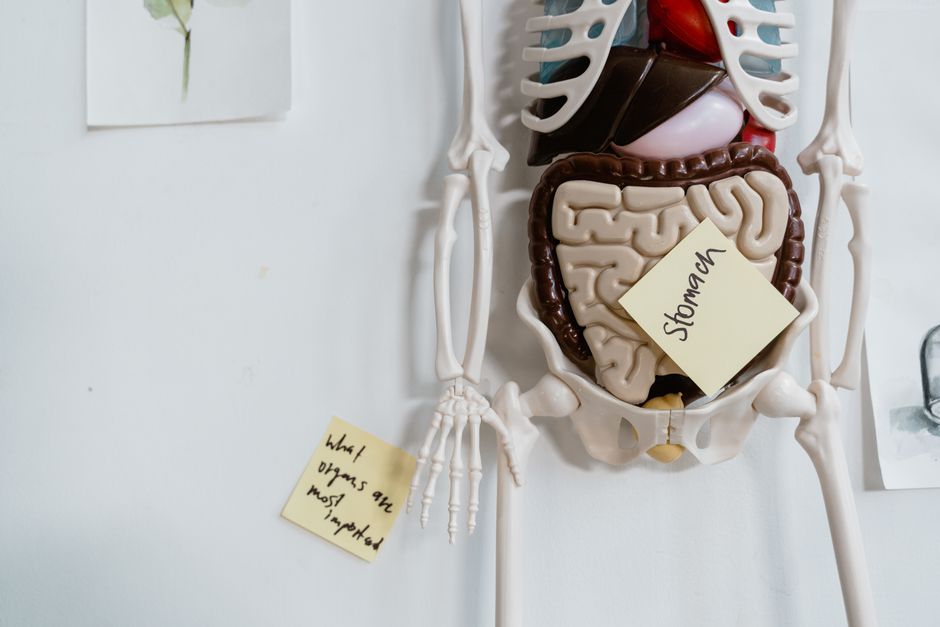
Digestion is the process your body uses to break down food into nutrients it can use for energy, growth, and cell repair. It starts in your mouth and continues through a series of organs, ending with waste leaving your body. This step-by-step journey turns a meal into fuel your cells can actually absorb.
How does digestion start in the mouth?
Digestion begins the moment you take a bite. Your teeth grind food into smaller pieces while your tongue mixes it with saliva. Saliva contains an enzyme called amylase that starts breaking down starches into simpler sugars. That is why food tastes slightly sweeter the longer you chew it.
Chewing also signals your stomach to prepare for incoming food. The more thoroughly you chew, the easier the rest of your digestive system can work. Swallowing moves the chewed food — now called a bolus — into your esophagus, a muscular tube that pushes it toward your stomach.
What happens in the stomach?
Your stomach mixes the food with strong gastric juices. These juices contain hydrochloric acid and an enzyme called pepsin. The acid kills most bacteria that enter with food and activates pepsin, which starts breaking down proteins into smaller chains called peptides.
Muscular contractions in the stomach churn everything together, turning the solid food into a semi-liquid mixture called chyme. This process takes about two to four hours after a meal. The stomach gradually releases chyme into the small intestine through a valve called the pyloric sphincter. That valve prevents too much chyme from entering the small intestine at once.
How does the small intestine digest food?
The small intestine is where most digestion and nutrient absorption happen. It is about 20 feet long in adults and lined with tiny finger-like projections called villi. These villi increase the surface area for absorption.
When chyme enters the small intestine, it mixes with bile from the gallbladder and pancreatic juices from the pancreas. Bile breaks down fats into smaller droplets, a process called emulsification. Pancreatic enzymes continue breaking down proteins, carbohydrates, and fats into their simplest forms: amino acids, simple sugars, and fatty acids.
The cells on the villi then absorb these nutrients. Sugars and amino acids go directly into the bloodstream. Fatty acids are packaged into tiny particles called chylomicrons and enter the lymphatic system before reaching the blood. This whole process — from stomach to small intestine — usually takes three to five hours.



What role does the large intestine play?
By the time food reaches the large intestine — also called the colon — most nutrients have already been absorbed. What remains is mostly water, fiber, and undigested food particles. The large intestine absorbs most of the remaining water and electrolytes, turning the liquid residue into more solid stool.
Trillions of bacteria live in the colon. These gut bacteria break down some of the leftover fiber and produce certain vitamins, including vitamin K and some B vitamins. This part of the digestion process can last 12 to 48 hours. The stool then moves to the rectum, where it is stored until elimination.
The digestion process timeline: how long does it take?
From your first bite to the final exit, the entire digestion process usually takes anywhere from 24 to 72 hours. The exact timing depends on what you eat, your metabolism, and individual differences. High-fat meals tend to slow stomach emptying, while high-fiber foods can speed passage through the colon.
Small intestine transit takes about three to five hours. Colon transit is variable, often 12 to 48 hours. If you eat a meal that includes a marker like corn, you may see it in the stool within 24 hours — that is normal.
What other organs help the digestion process?
Your liver, pancreas, and gallbladder do not interact directly with food, but they are essential for digestion. The liver produces bile, which is stored in the gallbladder and released into the small intestine to help digest fats. The pancreas makes many digestive enzymes and also releases bicarbonate to neutralize stomach acid so the small intestine’s enzymes can work properly.
These organs can be affected by conditions like gallstones or pancreatitis, which disrupt digestion. Keeping these organs healthy — through a balanced diet, limited alcohol, and maintaining a healthy weight — supports the entire process.
How to support your digestion process naturally
Some habits can help your digestive system work smoothly. Eating slowly and chewing food thoroughly gives enzymes more time to start breaking down food. Drinking enough water keeps the colon from absorbing too much water, which helps prevent constipation.
Fiber from fruits, vegetables, and whole grains feeds beneficial gut bacteria and adds bulk to stool. Regular physical activity helps move food through the colon more quickly. Probiotic foods like yogurt and fermented vegetables can support a healthy gut microbiome, though the evidence for specific benefits varies by person and product.
If you experience persistent digestive symptoms like bloating, pain, or changes in bowel habits, speak with a healthcare provider. These symptoms can sometimes signal an underlying condition that needs evaluation.
Frequently Asked Questions
What is the digestion process in simple terms?
Digestion breaks food into small nutrients your body can absorb. It starts in your mouth and continues through your stomach, small intestine, and large intestine until waste leaves your body.
How long does the digestion process take?
Complete digestion usually takes 24 to 72 hours. The exact time depends on the type of food and your individual metabolism.
Which organs are involved in the digestion process?
The main organs are the mouth, esophagus, stomach, small intestine, large intestine, and rectum. The liver, pancreas, and gallbladder also help by producing enzymes and bile.
What foods are hardest to digest?
High-fat and fried foods delay stomach emptying. Some people have trouble digesting beans, cruciferous vegetables, or dairy due to individual sensitivities or enzyme deficiencies.
