
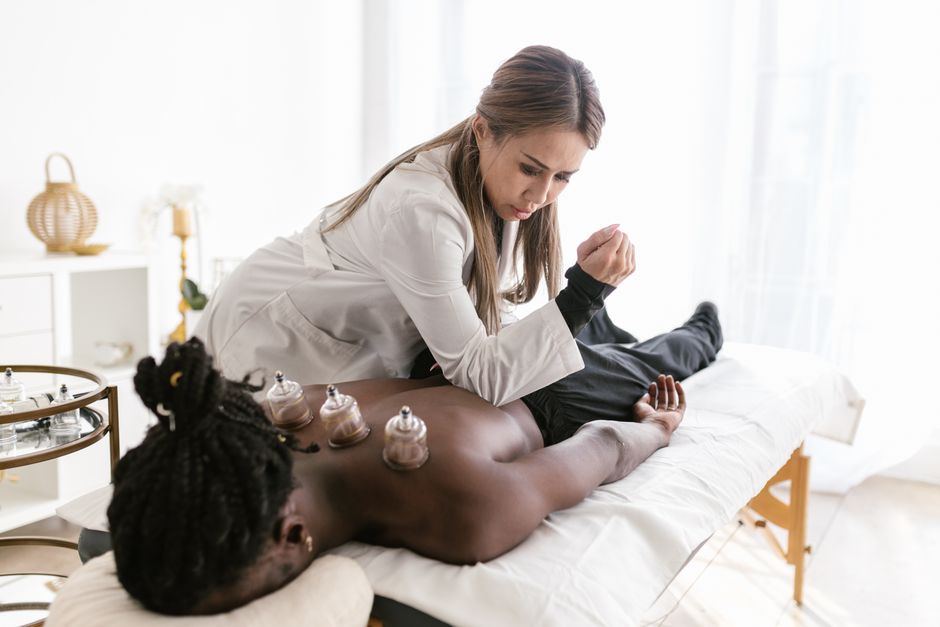
Cupping massage is a form of manual therapy that uses suction to lift the skin and underlying tissue away from the body. A practitioner places cups on the skin and creates a vacuum inside them, either with heat or a mechanical pump. The suction pulls tissue upward rather than pressing down, which is the opposite of what happens during a traditional massage.
People seek it out mainly for muscle tightness, back pain, and recovery after exercise. It has been used in traditional Chinese medicine for centuries and has more recently appeared in sports and wellness settings. The evidence for it is a mix of promising findings and genuine uncertainty, which this article will lay out honestly.
What Is Cupping Massage and How Does It Work?
The physical mechanism is straightforward. A cup is placed on the skin and the air inside is removed or heated, creating negative pressure. That suction draws blood toward the surface, lifts the fascia and muscle layers, and leaves the characteristic circular marks that fade over several days.
Practitioners describe the goal as releasing tension in tight tissue and improving local blood flow. Whether the suction produces lasting change in the muscle itself, or whether the benefit comes largely from the nervous system’s response to the sensation, is not fully settled. Some researchers argue that much of the reported relief is a placebo effect, and that position is not unreasonable given how hard it is to blind a treatment that leaves visible marks.
There are two main approaches:
- Dry cupping. Cups stay in one place or are slid across oiled skin. No cutting of the skin is involved.
- Wet cupping. The skin is lightly scratched before suction, and a small amount of blood is drawn into the cup. This is a different procedure with different risks and is not the same as the massage-style dry cupping most people mean.
Most spa and sports settings offer dry cupping. Wet cupping is a clinical procedure and should only be done by someone trained in it.
What Is Cupping Massage Used For?
The most common reason people try it is musculoskeletal pain, particularly in the back, neck, and shoulders. It also shows up in sports recovery routines, where athletes use it between training sessions.
Some studies suggest cupping may reduce pain intensity in people with chronic neck or back pain, at least in the short term. The quality of that research is a real limitation. Many trials are small, blinding is difficult or impossible, and follow-up periods are often short. That does not mean the effect is fake. It means the evidence is not strong enough to say cupping reliably outperforms other treatments.
A 2018 analysis published in BMJ Open reviewed the available trials and found that most had a high risk of bias. The authors did not conclude cupping was ineffective. They concluded that better-designed studies are needed before firm claims can be made.
Other reported uses include:
- Relieving trigger points and muscle knots
- Reducing perceived soreness after exercise
- General relaxation and stress relief
- Adjunct treatment alongside physical therapy
It is worth being clear about one thing. Cupping is not a treatment for any underlying disease. It does not remove toxins, despite what marketing sometimes claims. The body clears waste products through the liver and kidneys, and no cupping technique speeds that process up. That framing is a marketing narrative, not a physiological one.
What Do the Marks Look Like and Why Do They Happen?
The round marks left by cupping are caused by capillaries under the skin breaking from the suction. They range from light pink to deep purple, depending on how much pressure was used and how the person’s skin responds.
They typically fade within a few days to about two weeks. Darker marks do not mean more toxins were released, which is a claim that circulates widely and has no supporting evidence. Darker marks generally mean more suction was applied or the person bruises easily.
If you take blood thinners, have a bleeding disorder, or have thin or fragile skin, the marks may be more pronounced and last longer. That is a reason to discuss it with a clinician first, not a reason to assume something went wrong.



Is Cupping Massage Safe?
For most healthy adults, dry cupping is generally well tolerated. The main side effects are temporary marks, mild soreness, and occasional dizziness during the session.
Serious complications are uncommon but documented. These include skin burns when heat is used to create the vacuum, and infections when equipment is not properly cleaned. Burns are more likely with fire cupping, where a flame is used to remove oxygen from the cup. Mechanical pump cups avoid that specific risk.
People who should be cautious or avoid it include:
- Anyone taking blood-thinning medication
- People with bleeding disorders or easy bruising
- Those with active skin infections, wounds, or rashes in the treatment area
- Pregnant women, particularly over the abdomen and lower back, unless cleared by their clinician
- People with certain heart conditions, where the evidence on safety is limited
No clinical guidelines currently exist that define who should and should not receive cupping. The cautions above reflect general clinical judgment rather than formal consensus recommendations.
How Does Cupping Compare to Other Treatments?
This is where honesty matters most. Cupping has not been shown to be more effective than established treatments for the conditions people most often use it for.
For chronic low back pain, for example, exercise therapy, physical therapy, and cognitive behavioral approaches have stronger evidence behind them. Cupping may provide short-term relief for some people, but it has not been demonstrated to outperform these options in well-controlled trials.
That does not make it useless. Some people report meaningful relief, and for them it may be a reasonable addition to a broader plan. The key word is addition. It should not replace treatments with stronger evidence, particularly for conditions that need active management.
If you are considering cupping, it is reasonable to think of it as a complementary option rather than a primary one. And if a practitioner tells you it will cure a disease or detoxify your body, that is a signal to be skeptical of everything else they say.
What Should You Expect During a Session?
A typical session lasts between five and twenty minutes for the cups themselves, though the full appointment may run longer. The practitioner may leave cups in place or slide them across the skin with oil.
The sensation is usually described as a tight pulling or warmth. It should not be sharply painful. If it is, tell the practitioner so they can reduce the suction.
Afterward, the marks appear within minutes and are not a sign of injury in the usual sense. They are expected. Mild tenderness in the area for a day or two is also common.
Drinking water afterward is often recommended, but there is no evidence that it affects the marks or speeds recovery. It is a harmless suggestion, not a physiological requirement.
Does Insurance Cover Cupping Massage?
In the United States, most health insurance plans do not cover cupping as a standalone treatment. Some plans may cover it when performed by a licensed provider as part of physical therapy or acupuncture, but coverage varies widely.
Medicare generally does not cover cupping. Medicaid coverage depends on the state. If cost is a factor, it is worth calling your plan directly rather than assuming.
Because cupping is often offered in spa settings, it is frequently paid for out of pocket. Prices vary by location and provider.
What Does the Research Actually Show?
The honest summary is that cupping shows some promise for short-term pain relief, but the evidence base is weak. Most studies are small, and blinding is essentially impossible because both the practitioner and the participant know cupping is being performed.
That does not automatically invalidate the findings. It does mean that reported benefits may partly reflect expectation, relaxation, and the attention of a practitioner. Those effects are real to the person experiencing them, but they are not the same as a proven biological effect of suction on muscle tissue.
Researchers continue to study cupping, particularly in sports recovery and chronic pain. Until larger, better-controlled trials are done, claims about how well it works should be treated with appropriate caution.
Frequently Asked Questions
What is cupping massage good for?
It is most often used for short-term relief of muscle tightness and pain in the back, neck, and shoulders. Some studies suggest benefit, but the evidence is limited and the trials are generally small.
How long do cupping marks last?
Most marks fade within a few days to about two weeks, depending on how much suction was used and how your skin responds. Darker marks do not indicate more toxins were released.
Is cupping massage safe?
For most healthy adults, dry cupping is generally well tolerated, with temporary marks and mild soreness being the most common effects. People on blood thinners, with bleeding disorders, or with skin infections in the area should check with a clinician first.
Does cupping actually remove toxins?
No. The body clears waste products through the liver and kidneys, and no evidence shows cupping speeds that process. Claims about detoxification are marketing, not physiology.
