
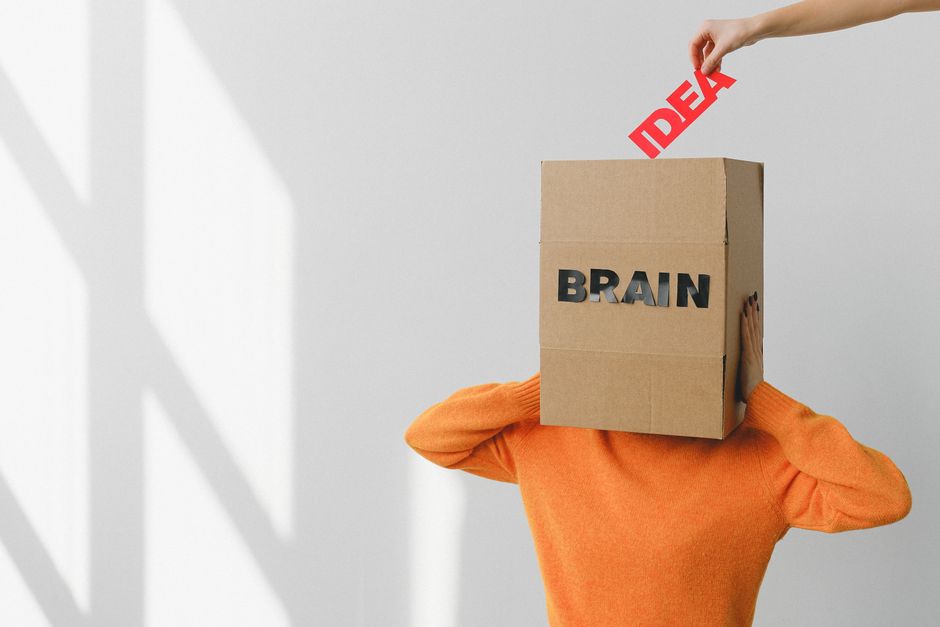
Creative intelligence is the ability to generate new and useful ideas. In psychology, it is one of the several types of intelligence that researchers study. It involves thinking in original ways to solve problems or create something valuable.
How Do Psychologists Define Creative Intelligence?
Psychologists define creative intelligence as the capacity to think of novel solutions to problems. It goes beyond simply recalling facts or following learned rules. Instead, it requires combining existing knowledge in new ways.
This concept is part of the broader study of intelligence. While traditional views focused on logical and verbal skills, modern psychology recognizes multiple forms of intelligence. Creative intelligence is one of them. It is often linked to divergent thinking — the ability to come up with many different ideas from a single starting point.
Some researchers include creative intelligence within Robert Sternberg’s triarchic theory of intelligence. In that model, creative intelligence is one of three types, along with analytical and practical intelligence. However, other theorists, like Howard Gardner, treat creativity as a separate dimension within his multiple intelligences framework.
What Is the Difference Between Creative Intelligence and General Intelligence?
General intelligence, often called g factor, refers to overall mental ability. It includes reasoning, problem-solving, and learning speed. Creative intelligence is different. It focuses on originality and adaptability rather than on how quickly someone learns or solves standard problems.
Standard IQ tests measure general intelligence. They assess memory, vocabulary, and logical reasoning. These tests do not directly measure creative intelligence. A person can score high on an IQ test but not be particularly creative. Likewise, someone with average general intelligence can show high creative intelligence.
Research shows only a modest correlation between IQ and creative output after a certain threshold. Once a person has enough general intelligence to understand a domain, further IQ gains do not guarantee more creativity.
What Are the Key Components of Creative Intelligence?
Psychologists break creative intelligence into several components. The two most important are divergent thinking and convergent thinking.
Divergent thinking is the ability to generate many ideas. For example, thinking of all the possible uses for a paperclip. It involves fluency (many ideas), flexibility (different categories), and originality (uncommon ideas).
Convergent thinking is the ability to narrow down options to find the best solution. It requires logic and evaluation. Creative intelligence uses both processes — first coming up with many possibilities, then selecting the most effective one.
Other components include:
- Problem sensitivity — noticing that a problem exists
- Fluency — producing many ideas quickly
- Flexibility — shifting between different approaches
- Originality — creating ideas that are unusual yet appropriate
- Elaboration — building on ideas to make them more detailed
These components are not fixed traits. They can vary depending on the situation and the person’s knowledge in a specific field.




How Is Creative Intelligence Measured?
Measuring creative intelligence is more complex than measuring general intelligence. There is no single accepted test. However, psychologists use several methods that capture different aspects.
The most common tool is the Torrance Tests of Creative Thinking (TTCT). These tests ask people to generate ideas in response to verbal or visual prompts. For example, a person might be given a shape and asked to draw a picture from it, then add details. The responses are scored for fluency, flexibility, originality, and elaboration.
Other methods include:
- The Alternative Uses Test — listing as many uses for a common object as possible
- Remote Associates Test — finding a common word that links three seemingly unrelated words
- Creative Achievement Questionnaire — self-reported measures of real-world creative accomplishments in fields like art, science, and writing
These tests have limitations. They assess only certain cognitive processes, not the full complexity of creative intelligence. Real-world creative output depends on motivation, environment, and domain-specific knowledge, which tests cannot fully capture.
Can Creative Intelligence Be Developed?
Yes, research consistently shows that creative intelligence can be improved. Unlike general intelligence, which is relatively stable, creative thinking skills respond to training and practice.
Many schools and workplaces use programs to boost creative thinking. These programs often teach techniques like brainstorming, mind mapping, and lateral thinking. Studies have found that such training increases divergent thinking scores, especially in fluency and flexibility.
Encouraging a growth mindset — believing that abilities can be developed — also helps. People who see creativity as a skill they can grow tend to take more risks and persist through difficulties.
Environments that support curiosity and reduce fear of failure foster creative intelligence. When people feel safe to explore and make mistakes, they generate more original ideas.
However, some aspects of creative intelligence may have a genetic component. Twin studies suggest that certain personality traits linked to creativity, such as openness to experience, are partly heritable. But the environment plays a major role in whether those traits turn into actual creative achievements.
How Does Creative Intelligence Relate to Personality?
Certain personality traits are consistently linked to higher creative intelligence. The most important is openness to experience — a tendency to be curious, imaginative, and willing to try new things. People high in openness tend to have more divergent thinking and produce more original work.
Another related trait is tolerance for ambiguity. Creative people often work on problems that do not have clear answers. They are comfortable with uncertainty and can hold multiple possibilities in mind.
Risk-taking is also common. Creating something new often involves failure. People with high creative intelligence tend to accept that risk as part of the process.
Not all creative people have the same personality. Some are introverted, some extroverted. But openness to experience appears across many studies as the strongest personality predictor of creative output.
What Is Creative Intelligence in Psychology? — A Summary
Creative intelligence is the mental ability to produce original and useful ideas. It is distinct from general intelligence and relies on processes like divergent and convergent thinking. It can be measured with specific tests, though no single test captures it fully. Importantly, it can be developed through practice and supportive environments.
Understanding creative intelligence helps psychologists explain how people innovate and solve problems in new ways. It also has practical applications in education, business, and personal growth. By recognizing that creativity is a type of intelligence, we can better appreciate and nurture it.
Frequently Asked Questions
Can creative intelligence be improved?
Yes, research shows that creative thinking skills can be strengthened with practice and training. Techniques like brainstorming, mind mapping, and lateral thinking exercises help.
Is creative intelligence the same as creativity?
Psychologists often use the terms similarly, but creative intelligence refers specifically to the cognitive ability to generate original ideas. Creativity is a broader concept that also includes motivation, environment, and real-world output.
What is an example of creative intelligence?
Finding a new way to reuse an old object, such as turning a glass bottle into a candle holder, is an example. It involves seeing a common item in a new light and solving a practical problem.
Does IQ measure creative intelligence?
No, standard IQ tests do not directly measure creative intelligence. They assess logical reasoning, memory, and verbal skills, not the ability to generate novel ideas.
