
What Exactly Happens in the Brain When We Get Scared?
Your brain does not wait for you to think before reacting to danger. The amygdala, a small almond-shaped structure deep in the brain, acts as your alarm system. It scans everything you see and hear for possible threats.
When the amygdala detects something dangerous, it sends a signal to your body within milliseconds. Your heart beats faster. Your breathing quickens. Your muscles tense up. This is called the fight-or-flight response.
The National Institute of Mental Health explains that this response is automatic. You cannot control it with conscious thought. It happens before your rational brain even knows what is happening.
Your prefrontal cortex, the thinking part of your brain, gets the message a split second later. This is when you can decide if the threat is real. But by then, your body is already ready to act.
This system saved our ancestors from predators. Today, it can trigger the same response to a difficult email or a crowded room.
What Makes People Scared The Psychology Of Fear: The Two Main Types
Psychologists divide fear into two categories. The first is innate fear. These are fears you are born with. Research shows that humans are naturally afraid of loud noises, falling, and sudden movements. These fears helped our ancestors survive.
The second type is learned fear. You learn to be afraid of things through experience. If a dog bit you as a child, your brain may associate dogs with pain. Every time you see a dog, your amygdala sounds the alarm.
Learned fears can also come from watching others. If you saw your parent react with terror to a spider, you might learn to fear spiders too. This is called observational learning.
Some studies suggest that humans are also biologically prepared to fear certain things more easily. Snakes, spiders, heights, and darkness are common fears across cultures. The theory is that these were genuine dangers for early humans.
But most modern fears are learned. Public speaking, social rejection, and failure are not life-threatening. Your brain treats them the same way it treats a predator.
What Does Research on Fear Conditioning Show?
A well-known study from the 1920s called the Little Albert experiment showed how fear is learned. Researchers conditioned a baby to fear a white rat by pairing it with a loud, scary sound. The baby eventually feared anything fuzzy or white, including a rabbit and a Santa Claus beard.
Modern research has refined this understanding. The amygdala does not just learn fear. It also stores fear memories. These memories can last a lifetime.
Research published in the journal Nature Neuroscience found that fear memories are stored in specific brain cells called engram cells. When you encounter something that reminds you of a past fear, these cells reactivate. You feel scared all over again.
This explains why a smell, a sound, or a place can trigger panic years after a traumatic event. The brain does not forget fear easily.
But the same research shows that fear memories can change. When you recall a fear memory, your brain opens a short window where the memory can be updated. Therapies like exposure therapy use this window to help people learn new, safer associations.





How Anxiety Is Different From Fear
Fear and anxiety are not the same thing, though people use the words interchangeably. Fear is a response to a real, immediate threat. A car swerving toward you causes fear. Your body reacts right now.
Anxiety is a response to a future, uncertain threat. You worry about something that might happen. Your body reacts the same way, but there is no immediate danger.
The American Psychological Association defines anxiety as anticipation of a future concern. Fear is an emotional response to an immediate threat.
This difference matters for treatment. Fear usually goes away when the threat is gone. Anxiety can linger for weeks, months, or years. It creates a constant state of alertness that wears your body down.
Chronic anxiety can lead to physical health problems. High blood pressure, digestive issues, and weakened immune function are linked to long-term anxiety. The CDC reports that nearly 1 in 5 US adults live with an anxiety disorder.
If your fear response is constantly active without a real threat, it is worth talking to a doctor or therapist. This is not something you have to manage on your own.
What Are Common Fears and How Do They Develop?
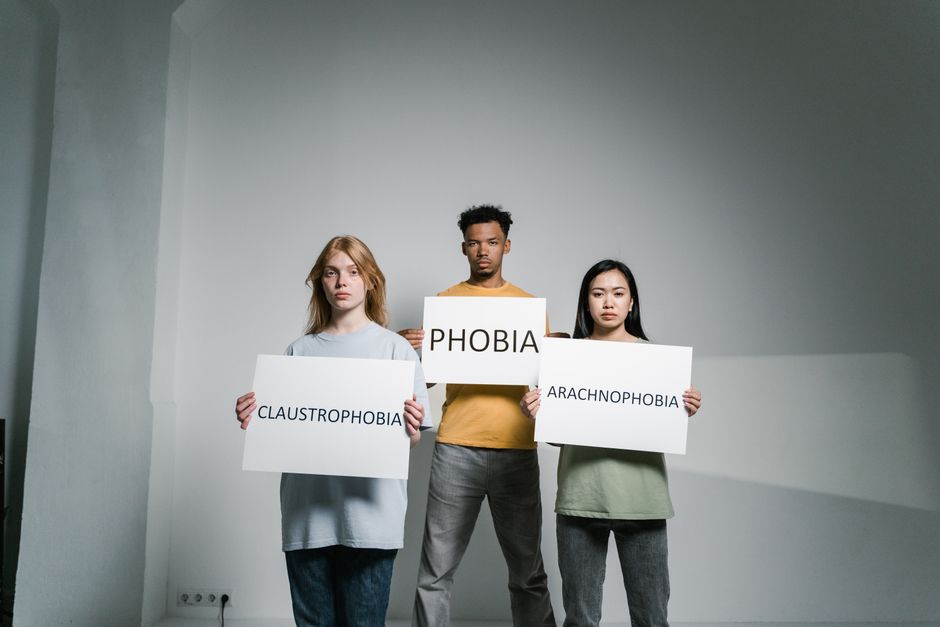
The most common fears in the United States include public speaking, heights, spiders, snakes, and flying. The National Institute of Mental Health estimates that specific phobias affect about 12.5% of US adults at some point in their lives.
Here is how these fears typically develop:
- Direct experience: You had a bad experience with the thing you now fear
- Vicarious learning: You saw someone else react with fear to something
- Informational learning: You were told something is dangerous, even if it is not
- Evolutionary preparedness: Your brain is wired to fear certain things more easily
Most phobias start in childhood or adolescence. But they can develop at any age. A traumatic event in adulthood can create a new fear that lasts for years.
The good news is that fears are treatable. Cognitive behavioral therapy (CBT) is one of the most effective approaches. It helps you identify the thoughts behind your fear and test whether they are accurate.
Exposure therapy is another well-researched treatment. You gradually face what you fear in a safe, controlled way. Over time, your brain learns that the thing is not actually dangerous.
How Fear Affects Your Body and Health Over Time
Short-term fear is not harmful. It can even be helpful. It sharpens your focus and gives you energy to act. But long-term fear takes a toll on your body.
When you are afraid, your body releases stress hormones like cortisol and adrenaline. These hormones are meant for short bursts of action. When they stay high for weeks or months, problems develop.
Chronic fear can cause:
Research published in JAMA found that people with high levels of fear and anxiety have a higher risk of heart disease. The constant stress damages blood vessels over time.
Fear also affects how you make decisions. When you are scared, you tend to focus on the worst possible outcome. You avoid risks, even when the risks are small. This can keep you from trying new things or pursuing opportunities.
The good news is that your brain can change. This is called neuroplasticity. With practice, you can train your brain to react less strongly to things that trigger fear. Therapy, mindfulness, and gradual exposure all help rewire the fear response.
Frequently Asked Questions
Can fear be completely eliminated?
No, fear is a normal and necessary emotion. The goal is not to eliminate fear but to manage it so it does not control your life.
Is it possible to be born without fear?
There is a rare condition called Urbach-Wiethe disease that damages the amygdala. People with this condition cannot feel fear, but this puts them in danger because they do not avoid real threats.
Why do some people enjoy being scared?
Some people enjoy the rush of adrenaline from scary movies or haunted houses. Their brain releases dopamine after the threat passes, which creates a feeling of relief and pleasure.
How long does it take to overcome a phobia?
Treatment length varies. Some people see improvement in 8 to 12 sessions of cognitive behavioral therapy. Others may need longer treatment depending on the severity of the fear.
