
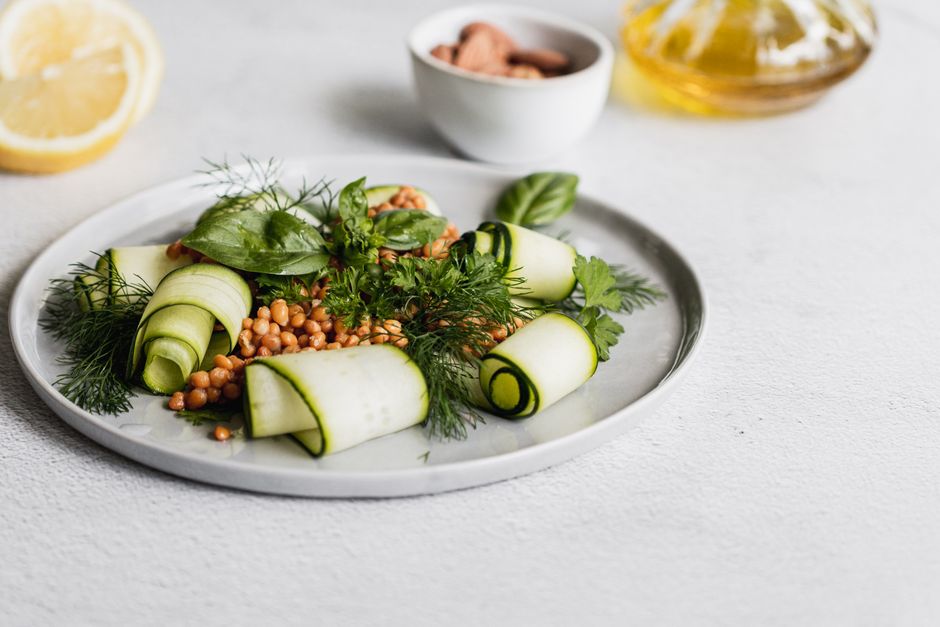
Couscous is a food made from tiny steamed balls of semolina flour, which is a coarse flour ground from durum wheat. It is a staple dish in North African cuisine, particularly in Morocco, Algeria, Tunisia, and Libya. While many people treat it as a grain, it is technically a type of pasta, because it is made from wheat flour and water, just shaped into small granules.
How Is Couscous Made?
Traditional couscous is made by hand. Workers sprinkle semolina flour with salted water and roll it with their hands until small granules form. These granules are then coated with dry flour to keep them separate. The process is repeated several times to create uniform sizes.
After shaping, the couscous is steamed in a special pot called a couscoussier. The pot has a perforated bottom that fits over a simmering stew. This allows the couscous to absorb the steam and flavors from the dish cooking below. After the first steaming, the couscous is spread out, broken up, and steamed a second time to ensure a light, fluffy texture.
Modern commercial couscous is made by machine. The semolina is mixed with water and processed into granules, then dried. This is the type most people buy in boxes at the grocery store. It cooks in about five to ten minutes, whereas traditional handmade couscous can take over an hour to prepare.
What Does Couscous Taste Like?
Couscous has a mild, nutty flavor and a soft, fluffy texture. On its own, it is fairly neutral. It does not have a strong taste, which is why it pairs so well with bold ingredients like spices, herbs, roasted vegetables, and meats.
The texture depends on how it is cooked. Properly prepared couscous is light and separate, with each granule distinct. Overcooked or poorly prepared couscous becomes sticky, clumpy, and gummy. The size of the granules also matters. Standard couscous is small, while Israeli couscous (also called pearl couscous) is larger and chewier. Lebanese couscous is even larger, about the size of a pea.
Is Couscous Healthy?
Couscous is a source of complex carbohydrates and provides some protein and fiber. A typical serving of cooked couscous contains about 176 calories per cup, with roughly 36 grams of carbohydrates and 6 grams of protein. It is low in fat and contains small amounts of several minerals, including selenium and magnesium.
Because it is made from wheat, couscous is not gluten-free. People with celiac disease or gluten sensitivity should avoid it. For those who can eat gluten, couscous can be part of a balanced diet, but it is not a nutritional powerhouse. Whole wheat couscous retains more fiber than regular couscous, but even that has less fiber than whole grains like quinoa, brown rice, or barley.





What Is the Difference Between Couscous and Quinoa?
People often compare couscous and quinoa because they look similar and are used in similar dishes. The differences are significant.
Couscous is a wheat product, technically a pasta. Quinoa is a seed from a plant related to spinach. Quinoa is naturally gluten-free, while couscous is not.
Nutritionally, quinoa generally has more protein and fiber than couscous. A cup of cooked quinoa provides about 8 grams of protein and 5 grams of fiber, compared to couscous’s 6 grams of protein and 2 grams of fiber. Quinoa also contains all nine essential amino acids, making it a complete protein, while couscous does not.
Neither food is inherently better. The choice depends on dietary needs and personal preference. If you need gluten-free options, quinoa is the clear choice. If you want a mild-flavored base for a stew, couscous works well.
How Do You Cook Couscous?
Instant couscous, the most common type sold in stores, is simple to prepare. The standard ratio is one part couscous to one and a half parts boiling liquid. Pour the liquid over the couscous, cover, and let it sit for five minutes. Then fluff it with a fork.
For more flavor, use broth instead of water. You can also add a little olive oil or butter before adding the liquid. A pinch of salt is usually enough, since the couscous absorbs flavor from whatever it is served with.
Traditional couscous requires a different method. It must be moistened, steamed, broken up, and steamed again. This process takes time and practice. Most home cooks in North Africa have a dedicated couscoussier, but a steamer basket lined with cheesecloth can work as a substitute.
What Dishes Use Couscous?
In North Africa, couscous is often served as the base for a stew. The stew typically contains meat, such as lamb or chicken, and a variety of vegetables like carrots, zucchini, turnips, and chickpeas. The dish is seasoned with spices like cumin, coriander, and saffron. The stew is ladled over the couscous, and the grains absorb the sauce.
In other parts of the world, couscous is used more casually. It appears in salads with chopped vegetables, herbs, and a lemon vinaigrette. It can be served as a side dish alongside grilled fish or chicken. It also works as a stuffing for peppers or tomatoes.
Israeli couscous is often toasted in oil before cooking, which gives it a deeper, nuttier flavor. It holds up well in cold salads and is sometimes used in place of pasta in casseroles.
Is Couscous Good for Weight Loss?
Couscous can fit into a weight loss plan, but it is not a special weight loss food. It is calorie-dense compared to non-starchy vegetables, and portion size matters. A reasonable serving is about half a cup to one cup of cooked couscous.
Because couscous is low in fat and has a mild flavor, it is easy to overeat without noticing. It also lacks the protein and fiber that promote fullness. Pairing couscous with lean protein and vegetables can make the meal more satisfying.
Some evidence suggests that eating whole grains is associated with lower body weight, but couscous is not a whole grain. If weight loss is the goal, choosing higher-fiber grains like barley, farro, or quinoa may provide more satiety per calorie.
How Should You Store Couscous?
Dry couscous should be stored in an airtight container in a cool, dry place. It can last for months when stored properly. Once cooked, couscous should be refrigerated and eaten within three to five days.
Cooked couscous can be reheated in the microwave with a splash of water to restore moisture. You can also reheat it in a skillet with a little oil. Leftover couscous works well in salads, soups, or as a quick breakfast with milk and honey.
What Are the Different Types of Couscous?
There are three main types of couscous available in most markets.
- Moroccan couscous: The smallest granules. Cooks quickly and has a light, fluffy texture. This is the most common type found in grocery stores.
- Israeli couscous: Also called pearl couscous. Larger, round granules with a chewy texture. Toasted for a nutty flavor.
- Lebanese couscous: The largest type, about the size of a pea. Takes longer to cook and has a substantial, pasta-like texture.
All three are made from the same basic ingredients: semolina flour and water. The difference is the size of the granules, which affects cooking time and texture.
Is Couscous the Same as Pasta?
Yes, technically couscous is a type of pasta. Both are made from durum wheat semolina and water. The difference is in the shape and the cooking method. Pasta is typically boiled, while couscous is traditionally steamed.
This distinction matters for people with wheat allergies or celiac disease. Because couscous is wheat-based, it contains gluten and is not safe for those who must avoid it. Some gluten-free couscous alternatives exist, made from corn, millet, or other gluten-free grains, but these are not true couscous.
Frequently Asked Questions
Is couscous a grain or a pasta?
Couscous is a type of pasta made from semolina flour and water, not a grain. It is shaped into tiny granules that look like grains but are processed like pasta.
Is couscous gluten-free?
No, couscous is made from durum wheat and contains gluten. People with celiac disease or gluten sensitivity should avoid it.
How long does couscous take to cook?
Instant couscous takes about five minutes after adding boiling liquid. Traditional couscous requires steaming and can take over an hour to prepare.
Is couscous healthier than rice?
Couscous and white rice are nutritionally similar in calories and carbohydrates. Brown rice has more fiber than couscous, making it the better choice for fiber intake.
