
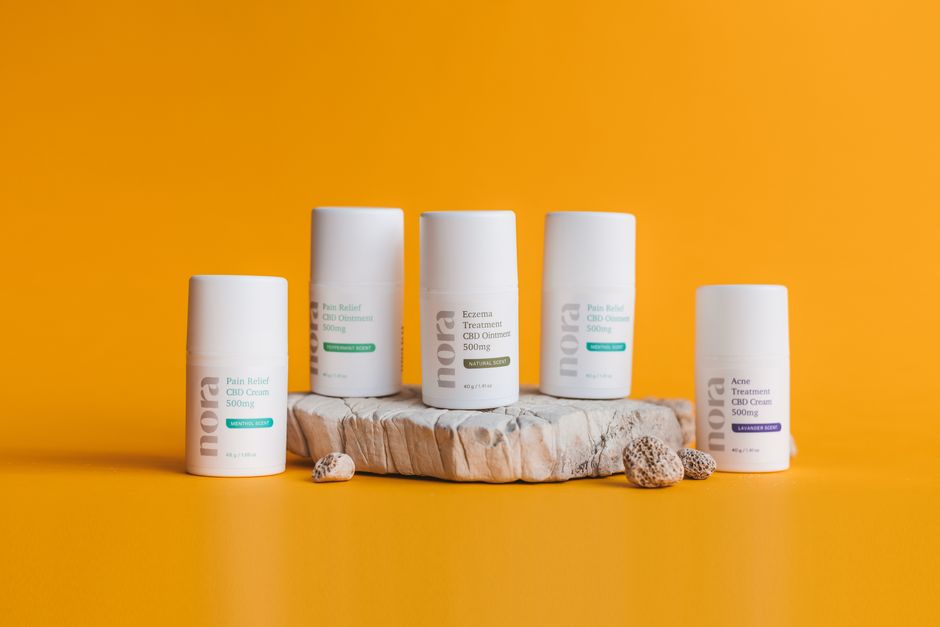
Cannabidiol, or CBD, is a compound found in the cannabis plant that does not produce a high. CBD creams are topical products that combine CBD with a carrier lotion or salve and are marketed for muscle soreness, joint discomfort, and skin recovery. Here is what research actually shows about how they work, what they can and cannot do, and how to read a label without being misled.
What Is CBD Cream and How Does It Differ From Other CBD Products?
CBD cream is a topical product. You rub it into your skin. That single fact separates it from oils, tinctures, gummies, and vapes, which are swallowed or inhaled and enter the bloodstream.
The distinction matters more than most people realize. When you swallow CBD, a meaningful amount reaches your bloodstream and can affect the whole body. When you apply it to your skin, most of it stays in the skin or never gets past the outer layer at all. Absorption into the bloodstream from a topical product is generally low, though it varies by formulation.
CBD is one of many compounds in the cannabis plant. Unlike THC, it does not cause intoxication. Products sold online and in stores are usually made with hemp-derived CBD, which by US law must contain no more than 0.3 percent THC on a dry weight basis. That threshold does not guarantee a product is free of THC, and trace amounts can accumulate with heavy use.
Creams, salves, balms, and lotions are often used interchangeably in marketing. In practice they differ mainly in their base ingredients — water-based creams absorb faster, while oil-based salves sit on the surface longer. Whether that changes how well CBD works is not well established.
How Does CBD Cream Work on the Skin?
The skin is a barrier. Its outer layer, the stratum corneum, is built to keep things out, including most drugs and chemicals. That is why topical medicines are harder to design than pills.
CBD does interact with receptors in the body known as CB1 and CB2, part of what is called the endocannabinoid system. These receptors are present in skin tissue and in nerve endings. Researchers have proposed that CBD may influence pain signaling and inflammation through these pathways.
That is a reasonable biological idea. It is not the same as proven clinical benefit. A mechanism that looks logical in a lab dish does not always translate into a real effect when a cream is rubbed on a sore knee.
There is also a practical problem. CBD is a large, greasy molecule that does not pass easily through skin. Formulators add penetration enhancers to help it cross, but how much CBD actually reaches deeper tissue in a real person using a real product is largely unknown.
One more point that gets lost in marketing: much of the soothing sensation people feel from a CBD cream may come from the other ingredients. Menthol, camphor, and capsaicin create cooling or warming feelings that can distract from pain. That effect is real, but it is not the CBD doing it.
What Does the Evidence Show for Pain and Recovery?
The evidence for topical CBD is thin. Most human studies have looked at oral CBD, not creams, and even those have focused on specific conditions like certain forms of epilepsy, where a prescription CBD product has shown clear benefit.
For pain, the picture is mixed. Some small studies suggest CBD may reduce certain types of pain, but these trials are often short, use different doses, and measure different outcomes. Results vary, and many have not been repeated in larger groups.
For topical CBD specifically, most of what exists is small, short-term, and not designed to prove cause and effect. A few studies have looked at CBD creams for joint pain or nerve discomfort, but the numbers of participants are small and the results are not consistent enough to call this settled.
For muscle recovery after exercise, the evidence is even weaker. No large human trials have confirmed that rubbing CBD cream on a muscle speeds healing, reduces soreness in a meaningful way, or improves performance. Claims about faster recovery are largely marketing at this point.
For skin conditions, some research has explored CBD for acne and inflammation, but again mostly in lab studies or very small human trials. No clinical evidence currently confirms that CBD cream treats eczema, psoriasis, or scarring.
It is fair to say that topical CBD is not harmful for most people when used as directed. It is not fair to say it is proven to work.

What Should You Look For on a CBD Cream Label?
Labels are where a lot of the confusion lives. A few practical points help separate a reasonable product from a vague one.
- Total CBD in milligrams. A number like “500 mg” tells you how much CBD is in the whole container, not per application. A large tub with 500 mg may deliver very little per use.
- Third-party testing. Reputable brands publish a certificate of analysis from an independent lab. This confirms what is actually in the product and whether it contains contaminants.
- THC content. Even hemp-derived products can contain trace THC. If you are drug-tested for work or are sensitive to THC, this matters.
- Other active ingredients. Menthol, camphor, lidocaine, and capsaicin are common. These have their own effects and their own cautions.
- Full-spectrum vs. isolate. Full-spectrum contains other plant compounds including trace THC. Isolate is CBD alone. Whether one works better is not established.
Be cautious with products that list “hemp extract” without saying how much CBD is present. That wording can hide a very small amount.
Are There Risks or Side Effects?
Topical CBD is generally well tolerated. The most common issues are skin reactions — redness, itching, or irritation — which are often caused by the base ingredients rather than the CBD itself.
Because absorption into the bloodstream is low, systemic effects are unlikely from a cream. Still, some CBD can get through, especially with repeated use over large areas or on broken skin. That raises a few real concerns.
CBD can interact with certain medications. It affects some liver enzymes that process drugs, which means it could change how your body handles medicines including some blood thinners and seizure medications. This is better documented for oral CBD, but it is worth mentioning to your doctor if you use CBD cream over large areas regularly.
Pregnant and breastfeeding women should be cautious. No clinical guidelines currently establish a safe dose of CBD for these groups, and it is generally recommended to avoid it.
Keep CBD creams away from the eyes, open wounds, and mucous membranes. If you have a skin condition, check with a clinician before applying anything new.
How Does CBD Cream Compare to Other Topical Pain Products?
It helps to see CBD cream next to options that have more evidence behind them. The table below is a general comparison, not a prescription.
| Product type | Typical active ingredient | Evidence level |
|---|---|---|
| CBD cream | Cannabidiol | Limited, mostly small studies |
| Menthol gel | Menthol | Well established for cooling relief |
| Capsaicin cream | Capsaicin | Established for some pain types |
| NSAID gel | Diclofenac | Established for localized pain |
| Lidocaine patch | Lidocaine | Established for certain pain |
The takeaway is not that CBD cream is useless. It is that other topical options have stronger evidence for pain relief. If your goal is proven relief, those are worth discussing with a clinician first.
Some people find CBD cream pleasant and report feeling better. That experience is real to them. It just does not prove the CBD caused it, since placebo effects and the other ingredients in the cream can produce similar feelings.
Frequently Asked Questions
Does CBD cream actually work for pain?
The evidence is limited and mixed, with most studies being small and short-term. Some people report relief, but no large human trials have confirmed that CBD cream reliably reduces pain.
Can CBD cream get you high?
No, CBD does not cause intoxication. However, hemp-derived products can contain trace THC, so heavy use of a full-spectrum cream could theoretically show up on a drug test.
How long does CBD cream take to work?
There is no established timeline, and effects vary widely between people and products. Any sensation you feel within minutes is more likely from ingredients like menthol than from CBD itself.
Is CBD cream safe to use every day?
For most people, occasional topical use is well tolerated, with skin irritation being the main concern. Regular use over large areas is less studied, and it is worth checking with a doctor if you take other medications.
