
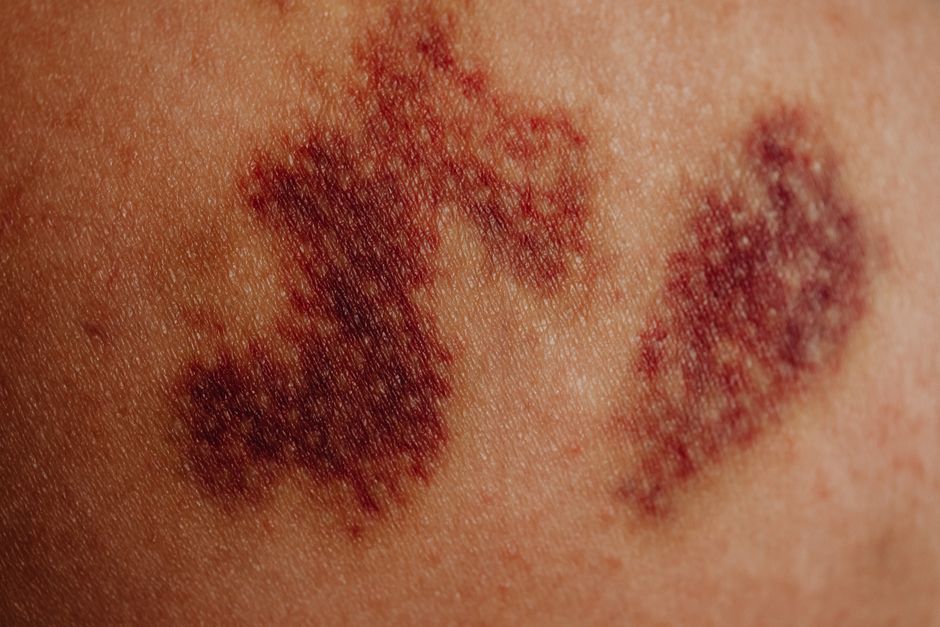
A bone bruise is an injury to the bone that damages the small blood vessels inside it, causing bleeding and swelling within the bone tissue itself. The bone is not broken, but it is injured. Think of it as the bone equivalent of a deep bruise on your skin — except this one sits inside hard tissue, which is why it can hurt far longer and far more than you might expect.
Bone bruises are sometimes called bone contusions. They show up most often after a fall, a sports collision, or a joint injury like a sprain. Because the outer shell of the bone stays intact, a standard X-ray often looks normal. That is one reason bone bruises are frequently missed or mistaken for something less serious.
What Is a Bone Bruise and How Does It Differ From a Fracture?
A fracture is a break in the bone. A bone bruise is damage to the bone without a break. The distinction matters because the two injuries are treated differently and heal on different timelines.
Bone is living tissue. Under its hard outer layer, called cortical bone, there is a spongy inner structure called trabecular bone. That spongy area contains tiny blood vessels and marrow. When force hits the bone hard enough to injure it but not hard enough to crack it, those small vessels can tear. Blood leaks into the bone tissue. Fluid builds up. The area becomes swollen and painful from the inside out.
There are three general types of bone bruises, based on where the damage sits:
- Subperiosteal — bleeding just under the outer membrane that covers the bone
- Intracortical — bleeding within the hard outer layer of the bone
- Subchondral — bleeding in the bone right beneath the cartilage surface of a joint
Subchondral bruises get the most medical attention. They often happen alongside ligament injuries, especially in the knee. Because they sit directly under the joint cartilage, researchers have studied whether they contribute to longer-term joint problems. The evidence here is mixed and still developing. Some studies suggest a link between certain subchondral bruises and later cartilage changes, but this is not firmly established, and not every bone bruise leads to lasting joint damage.
What Causes a Bone Bruise?
The cause is direct force or sudden compression on a bone. The bone absorbs more stress than it can handle in that moment, but not enough to break.
Common situations include:
- Falls onto a hard surface
- Sports collisions or hard landings
- Twisting injuries that stretch and load a joint
- Direct impact from an object
- Overuse from repeated high-impact activity
Knee injuries are a frequent source. When the knee is forced into an awkward position, the bones can knock against each other, bruising the surfaces where they meet. This often happens at the same time as an ACL or meniscus injury, which is why doctors sometimes find a bone bruise while investigating a larger problem.
One detail worth knowing: a bone bruise is not the same as a stress fracture. A stress fracture is a tiny crack that develops from repeated overload over time. A bone bruise is usually the result of a single event. The two can feel similar, and both can be hard to see on a plain X-ray, but they are different injuries.
What Does a Bone Bruise Feel Like?
The main symptom is pain that is deeper and more persistent than a typical muscle bruise. It often hurts at rest, not just when you move. That is a key difference. A muscle bruise usually hurts most when you use the muscle. A bone bruise can ache even when you are sitting still.
Other common signs include:
- Tenderness right over the bone
- Swelling in the area
- Pain that worsens with weight-bearing or pressure
- Stiffness in a nearby joint
- Discoloration of the skin in some cases, though not always
Because the pain can be intense and slow to fade, many people assume they have a fracture. That assumption is understandable. A bone bruise can hurt as much as a minor fracture in the early days.
How long a bone bruise lasts varies widely. Some improve within a few weeks. Others take several months, particularly subchondral bruises in the knee. The timeline depends on the size of the bruise, its location, and how much the area is used during healing. There is no single reliable timeline that applies to everyone, and anyone who tells you a fixed number of days is oversimplifying.




How Is a Bone Bruise Diagnosed?
An X-ray is usually the first test, and it often comes back normal. That is expected. X-rays show bone structure and fractures, not the bleeding and swelling inside the bone that defines a bruise.
MRI is the imaging test that can actually see a bone bruise. On an MRI, the injured area shows up as a distinct pattern of signal change caused by fluid and blood in the bone. This is why a bone bruise is sometimes discovered only after an MRI ordered for another reason.
Doctors reach a diagnosis by combining several things:
- Your account of how the injury happened
- Where it hurts and what makes it worse
- Physical exam findings
- MRI results when imaging is needed
Not every bone bruise requires an MRI. If the injury is mild and improving, a doctor may treat it based on symptoms alone. An MRI is more likely when the pain is severe, not improving, or when a joint injury is suspected.
How Are Bone Bruises Treated?
There is no medication or procedure that directly heals a bone bruise. Treatment focuses on reducing pain and giving the bone time to repair itself. This is the standard clinical approach, though it is worth being clear that much of it rests on general injury care principles rather than large trials specific to bone bruises.
Common measures include:
- Resting the injured area and avoiding the activity that caused it
- Ice to reduce swelling in the early period
- Elevation when possible
- Over-the-counter pain relievers as directed
- Crutches or a brace if weight-bearing is painful
Some clinicians recommend protecting the area from repeated impact for longer than the pain alone would suggest, because the bone may still be healing even after discomfort fades. This is a reasonable precaution, but it is not backed by strong head-to-head trials. It reflects clinical judgment more than hard evidence.
Surgery is not used to treat a bone bruise by itself. If surgery happens, it is usually for a related injury like a torn ligament or a meniscus tear.
When Should You See a Doctor?
See a doctor if the pain is severe, if you cannot bear weight, if the area is swollen and not improving, or if the injury came from a significant fall or collision. These signs could point to a fracture or a joint injury that needs proper evaluation.
It is also worth getting checked if the pain lingers well beyond what you would expect from a minor injury. A bone bruise that does not improve over several weeks may need imaging to rule out other problems.
Do not try to push through the pain. Using an injured bone before it heals can slow recovery and, in some cases, turn a bruise into a more serious problem. This is especially true for subchondral bruises near a joint.
Bone Bruise vs. Other Injuries
Bone bruises are often confused with other injuries because the symptoms overlap. The table below shows the main differences.
| Injury | What It Is | Visible on X-ray? | Typical Pain Pattern |
|---|---|---|---|
| Bone bruise | Bleeding and swelling inside bone, no break | Usually no | Deep, aching, often at rest |
| Fracture | A break or crack in the bone | Usually yes | Sharp, worse with movement |
| Stress fracture | Tiny crack from repeated overload | Sometimes, often not early | Builds gradually with activity |
| Muscle bruise | Bleeding within muscle tissue | No | Hurts mainly with muscle use |
| Sprain | Stretched or torn ligament | No | Joint pain, instability |
The key takeaway: if the pain is deep, present at rest, and an X-ray is normal, a bone bruise is a reasonable possibility. Only imaging like an MRI can confirm it.
How Long Does a Bone Bruise Take to Heal?
Healing time varies more than most people expect. Mild bruises may improve in a few weeks. Larger or joint-related bruises can take several months to fully settle.
Several factors affect the timeline:
- The size and depth of the bruise
- Whether it sits under joint cartilage
- How much the area is used during recovery
- Your age and general health
Bone tissue heals by rebuilding. Cells called osteoblasts lay down new bone, while other cells clear away damaged tissue. This process takes time, and pushing too hard too soon can interrupt it.
It is honest to say that no reliable formula predicts exactly how long any one person’s bone bruise will take. Recovery is monitored by how symptoms change over time, not by a fixed schedule.
Frequently Asked Questions
Is a bone bruise serious?
Most bone bruises are not dangerous and heal on their own with rest. A subchondral bruise near a joint is worth monitoring, because some research suggests it may be linked to longer-term joint changes, though this link is not firmly proven.
Can you walk on a bone bruise?
You may be able to walk, but it often hurts, and putting weight on an injured bone can slow healing. If walking is very painful, a doctor may recommend crutches or a brace until it improves.
Does a bone bruise show up on an X-ray?
Usually not. X-rays show fractures and bone structure, not the internal bleeding that defines a bruise. MRI is the imaging test that can detect a bone bruise.
How long does a bone bruise last?
It varies widely. Some improve within a few weeks, while others take several months, especially when the bruise is near a joint. There is no fixed timeline that applies to everyone.
