
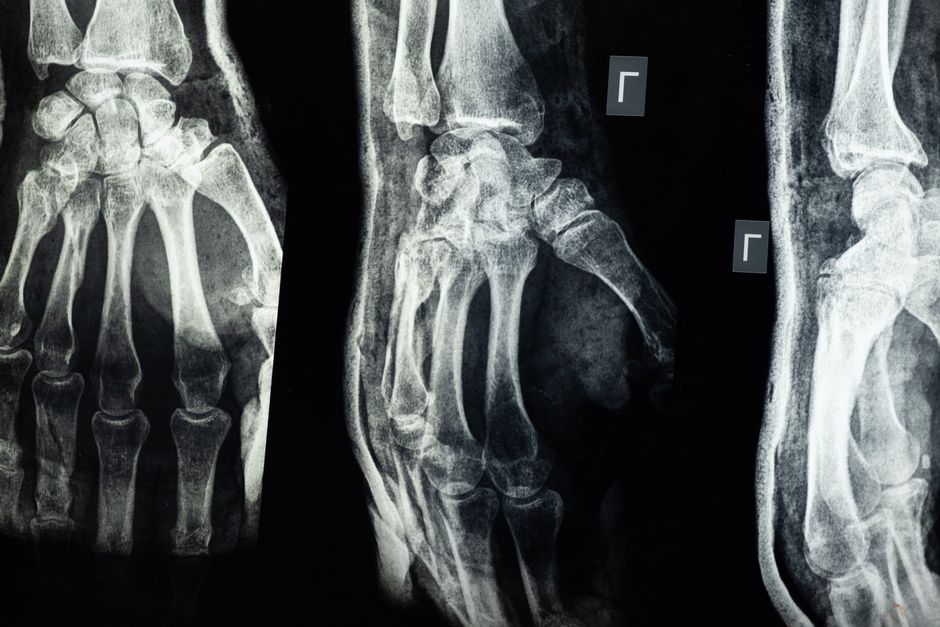
You fell and your arm hurts. You wonder if it is broken or just bruised. The difference matters for treatment, but you cannot always tell by how it feels. A bone fracture is a break in the bone. A bone bruise is bleeding and fluid inside the bone tissue. Both cause pain and swelling. The only way to know for certain is with medical imaging, usually an X-ray. If you have severe pain, cannot move the area, or see obvious deformity, treat it as a fracture and seek medical care right away.
What Is the Difference Between a Fracture and a Bone Bruise?
A fracture means the bone has cracked or broken completely. A bone bruise means the bone has tiny internal injuries without a break. Think of it like an egg. A fracture is a cracked shell. A bruise is damage inside the egg without cracking the shell.
Both injuries hurt. Both cause swelling. But they are different injuries with different healing times. A fracture usually takes 6 to 8 weeks to heal. A bone bruise can take anywhere from a few weeks to several months.
Bone bruises are common in sports injuries. They happen when a direct blow hits the bone. The force damages the inner layers of the bone. Blood and fluid pool there. This is what causes the deep, aching pain.
How To Tell If A Bone Is Fractured Or Bruised: Key Signs
You cannot reliably tell the difference by symptoms alone. But some signs point more toward a fracture.
- Deformity: The limb looks bent or out of place. This is a strong sign of a fracture.
- Bone protruding through skin: This is an open fracture. It requires emergency care.
- Inability to bear weight: If you cannot stand on a leg or lift an arm, a fracture is more likely.
- Grinding sensation: You feel or hear a grinding when you move the area. This suggests broken bone ends rubbing together.
- Numbness or tingling: This can mean nerve involvement, which needs prompt evaluation.
Bruises tend to cause pain that is deep and achy. The area may be tender to touch. Swelling is usually less severe than with a fracture. But this is not a reliable way to decide.
Some fractures are minor. A hairline fracture may only cause mild pain. Some bone bruises cause severe pain. Symptoms alone will not give you a definite answer.
When Should You See a Doctor?
See a doctor if you have any of these signs:
- Pain that does not improve with rest and ice
- Swelling that gets worse over hours
- Cannot move the joint or limb normally
- Pain with light touch over the bone
- Numbness, tingling, or coldness in the area
- Skin that looks pale or blue beyond the bruise
These symptoms can point to a fracture or a more serious injury. A doctor can check for other damage. Ligaments, tendons, and blood vessels can be injured in the same fall.
If the bone has broken through the skin, or the limb is obviously deformed, go to the emergency room. Do not try to straighten it yourself. Splint it in the position you found it and get medical help.





How Do Doctors Diagnose a Fracture or Bone Bruise?
Doctors start with a physical exam. They look for swelling, tenderness, and deformity. They check your range of motion. They ask how the injury happened.
Then they order imaging. An X-ray is the first test for most suspected fractures. It clearly shows breaks in the bone. But X-rays do not show bone bruises. A bone bruise will not appear on a standard X-ray.
An MRI is the test that shows bone bruises. It creates detailed images of the bone’s internal structure. It can show the bleeding and fluid inside the bone. MRIs are not usually needed right away. Doctors order them when pain persists and the X-ray looks normal.
In some cases, a CT scan is used. This gives a more detailed look at complex fractures. It is especially useful for fractures in the spine, pelvis, or joints.
How Is a Fracture Treated?
Treatment depends on the type and location of the fracture. Most simple fractures are treated with a cast or splint. This keeps the bone still so it can heal. You may need crutches or a sling to keep weight off the area.
Some fractures need surgery. This happens when the bone pieces are out of alignment. Metal plates, screws, or rods may be used to hold the bone in place. Surgery is also needed for open fractures where the bone broke through the skin.
Pain medication is often part of treatment. Over-the-counter options like acetaminophen or ibuprofen can help. Stronger prescription pain relievers may be needed for severe fractures.
Physical therapy is common after the bone heals. It helps restore strength and range of motion. The joint may be stiff after weeks in a cast. Therapy helps you regain normal use.
How Is a Bone Bruise Treated?
Bone bruises do not need a cast. But they do need rest. The injured bone must be protected from further stress while it heals.
The standard approach is the RICE method:
- Rest: Avoid putting weight on the injured area
- Ice: Apply ice packs for 15 to 20 minutes several times a day
- Compression: Use an elastic bandage to control swelling
- Elevation: Keep the area raised above heart level when possible
Over-the-counter pain relievers can help with discomfort. Some doctors recommend a brace or splint for a short time. This protects the bone while it heals.
Healing time for a bone bruise varies. Mild bruises heal in a few weeks. Severe ones can take months. The key is patience. Returning to activity too soon can make the injury worse.
What Happens If a Fracture Is Left Untreated?
An untreated fracture can lead to serious problems. The bone may heal in the wrong position. This is called malunion. It can cause permanent deformity and loss of function.
Sometimes the bone does not heal at all. This is called nonunion. It causes ongoing pain and instability. Surgery is often needed to fix it.
There are also risks of complications. A fracture can damage nearby blood vessels and nerves. This can lead to numbness, weakness, or even tissue death in severe cases.
Infection is a risk with open fractures. Bacteria can enter through the break in the skin. This requires urgent medical treatment.
Can You Prevent Fractures and Bone Bruises?
You cannot prevent every injury. Falls and accidents happen. But you can reduce your risk.
Strong bones are more resistant to fractures. Calcium and vitamin D are important for bone health. Good sources of calcium include dairy products, leafy greens, and fortified foods. Vitamin D comes from sunlight and certain foods like fatty fish.
Weight-bearing exercise helps build bone density. Walking, jogging, dancing, and strength training all count. These activities signal the body to build stronger bone.
Balance training helps prevent falls. This is especially important as you age. Simple exercises like standing on one leg can improve stability. Removing trip hazards at home also helps.
Wearing proper footwear reduces fall risk. Supportive shoes with good grip make a difference. This is true for everyday walking and for sports.
Home Care While You Wait for Medical Care
If you suspect a fracture, take these steps before seeing a doctor:
- Keep the area still. Do not try to use the injured limb.
- Apply ice wrapped in a cloth. Do not put ice directly on skin.
- Elevate the area if possible. This helps reduce swelling.
- Do not eat or drink if surgery might be needed.
- Do not massage the area. This can make bleeding worse.
These steps do not treat the injury. They only help manage symptoms until you get medical care.
Frequently Asked Questions
Can a bone bruise turn into a fracture?
No, a bone bruise does not turn into a fracture. But the same force that caused the bruise may have also caused a fracture that was not detected initially.
How long does a bone bruise take to heal?
Most bone bruises heal in a few weeks to a few months. The healing time depends on the severity of the injury and which bone is affected.
Is it okay to walk on a fractured foot?
No, walking on a suspected fractured foot can make the injury worse. Use crutches or a cane and seek medical evaluation.
Do bone bruises show up on X-rays?
No, standard X-rays do not show bone bruises. An MRI is needed to see the internal bleeding and fluid that define a bone bruise.
