
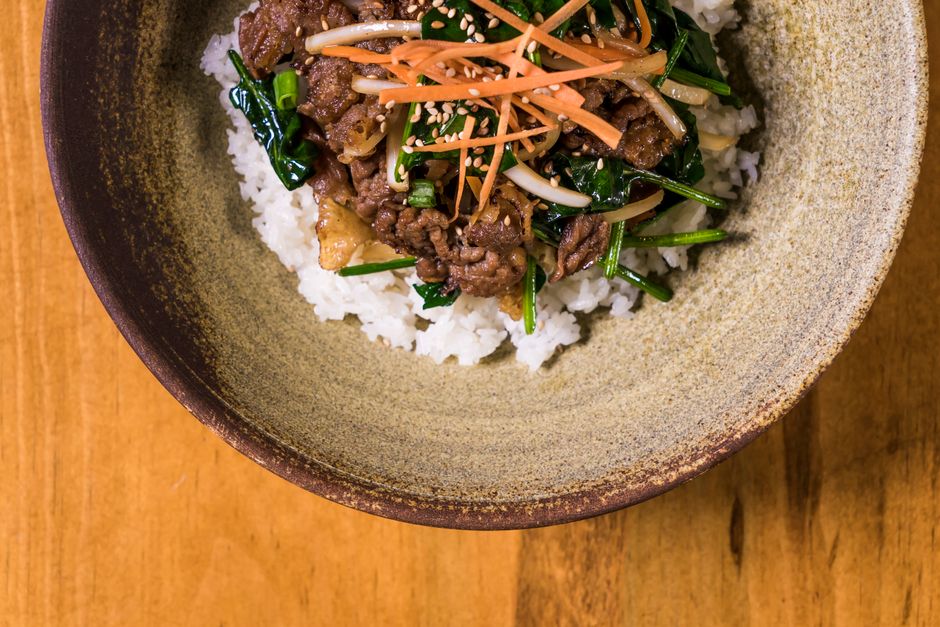
Bibimbap is a Korean rice dish built from warm rice, seasoned vegetables, a protein, a sauce, and often a fried or raw egg, all arranged separately in a bowl and mixed together at the table. The name means “mixed rice.” Its ingredients, regional styles, and nutrition vary widely, because bibimbap is more of a format than a fixed recipe.
That flexibility is the point. A bowl can be mostly vegetables and lean protein, or it can lean heavily on rice, oil, and fatty meat. The same dish name can describe a light 500-calorie meal or a much heavier one. Understanding the building blocks helps you see where the nutrition actually comes from.
What Is Bibimbap Ingredients Styles And Nutrition?
At its core, bibimbap combines four elements: a base of cooked short-grain rice, a set of seasoned toppings called namul, a protein, and a sauce called gochujang or a soy-based dressing. The toppings are arranged in sections over the rice rather than stirred in, and the eater mixes everything together before eating.
Namul are vegetables that have been blanched, sautéed, or lightly salted and then seasoned with sesame oil, garlic, salt, and sometimes scallions. Common vegetables include spinach, bean sprouts, carrot, zucchini, mushrooms, and radish. Each is prepared separately, which is why bibimbap takes time to assemble even though no single step is difficult.
The protein is usually beef, but chicken, pork, tofu, or seafood all appear. The egg is either fried with a runny yolk or added raw in the hot-stone version, where the bowl’s heat cooks it as you mix.
What Are the Main Ingredients in Bibimbap?
The ingredient list is long but each item plays a clear role. Rice provides the bulk. Vegetables provide volume, fiber, and micronutrients. The protein and egg contribute most of the protein content. The sauce and sesame oil carry most of the sodium and added fat.
A typical spread includes:
- Short-grain white rice, sometimes mixed with brown rice or other grains
- Spinach, blanched and seasoned with sesame oil and garlic
- Soybean sprouts, lightly blanched
- Carrot, julienned and sautéed
- Zucchini or cucumber
- Shiitake or other mushrooms
- Radish, sometimes pickled
- Beef, chicken, pork, tofu, or seafood
- A fried or raw egg
- Gochujang, a fermented chili paste, or a soy-sesame sauce
- Sesame oil and toasted sesame seeds
Not every bowl contains all of these. Home versions often use whatever vegetables are on hand. That variability is exactly why nutrition numbers differ so much from one bowl to the next.
What Are the Different Styles of Bibimbap?
Bibimbap has several distinct regional and serving styles, and they differ in more than presentation. The cooking method changes the texture, the temperature, and to some degree the fat content.
Jeonju bibimbap is often considered the most elaborate version. It comes from Jeonju, a city in South Korea known for its food. It traditionally uses many toppings, beef, and sometimes raw egg yolk, and is served in a regular bowl at room temperature or warm.
Dolsot bibimbap is served in a heated stone bowl. The bowl is coated with sesame oil before the rice goes in, which crisps the bottom layer of rice into a golden crust. The stone stays hot long enough to cook a raw egg added at the table. Because of the oil and the crisped rice, this style usually carries more fat and calories than the same toppings in a cold bowl.
Bibimbap served in a cold bowl is the everyday version. It is faster to assemble and lighter, since there is no added oil for crisping.
There is also a raw-fish version, sometimes called hwe bibimbap, which uses sliced raw fish in place of cooked meat. And there is a simple home style where leftover vegetables and rice are mixed with gochujang and a fried egg, with no particular ceremony.





How Nutritious Is Bibimbap?
Bibimbap can be a balanced meal, but it is not automatically one. The nutrition depends almost entirely on proportions. A bowl with generous vegetables, a modest portion of lean protein, and a light hand with the sauce looks very different from one dominated by white rice, fatty beef, and oil.
Where bibimbap does well is vegetable variety. A traditional bowl can include five or more different vegetables, which is more than many single meals provide. Those vegetables contribute fiber, potassium, vitamin A from carrots, vitamin K and folate from leafy greens, and a range of other micronutrients.
Where it can go wrong is sodium and fat. Gochujang is a fermented paste and is high in sodium. Sesame oil is used in several steps, not just one. Soy sauce in the beef marinade adds more sodium. A restaurant bowl can easily carry a large share of a day’s sodium before you have eaten anything else.
Portion size is the other variable. Restaurant bibimbap often arrives in a large bowl with a full cup or more of rice, which pushes the carbohydrate and calorie content up quickly.
Bibimbap Nutrition: What the Numbers Look Like
There is no single nutrition profile for bibimbap because recipes vary so much. The table below shows approximate values for a typical restaurant-style bowl with beef, vegetables, egg, and gochujang. These are estimates, not fixed figures.
| Component | Approximate contribution |
|---|---|
| Cooked white rice (1 cup) | About 200 calories, 45 g carbohydrate |
| Mixed seasoned vegetables (1 cup) | About 60–100 calories, 3–4 g fiber |
| Cooked beef (3 oz) | About 180–220 calories, 22–24 g protein |
| Fried egg | About 90 calories, 6 g protein |
| Gochujang (1 tbsp) | About 30–40 calories, notable sodium |
| Sesame oil (across steps) | About 40–80 calories |
Added up, a full restaurant bowl commonly lands somewhere in the range of 600 to 800 calories, with wide variation. A lighter home version with less rice, lean protein, and less oil can be considerably lower. Values for USDA food data on the individual components — rice, beef, egg, and vegetables — are well established. Values for a finished bibimbap bowl are not, because the recipe is not standardized.
Protein content is often higher than people expect, mostly from the beef and egg. Fiber comes mainly from the vegetables, and it drops sharply if the bowl is mostly rice.
How Can You Make Bibimbap Lighter or Higher in Protein?
Because bibimbap is assembled rather than baked, it is easy to shift the balance without changing the dish. The adjustments are about proportion, not substitution tricks.
To lower calories and sodium, use less rice and more vegetables, choose a lean protein, and go lighter on the gochujang and sesame oil. Skipping the stone bowl avoids the added oil used for crisping. Asking for sauce on the side at a restaurant gives you control over how much goes in.
To raise protein, increase the meat or tofu portion, add an extra egg, or use a higher-protein grain blend in place of some white rice. Tofu and edamame both work, though tofu carries less protein per ounce than beef or chicken.
One practical note: the vegetables are usually seasoned individually, so sodium adds up across several small seasonings rather than one obvious source. Tasting as you go, rather than seasoning each component by habit, is a simple way to keep the total down.
Is Bibimbap Gluten-Free or Vegetarian?
Bibimbap is not automatically gluten-free or vegetarian, and both depend on the specific ingredients used. Gochujang frequently contains wheat, and soy sauce almost always does, so a standard bowl is not gluten-free. The beef marinade commonly includes soy sauce as well.
A vegetarian version is straightforward if you leave out the meat and fish and use tofu or extra vegetables. But fish sauce or anchovy-based seasoning sometimes appears in the vegetable preparations, so a bowl labeled vegetarian is worth confirming rather than assuming.
For anyone with celiac disease or a serious gluten sensitivity, the safe approach is to ask about each component, since the sauce and marinade are the usual sources and they are not always obvious from the menu description.
Frequently Asked Questions
What is bibimbap made of?
Bibimbap is made of cooked rice topped with seasoned vegetables, a protein such as beef, tofu, or egg, and a sauce like gochujang. The ingredients are arranged separately and mixed together before eating.
Is bibimbap healthy?
It can be a balanced meal because it often includes several vegetables, a protein, and a whole grain or rice base. Whether a specific bowl is healthy depends on the proportions, since restaurant versions can be high in sodium, oil, and calories.
How many calories are in a bowl of bibimbap?
A typical restaurant-style bowl with beef, vegetables, egg, and gochujang commonly falls in the range of about 600 to 800 calories. Home versions vary widely depending on how much rice, oil, and meat is used.
Is bibimbap gluten-free?
Usually not, because gochujang often contains wheat and soy sauce is typically made with wheat. A gluten-free version is possible if those are replaced, but the standard dish is not gluten-free.
