
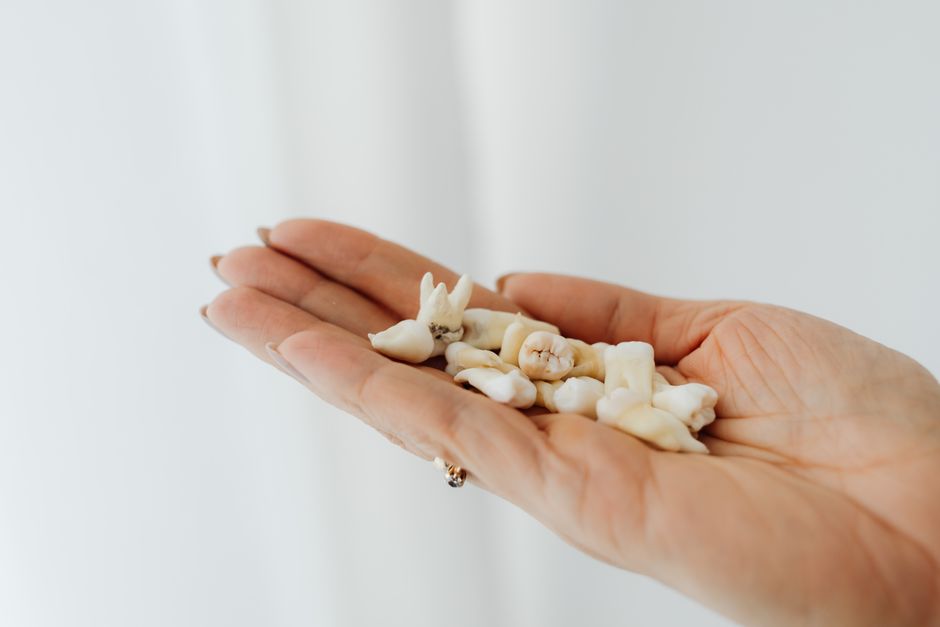
You might be waiting for a permanent tooth to appear and nothing is happening. Or a wisdom tooth seems stuck and won’t come through. The most common reason a tooth does not grow in is that it is impacted, meaning it is blocked by another tooth, bone, or tissue. Other causes include having no permanent tooth to begin with, a condition called impacted eruption, or a dental cyst. This is not something to ignore, but it is also not a rare problem. Let’s look at what is actually happening in your mouth.
What Does It Mean When a Tooth Is Impacted?
An impacted tooth is one that cannot break through the gum. It is trapped. This happens most often with wisdom teeth, also called third molars. But it can happen with any tooth, especially the upper canines and lower premolars.
Your tooth forms inside the jawbone. Normally, it pushes upward or downward through the bone and gum. This is called eruption. When something blocks that path, the tooth stays put. It may sit at an angle. It may lie sideways. It may be upside down in rare cases. The tooth is still alive. It just cannot reach the surface.
Dentists see this on X-rays. You cannot always feel an impacted tooth. Some people have no pain at all. Others feel pressure, swelling, or a dull ache. The tooth may also cause problems for the teeth next to it.
Why Is My Tooth Not Growing In? The Main Reasons
There are four main reasons a permanent tooth does not come in. Each has a different cause and a different solution.
Impaction. This is the most common reason. The tooth is blocked by another tooth, thick bone, or dense gum tissue. Wisdom teeth are the classic example. They often grow at an angle and hit the tooth in front of them. Upper canines can also become impacted if they grow into the roof of the mouth instead of down into the dental arch.
Missing tooth. Sometimes there is no permanent tooth to grow in. This is called congenital absence or hypodontia. About 5 percent of people are missing at least one permanent tooth. The most commonly missing teeth are the wisdom teeth, the upper lateral incisors, and the lower second premolars. In these cases, the baby tooth may stay in place for years or even decades.
Delayed eruption. The tooth exists. It is in the right position. It is just slow. This can happen after a baby tooth falls out too early. The gum tissue becomes thick and fibrous, making it hard for the permanent tooth to push through. It can also happen if there is a cyst or a tumor over the tooth. These are usually benign, but they block the path.
Ankylosis. This is when the tooth fuses to the bone. The tooth stops moving. It looks like it is stuck. This happens most often with baby teeth. The permanent tooth behind it cannot push it out, so it stays in place. Over time, the baby tooth sinks lower than the teeth next to it. It looks like it is disappearing into the gum.
How Do I Know If My Child’s Tooth Is Not Growing In?
Children lose baby teeth in a predictable order. The front bottom teeth go first around age 6. The back molars come in around age 12. If a permanent tooth has not appeared within six months of the baby tooth falling out, it is worth checking.
Sometimes a baby tooth does not fall out at all. The permanent tooth grows in behind it. This is called a shark tooth. It looks alarming but it is usually harmless. The baby tooth often falls out on its own within a few weeks. If it does not, a dentist can remove it.
Other signs to watch for include a gap that stays empty for more than a year, a bump in the gum where the tooth should be, or pain and swelling in the area. A dentist can take a simple X-ray called a panoramic radiograph. It shows all the teeth, even the ones still inside the bone.



What Happens If an Impacted Tooth Is Left Alone?
Some impacted teeth cause no problems. Many people live with impacted wisdom teeth for years without trouble. But there are risks.
The biggest risk is damage to the tooth in front. An impacted wisdom tooth can push against the second molar. This can cause the root of that molar to erode. It can also create a pocket where bacteria collect. That leads to decay and gum disease in a place that is very hard to clean.
Impacted teeth can also cause cysts. A cyst is a fluid-filled sac that forms around the crown of the tooth. Most are small and harmless. But some grow large enough to damage the jawbone or nearby teeth. In rare cases, a cyst can turn into a tumor. This is very uncommon, but it is one reason dentists recommend removing impacted wisdom teeth.
Pain is another issue. Some impacted teeth cause chronic low-grade pain. Others cause sudden sharp pain when infection sets in. This is called pericoronitis. It happens when a flap of gum covers part of the tooth and traps food and bacteria. The area becomes swollen, painful, and hard to open your mouth.
Why Is My Wisdom Tooth Not Growing In?
Wisdom teeth are the most likely teeth to stay trapped. They are the last teeth to come in, usually between ages 17 and 25. By that time, the jaw is often too small to fit them. There is simply no room.
When there is not enough space, the wisdom tooth grows at an angle. It may point forward toward the other teeth. It may point backward. It may lie completely horizontal. It may grow straight but stay buried under the gum. All of these are forms of impaction.
Not all impacted wisdom teeth need to come out. The decision depends on your age, your symptoms, and the position of the tooth. Younger people heal better from extraction. People over 30 have higher risks of complications. If your wisdom tooth is painless and not causing damage, your dentist may recommend watching it with regular X-rays rather than removing it.
What Are the Treatment Options?
Treatment depends entirely on the cause. There is no one-size-fits-all answer.
For impaction: The most common treatment is extraction. The dentist or oral surgeon removes the blocked tooth. This is usually done with local anesthesia. For more complex cases, you may need sedation or general anesthesia. Recovery takes a few days to a week. You will have swelling and some pain, but most people manage fine with over-the-counter pain relievers and ice packs.
For a missing tooth: If there is no permanent tooth, you have options. You can leave the baby tooth in place if it is healthy. Some baby teeth last into adulthood. If the baby tooth falls out or is damaged, you can replace the gap with a bridge, an implant, or a partial denture. Orthodontic treatment can also close the gap by moving other teeth into the space.
For delayed eruption: Sometimes the tooth needs help. A dentist can remove the gum tissue covering the tooth. This is called an operculectomy. If a cyst is blocking the tooth, the cyst needs to be removed first. In some cases, braces are used to pull the tooth into the correct position.
For ankylosis: If a baby tooth is fused to the bone and the permanent tooth is behind it, the baby tooth usually needs to come out. The dentist may also need to remove some bone to free the permanent tooth. Braces can then guide it into place.
When Should You See a Dentist?
See a dentist if your child has a gap that stays empty for more than a year after the baby tooth fell out. See one if an adult tooth is visibly coming in behind a baby tooth that has not fallen out. See one if you feel pain, swelling, or pressure in the back of your jaw where wisdom teeth should be.
Routine X-rays catch most of these problems before you feel anything. That is why regular dental checkups matter. A dentist can see an impacted tooth on an X-ray years before it causes symptoms. Early detection gives you more options and often means simpler treatment.
If you are an adult and your wisdom teeth have never come in, you are not alone. Many people have buried wisdom teeth that never cause trouble. But you should still have them checked. A single panoramic X-ray can tell you exactly what is going on.
Frequently Asked Questions
Can a tooth come in years late?
Yes, but it is rare. Some permanent teeth, especially wisdom teeth, can erupt in a person’s 30s or 40s. Most delayed teeth that have not appeared by age 25 will stay impacted.
Is it bad if my child’s permanent tooth is not coming in?
Not necessarily, but it needs a dental checkup. A simple X-ray will show whether the tooth exists, if it is blocked, or if it is just slow. Early treatment is usually easier than waiting.
Can a missing permanent tooth be fixed without surgery?
Yes, if the baby tooth is still healthy and in good position. Many people keep a baby tooth for decades. If the baby tooth falls out, options like braces to close the gap or a bridge do not require surgery.
Do all impacted wisdom teeth need to be removed?
No. Impacted wisdom teeth that are painless, healthy, and not damaging nearby teeth can often be left in place. Your dentist will monitor them with regular X-rays to make sure they stay that way.
