
An NT scan is a first-trimester ultrasound test that measures a small pocket of fluid at the back of a developing baby’s neck. That measurement, called nuchal translucency, can flag an increased chance of certain chromosomal conditions such as Down syndrome. The scan is usually done between 11 and 14 weeks of pregnancy, takes about 20 to 30 minutes, and does not give a diagnosis on its own — it produces a risk estimate that may lead to further testing.
What Is an NT Scan and What Does It Measure?
NT stands for nuchal translucency. It is the collection of fluid under the skin at the back of the fetal neck, and it can be seen on an ultrasound screen as a dark strip.
Every developing baby has some fluid there. What matters is the thickness. When that fluid space measures larger than expected for the stage of pregnancy, the chance of certain chromosomal conditions goes up. The two most commonly associated are trisomy 21 (Down syndrome) and trisomy 18 (Edwards syndrome). The scan can also raise suspicion for some heart problems and a few other structural conditions.
Here is a point that gets lost in a lot of online explanations: an NT scan is a screening test, not a diagnostic test. It sorts pregnancies into higher-risk and lower-risk groups. It does not tell you whether a baby has a condition. Only a diagnostic test, such as chorionic villus sampling or amniocentesis, can do that.
Nuchal translucency is also not the same as the “nuchal fold.” The nuchal fold is measured later in pregnancy, during the second-trimester anatomy scan. They sound similar but they are different measurements taken at different times.
What Is the Purpose of an NT Scan?
The purpose is to estimate risk early, when parents have the widest range of options. The scan itself does not treat or prevent anything. It informs decisions.
Specifically, an NT scan is used to:
- Estimate the chance of Down syndrome and Edwards syndrome
- Combine with a blood test to improve the accuracy of that estimate
- Identify pregnancies that may benefit from a diagnostic test
- Detect certain major structural problems that can sometimes be seen this early
The scan is almost never interpreted alone. It is combined with maternal blood markers in what is called first-trimester combined screening. That combination is more informative than the ultrasound measurement by itself.
It is worth being clear about what the scan is not. It is not a routine requirement. Whether it is offered, and whether it is covered by insurance, varies by practice and by country. Many pregnant people choose to have it. Some decline it. Both are reasonable positions, and neither is a medical failure.
How Is the NT Scan Procedure Done?
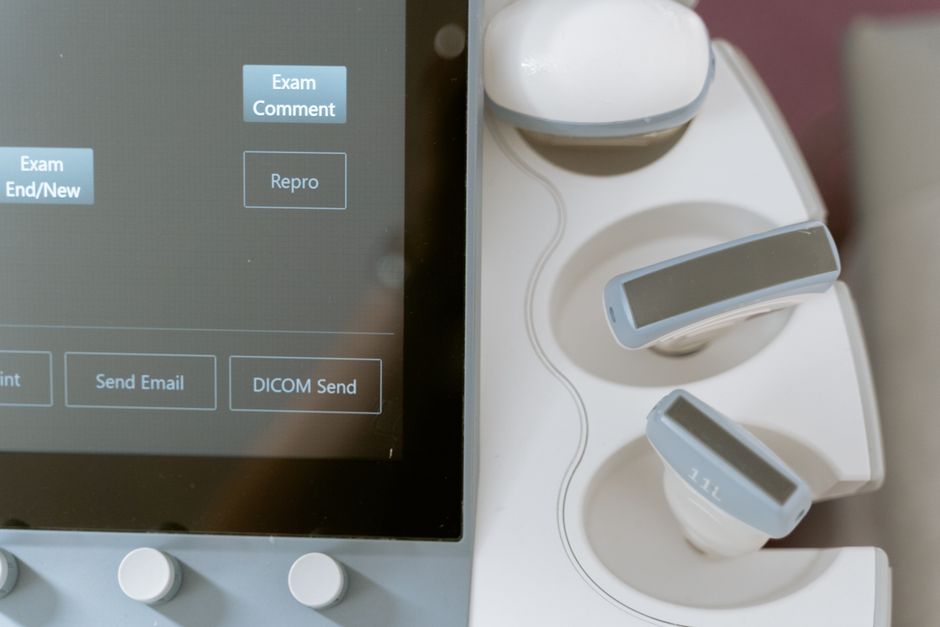
The procedure is a standard abdominal ultrasound. In most cases it is quick and painless.
You lie on an exam table. A technician or doctor applies gel to your lower belly and moves a transducer across it. If the baby is positioned poorly, or if your body shape makes the view difficult, a transvaginal ultrasound may be used instead. That involves a slim probe placed in the vagina. It is not painful for most people but it can be unexpected if you were not told it might happen.
Getting a usable measurement depends heavily on the baby’s position. The baby needs to be lying in a way that lets the technician see a clear profile of the neck. If the baby is curled up or facing the wrong way, the technician may ask you to cough, walk around, or wait. Sometimes the scan has to be rescheduled.
Timing matters. The measurement is only considered valid within a specific window of gestation, generally around 11 to 14 weeks. Before that window the fluid space is not yet developed enough to measure reliably. After it, the fluid naturally changes and the measurement loses its meaning. This is one of the few parts of prenatal care where being slightly too early or too late genuinely changes what the test can tell you.




What Do NT Scan Results Mean?
Results are reported as a risk ratio, not as a yes-or-no answer. You might see something like “1 in 800” or “1 in 50.”
A higher-risk result means the chance is greater than the baseline for your age, but it is still a chance. A “1 in 50” result means that out of 50 people with that same result, on average one would have an affected pregnancy and 49 would not. A lower-risk result does not guarantee anything either. Screening tests can miss conditions.
Several factors shape the final number:
- The measured thickness of the fluid space
- Your age, which affects baseline risk
- Blood marker levels, when combined screening is used
- How far along the pregnancy is, since the expected measurement changes with gestation
An increased nuchal translucency can also occur in pregnancies with normal chromosomes. This is important and often left out. An enlarged measurement raises the chance of a chromosomal condition, but it can also appear in babies who turn out to have no chromosomal problem at all. That is part of why the result is a risk estimate rather than a verdict.
What Happens If the NT Scan Shows an Increased Risk?
A higher-risk result is a prompt for a conversation, not a conclusion. The next step is usually a discussion with a genetic counselor or your obstetric provider about what the number does and does not mean.
From there, options typically include:
- Diagnostic testing such as chorionic villus sampling or amniocentesis, which can give a definitive answer but carry a small risk of miscarriage
- Cell-free DNA screening, a blood test that analyzes placental DNA and can assess certain chromosomal conditions with high accuracy, though it is still a screening test
- Further ultrasound, including a detailed anatomy scan later in pregnancy
- No further testing, which is a legitimate choice for some people
The right path depends on what information you want, what you would do with it, and your own values. There is no single correct answer, and a provider should walk you through the trade-offs rather than steer you toward one option.
Does the NT Scan Have Risks?
The ultrasound itself carries no known risk to you or the baby. It uses sound waves, not radiation, and there is no established harm from diagnostic ultrasound at the energy levels used in prenatal care.
The real considerations are not physical. They are about what the result can do to you emotionally and what it can lead to. A higher-risk screening result can cause significant anxiety, especially because most people who receive one will ultimately have an unaffected pregnancy. And a screening result can lead to a diagnostic test, which does carry a small but real risk of miscarriage.
This is the honest trade-off. The scan is safe. The decisions that can follow it are not free of consequence, and that is worth knowing before you walk in.
How Does NT Screening Fit With Other Prenatal Tests?
It helps to see the NT scan as one tool among several, each with different strengths.
| Test | Typical timing | What it does |
|---|---|---|
| NT scan | Around 11–14 weeks | Measures nuchal fluid; contributes to a risk estimate |
| First-trimester combined screening | Around 11–14 weeks | Combines NT measurement with blood markers for a stronger estimate |
| Cell-free DNA screening | Generally from 10 weeks onward | Analyzes placental DNA in the blood; high accuracy for certain conditions but still screening |
| Chorionic villus sampling | Roughly 10–13 weeks | Diagnostic; small miscarriage risk |
| Amniocentesis | Generally 15 weeks and later | Diagnostic; small miscarriage risk |
Cell-free DNA screening has changed the landscape. It can assess certain chromosomal conditions with high accuracy from a simple blood draw and carries no miscarriage risk. Because of this, some people now skip the NT scan entirely. Others still have it, because the NT scan can also detect structural problems that a blood test cannot.
No single test covers everything. The choice of which to use, and in what order, is a genuine clinical decision that depends on timing, what you want to learn, and what you would do with the information.
Frequently Asked Questions
What is an NT scan used for?
An NT scan measures the fluid at the back of a baby’s neck to estimate the chance of certain chromosomal conditions like Down syndrome. It is a screening test, so it gives a risk estimate rather than a diagnosis.
Is an NT scan the same as a diagnostic test?
No. An NT scan is a screening test that sorts pregnancies into higher- and lower-risk groups, and it cannot confirm or rule out a condition. Only diagnostic tests such as chorionic villus sampling or amniocentesis can do that.
When is an NT scan usually done?
It is generally performed between about 11 and 14 weeks of pregnancy. The measurement is only considered valid within that window, because the fluid space is not developed enough earlier and changes meaning later.
Can an NT scan be wrong?
Yes. An NT scan can produce a higher-risk result in a pregnancy with normal chromosomes, and it can also miss conditions. That is why it is used as a screening tool and not as a final answer.
