
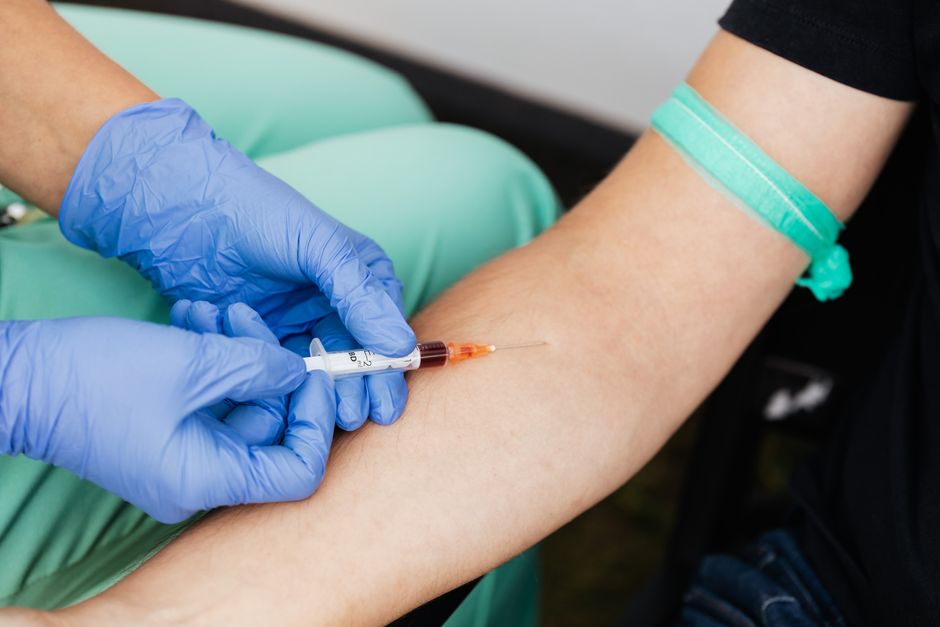
An MMR blood test for immunity is a blood draw that checks whether you have protective antibodies against measles, mumps, and rubella. Instead of guessing whether a past vaccine or childhood infection left you protected, the test measures your immune response directly. It is most often used when someone cannot find their vaccination records, before certain jobs or school enrollment, or during pregnancy planning.
What Is an MMR Blood Test for Immunity?
The test looks for antibodies your immune system makes after either vaccination or natural infection. Antibodies are proteins that recognize and neutralize a specific virus. If those proteins are present at high enough levels, you are generally considered protected.
There are two main types of antibody tests, and the difference matters:
- IgG antibody test — detects long-term antibodies from past vaccination or infection. This is the test used to check immunity.
- IgM antibody test — detects recent or active infection. This is used to diagnose a current illness, not to check immunity.
When people talk about an “MMR immunity blood test,” they almost always mean the IgG test. Results are reported as either positive (immune), negative (not immune), or equivocal (unclear).
Why Do People Get an MMR Immunity Blood Test?
There are several common reasons. Most of them come down to uncertainty about the past.
- Missing vaccination records. Adults who moved countries, changed doctors, or lost paperwork often have no proof of their childhood MMR shots.
- School or university enrollment. Many institutions require documented immunity before allowing enrollment.
- Healthcare and childcare jobs. Employers often require proof of immunity because these workers face higher exposure risk.
- Pregnancy planning. Rubella infection during pregnancy can cause serious harm to a developing baby. Checking immunity before pregnancy is common clinical practice.
- Before international travel. Some destinations or situations prompt a check, especially during measles outbreaks.
- Immunocompromised patients. People with weakened immune systems or on certain medications may need to know their status.
The test answers a specific question: does your body already have the antibodies it needs? If yes, revaccination is usually unnecessary. If no, a booster dose is typically recommended.
How Does the MMR Blood Test Work?
The process is straightforward. A healthcare worker draws a small amount of blood from a vein in your arm, usually in the crook of the elbow. The sample goes to a lab, where it is tested for measles, mumps, and rubella IgG antibodies.
Results typically come back within a few days, though timing varies by lab and location. Each of the three viruses is reported separately, so you could be immune to two and not the third.
The lab uses a cutoff value to decide whether your antibody level is protective. Different labs may use slightly different cutoffs, which is one reason results can occasionally be hard to compare across providers. A result near the cutoff may come back as equivocal, meaning the lab cannot clearly say whether you are protected.
It is worth knowing that antibody levels and true protection are not perfectly identical. A positive result generally means you are protected. But the absence of detectable antibodies does not always mean you have zero immunity — the immune system also carries memory cells that can mount a response even when circulating antibodies have faded. This is why some people with negative or low antibody results still respond well if exposed. That said, the antibody test remains the standard practical tool for assessing immunity.




What Do the Results Mean?
Results fall into three general categories. How you interpret them depends on which virus and your personal health situation.
| Result | What It Usually Means | Typical Next Step |
|---|---|---|
| Positive (immune) | Protective antibodies detected | Usually no action needed |
| Negative (not immune) | No protective antibodies detected | Vaccination often recommended |
| Equivocal (unclear) | Level near the cutoff | Repeat test or vaccinate |
A negative result does not necessarily mean your childhood vaccines failed. Antibody levels naturally decline over time for some people. For measles and rubella, immunity tends to be long-lasting after two doses. For mumps, protection can wane more noticeably, and outbreaks have occurred even among vaccinated people.
If you are unsure how to read your results, discuss them with a clinician who knows your health history. The numbers alone do not tell the whole story.
Who Should Consider This Test?
The test is most useful for people who genuinely do not know their immunity status. That includes adults with no vaccination records, people born during certain periods when vaccine recommendations differed, and anyone whose job or living situation raises their exposure risk.
People born before 1957 in the United States are generally considered immune to measles and mumps because these viruses circulated widely at the time. Most of them had natural infections as children. For rubella, the picture is a little different, and a blood test or vaccination may still be advised.
Pregnant women should not receive the MMR vaccine, because it contains live but weakened viruses. Immunity is ideally checked and any needed vaccination completed before pregnancy. If a woman is already pregnant and not immune to rubella, vaccination is typically postponed until after delivery.
People with weakened immune systems, or those taking medications that suppress immunity, should talk with their doctor before any testing or vaccination decisions. Live vaccines are generally not given to this group.
Does a Positive Test Mean You Are Fully Protected?
For measles and rubella, a positive IgG result is a strong sign of protection. These two viruses tend to produce durable immunity, and reinfection is uncommon in people with detectable antibodies.
Mumps is the exception. Immunity from the vaccine can fade over time, and even people with positive antibody tests have occasionally been infected during outbreaks. This does not mean the test is useless — it means mumps protection is less absolute than measles or rubella protection.
No test is perfect. Antibody tests estimate protection, they do not guarantee it. But for practical purposes, they are the best tool available for deciding whether you need another dose.
What Are the Risks and Limitations?
The blood draw itself carries minimal risk. You may have brief soreness, bruising, or slight bleeding at the needle site. Serious complications from a routine blood draw are rare.
The bigger issue is what the test cannot tell you. It cannot show how long your immunity will last. It cannot predict whether you will get infected if exposed. And because labs use different cutoff values, results from different providers are not always directly comparable.
There is also a cost consideration. Insurance coverage for MMR antibody testing varies. Some plans cover it when there is a clear medical reason, such as pregnancy planning or occupational requirement. Others may not. Checking with your insurer before testing can save surprises.
One more point worth making: getting tested is not always necessary. If you have written proof of two MMR doses, or you were born before 1957, you may already be considered immune without a blood test. Testing is most valuable when the records are missing or unclear.
How Does This Compare to Just Getting Revaccinated?
Some people skip the test and simply get another MMR dose. This is a reasonable option in many cases. The vaccine is generally safe for most people, and an extra dose is not harmful for those who are already immune.
Testing has advantages, though. It can confirm that you do not need a vaccine, which matters if you want to avoid unnecessary shots. It also gives you a documented result you can show employers or schools. And for people with certain health conditions, confirming immunity may be preferable to receiving a live vaccine.
Which path makes sense depends on your situation. A clinician can help you weigh the options based on your records, health status, and reasons for checking.
Frequently Asked Questions
How long does an MMR immunity blood test take to come back?
Results usually come back within a few days, though timing varies by lab. Some facilities offer faster turnaround, while others may take up to a week.
Can I get an MMR blood test without a doctor’s order?
In many states, you can order certain lab tests directly, but rules vary. For immunity testing tied to school, work, or pregnancy, a clinician’s order is often required.
What if my MMR test shows I am not immune?
A negative result usually means a booster dose of the MMR vaccine is recommended. One or two doses may be advised depending on your age, health, and which viruses you are not protected against.
Is a positive MMR antibody test proof I will never get measles, mumps, or rubella?
No test can guarantee you will never get infected. A positive result is a strong sign of protection for measles and rubella, but mumps immunity can fade even when antibodies are detected.
