
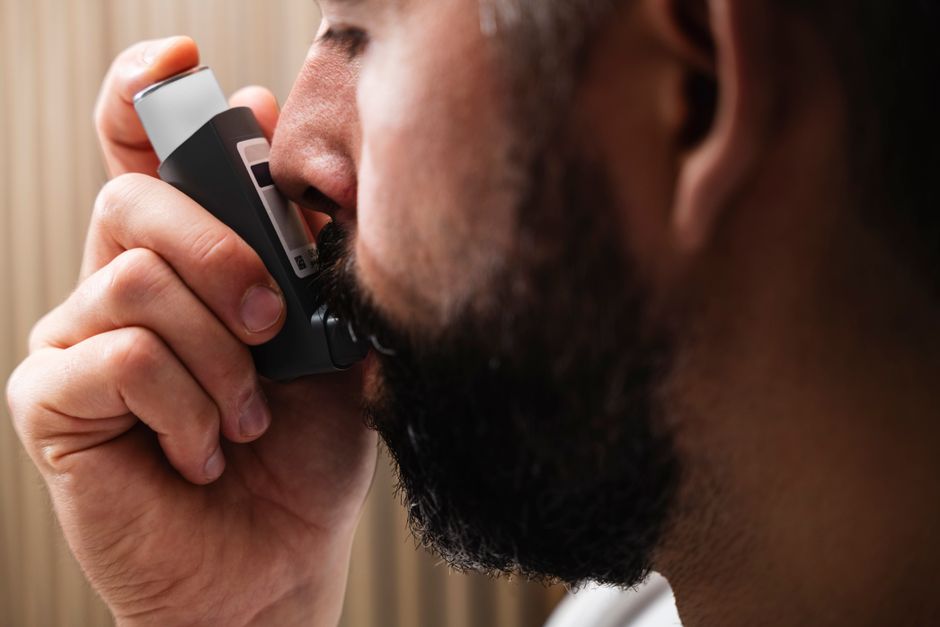
An asthma attack is a sudden worsening of asthma symptoms caused by narrowing of the airways in the lungs. The muscles around the airways tighten, the airway lining swells, and mucus production increases. Together, these changes make it hard to move air in and out. Breathing becomes difficult, and in serious cases, the attack can become a medical emergency.
What Is an Asthma Attack?
Asthma is a long-term condition in which the airways are inflamed and overly sensitive. Between attacks, a person may feel fine or have only mild symptoms. During an attack, that underlying inflammation flares up and the airways narrow quickly.
Three things happen at the same time:
- Bronchoconstriction. The smooth muscle wrapped around the airways squeezes tight. This narrows the opening air passes through.
- Inflammation and swelling. The lining of the airways becomes swollen, which thickens the airway wall and leaves less room for air.
- Mucus. The airways produce extra sticky mucus that can further block airflow.
These changes make exhaling especially hard. Air gets trapped in the lungs, and the person has to work much harder to breathe. That extra effort is why an attack can feel exhausting and frightening.
An asthma attack is sometimes called an asthma exacerbation or a flare-up. The terms mean the same thing.
What Causes an Asthma Attack?
Attacks are usually triggered by something the airways react to. Common triggers include:
- Respiratory infections, especially colds and flu
- Allergens such as dust mites, pollen, pet dander, and mold
- Cold air or sudden changes in weather
- Exercise, particularly in cold or dry air
- Smoke, strong fumes, and air pollution
- Strong emotions, including stress, laughing, or crying
- Certain medications, such as aspirin or other NSAIDs in some people
Triggers vary from person to person. Something that sets off an attack in one person may cause no reaction in another. Many people have more than one trigger.
Poorly controlled asthma raises the risk of attacks. So does skipping controller medication, since the airway inflammation never fully settles. Respiratory infections are among the most common reasons attacks happen.
What Are the Symptoms of an Asthma Attack?
Symptoms can range from mild to life-threatening. They often build up over minutes to hours, but can also come on fast.
Common signs include:
- Shortness of breath
- Wheezing, a whistling sound during breathing
- Chest tightness or pressure
- Coughing, which may be worse at night or early morning
- Trouble speaking in full sentences
- Fast breathing
Not everyone wheezes. In a severe attack, airflow can become so limited that wheezing stops. That silence is not a good sign. It can mean the lungs are moving very little air.
Warning signs that an attack is severe include:
- Breathing very fast or gasping
- Being unable to speak more than a few words at a time
- Pale, gray, or bluish lips or fingernails
- Pulling in of the skin between the ribs or at the neck with each breath
- Feeling confused, drowsy, or faint
These are emergency signs. A person with these symptoms needs medical help right away.





How Is an Asthma Attack Treated?
Quick-relief medications, called bronchodilators, are the first line for stopping an attack. They relax the tightened airway muscles within minutes. Most are inhaled through a rescue inhaler or a nebulizer.
For mild attacks, a rescue inhaler often eases symptoms quickly. If symptoms do not improve, or if they return soon, that is a sign the attack is more serious and medical care may be needed.
For moderate or severe attacks, clinicians may add corticosteroids to reduce airway inflammation. These can be given by mouth, by injection, or through an IV in a hospital setting. Oxygen may also be provided if blood oxygen levels are low.
A few points that matter:
- Rescue inhalers treat symptoms. They do not treat the underlying inflammation.
- Controller medications, taken daily, reduce inflammation and lower the chance of attacks. They are not used to stop an attack in progress.
- An asthma action plan, written with a clinician, tells a person what to do at each stage. Following it can prevent small problems from becoming emergencies.
Anyone whose rescue inhaler is not working, or who needs it more often than usual, should seek medical advice. Frequent reliance on a rescue inhaler can signal that asthma is not well controlled.
When Is an Asthma Attack an Emergency?
An attack is an emergency when breathing becomes very difficult or symptoms do not respond to a rescue inhaler. Call emergency services if a person:
- Cannot speak more than a few words without stopping to breathe
- Has lips or fingernails turning blue or gray
- Is struggling to breathe and getting worse
- Becomes confused, drowsy, or hard to wake
- Gets no relief from a rescue inhaler
Do not wait to see if things improve on their own. Severe asthma attacks can be fatal, and early treatment saves lives. This is one area where being cautious is always the right call.
How Is Asthma Managed to Prevent Attacks?
Good day-to-day control is the best way to reduce attacks. Management usually combines medication, trigger avoidance, and a written plan.
Controller medications, most often inhaled corticosteroids, reduce airway inflammation over time. Taken regularly, they lower how often attacks happen and how severe they are. Many people feel well and stop using them, which is a common reason attacks return.
Other steps that help:
- Identify and avoid personal triggers where possible
- Get recommended vaccines, including flu and COVID-19, after talking with a clinician
- Track symptoms and rescue inhaler use
- Keep an up-to-date asthma action plan
- Review inhaler technique, since poor technique reduces how much medicine reaches the lungs
Regular checkups let a clinician adjust treatment as needed. Asthma control is not fixed. It can change with seasons, infections, and life circumstances.
What Is the Difference Between Asthma and an Asthma Attack?
Asthma is the ongoing condition. An asthma attack is a specific episode when symptoms suddenly get worse. A person can have asthma for years and have only occasional attacks.
This distinction matters for treatment. Daily controller medication manages the condition. Rescue medication treats an attack. Confusing the two can lead to using the wrong inhaler at the wrong time.
It also matters for expectations. Having asthma does not mean having attacks all the time. With good management, many people have few or no attacks. Others have more frequent flare-ups and need closer care.
Frequently Asked Questions
What does an asthma attack feel like?
Most people describe chest tightness, shortness of breath, wheezing, and coughing. It can feel like breathing through a narrow straw, and the effort can be exhausting.
How long does an asthma attack last?
A mild attack may ease within minutes of using a rescue inhaler, while more serious attacks can last longer and need medical treatment. If symptoms do not improve quickly, seek care.
Can an asthma attack go away on its own?
Some mild attacks ease without treatment, but relying on that is risky. Using a rescue inhaler early and following an action plan is safer than waiting.
Can you have an asthma attack without wheezing?
Yes. In severe attacks, airflow can be so limited that wheezing stops, which is a warning sign rather than a sign of improvement. Coughing and chest tightness may be the main symptoms.
