
In dermatology, “AK” stands for actinic keratosis. An actinic keratosis is a rough, scaly patch or bump on the skin caused by long-term exposure to ultraviolet radiation from the sun or from tanning beds. Dermatologists classify it as a precancerous lesion, meaning it is not skin cancer itself, but it can sometimes progress to a type of skin cancer called squamous cell carcinoma if left untreated.
These lesions usually appear on areas that get the most sun: the face, scalp, ears, neck, forearms, and the backs of the hands. They are most common in people over 40, in those with fair skin, and in anyone with a history of significant sun exposure or sunburns. Because AKs can be treated effectively when caught early, recognizing them matters.
What Is AK In Dermatology Symptoms Risks Treatment?
Actinic keratosis is a lesion that forms when ultraviolet light damages the DNA of keratinocytes, the main cells in the outer layer of skin. Over years of sun exposure, these damaged cells begin to grow abnormally. They stay confined to the outermost layer of skin, the epidermis, which is why an AK is not yet a cancer. If the abnormal cells break through into deeper skin layers, the lesion has become a squamous cell carcinoma.
Not every AK will make that transition. Many stay unchanged for years. Some go away on their own, though this is uncommon and unpredictable. Because there is no reliable way to know which individual lesion will progress, dermatologists generally treat them rather than watch and wait.
It helps to think of AKs as a marker of cumulative sun damage rather than a single isolated problem. People who develop one AK often develop more over time. The skin around a visible lesion may already contain damaged cells that are not yet visible to the eye. This is why treatment often targets a broader area, not just the spot you can see.
What Do Actinic Keratoses Look Like?
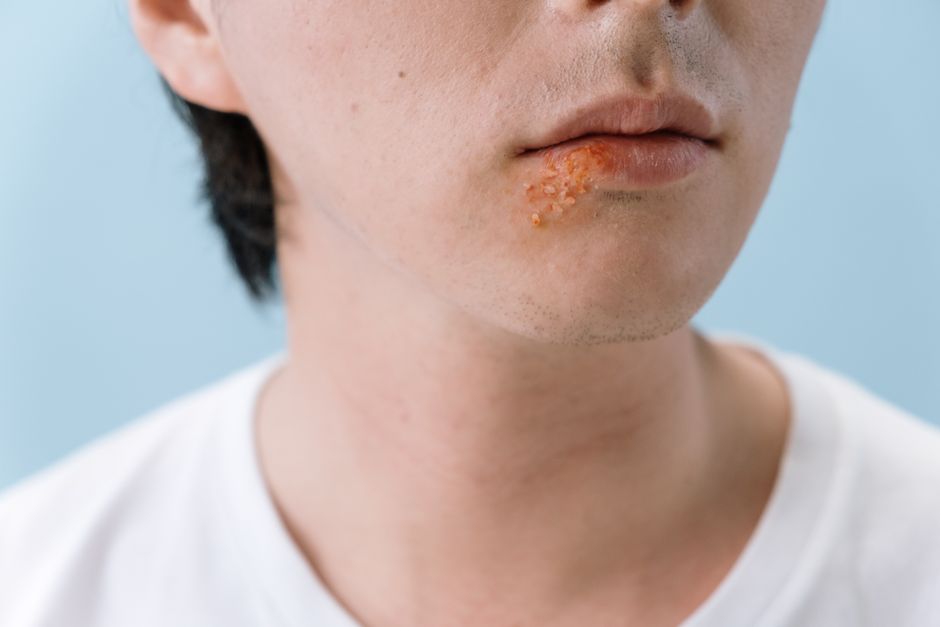
An AK typically looks like a small, rough, dry patch that feels like sandpaper when you run a finger over it. It may be easier to feel than to see. Colors range from skin-toned to pink, red, or brownish. Some lesions form a hard, wart-like crust. Others are flat and scaly.
Common features include:
- A rough or scaly patch that does not heal or go away
- A spot that stings, itches, or burns when touched
- A lesion that crusts, bleeds, or forms a sore that returns
- Flat or raised growths, usually less than 2.5 centimeters across
- Multiple lesions clustered in one sun-exposed area
Size and appearance vary widely. Some AKs are so subtle they are only found during a skin exam with a dermatoscope, a lighted magnifying tool. Others are obvious and tender.
One important point: AKs can look similar to other skin conditions, including seborrheic keratoses, psoriasis, eczema, and early skin cancers. A visual match is not a diagnosis. Only a clinician can tell the difference, and sometimes a biopsy is needed to rule out squamous cell carcinoma. If a lesion is growing, bleeding, or not healing, that warrants prompt evaluation.
What Causes Actinic Keratosis?
The cause is ultraviolet radiation. UV light damages DNA in skin cells, and the body’s repair systems cannot always keep up. Over decades, the damage accumulates. This is why AKs tend to appear later in life, even though the sun exposure that caused them happened years or decades earlier.
Both types of UV light matter. UVB causes direct DNA damage and is the main driver of sunburn. UVA penetrates deeper and contributes to aging and skin damage. Tanning beds emit both, often at high intensity, which is why they raise risk.
Several factors increase the likelihood of developing AKs:
- Fair skin, especially skin that burns easily and tans poorly
- Blue or green eyes and light hair
- A history of sunburns, particularly blistering burns earlier in life
- Cumulative lifetime sun exposure from work or recreation
- Tanning bed use
- Older age, since damage builds over time
- Weakened immune function, including from organ transplant medications
- Certain genetic conditions that impair DNA repair
People with darker skin can develop AKs too, though they are less common. When they do occur, they often appear in less obvious places and may be harder to spot, which can delay diagnosis.




Who Is Most at Risk?
Risk rises with total sun exposure and with skin type. Someone who has spent years working outdoors, played sports in the sun, or used tanning beds has a higher chance of developing AKs than someone with limited exposure and darker skin.
Age is a strong factor. AKs are uncommon before age 30 and become much more common after 40. This reflects the long lag between sun damage and visible lesions.
Immune status matters a great deal. People who take immunosuppressive medications, such as organ transplant recipients, develop AKs more often and are more likely to have them progress to squamous cell carcinoma. This is one reason transplant patients receive regular dermatology screening.
Having one AK raises the odds of having others, and having many AKs raises the risk of squamous cell carcinoma. That risk is tied to the total burden of sun-damaged skin, not just to any single spot.
How Are Actinic Keratoses Treated?
Treatment depends on how many lesions you have, where they are, and your overall risk. Options fall into two broad groups: treatments that target individual lesions and treatments that treat a field of damaged skin.
Lesion-directed treatments include:
- Cryotherapy — freezing the lesion with liquid nitrogen. This is one of the most common office treatments for isolated AKs.
- Curettage — scraping the lesion away, sometimes with electrosurgery.
- Laser therapy — using light energy to remove damaged tissue.
Field-directed treatments address the broader area of sun-damaged skin and are used when there are many lesions or when the surrounding skin shows significant damage:
- Topical creams and gels applied at home over weeks, such as fluorouracil, imiquimod, or tirbanibulin
- Photodynamic therapy — a light-sensitizing agent is applied, then a light source activates it to destroy abnormal cells
- Chemical peels using agents applied by a clinician
These treatments work differently and have different recovery times and side effects. Some cause redness, peeling, or crusting for days to weeks. The choice depends on the specifics of your case, and a dermatologist is the right person to weigh the options.
One honest point about evidence: no treatment has been proven in large trials to eliminate the risk of progression to skin cancer for any individual lesion. Treatment reduces the number of lesions and the burden of damaged skin, and it is widely used for that reason. The evidence supports treating AKs, but it does not support a guarantee that treating one lesion prevents cancer with certainty.
Can Actinic Keratosis Be Prevented?
Prevention focuses on reducing UV exposure and protecting skin daily.
- Use a broad-spectrum sunscreen with an SPF of 30 or higher, and reapply every two hours during sun exposure.
- Seek shade during peak sun hours, generally late morning to mid-afternoon.
- Wear protective clothing, a wide-brimmed hat, and sunglasses.
- Avoid tanning beds entirely.
- Check your skin monthly and see a dermatologist for any changing or non-healing spots.
Sunscreen use is well established for reducing sunburn and skin damage. Whether daily sunscreen use prevents AKs specifically has been studied, and the results are encouraging but not uniform across all studies. The general direction of the evidence supports consistent sun protection as the core prevention strategy.
For people with many AKs or a history of skin cancer, some clinicians recommend field treatments even on skin that looks normal, based on the idea that hidden damage is present. This approach is common in practice but is not universally standardized, and the strength of evidence varies by treatment.
When Should You See a Dermatologist?
See a dermatologist if you notice a new rough or scaly spot, a lesion that bleeds, crusts, or does not heal, or a spot that changes in size, color, or texture. These signs can also point to squamous cell carcinoma or other skin cancers, which need prompt attention.
People with a history of AKs or skin cancer usually need regular skin exams, often once or twice a year depending on their risk. Transplant patients and others on immunosuppressive medications may need more frequent checks.
An AK is not an emergency, but it is not something to ignore either. Early evaluation makes treatment simpler and helps catch any lesion that has already progressed.
Frequently Asked Questions
Is actinic keratosis the same as skin cancer?
No, an actinic keratosis is a precancerous lesion, not cancer, because the abnormal cells remain in the outer layer of skin. It can progress to squamous cell carcinoma if those cells break into deeper layers, which is why it is treated.
Can actinic keratosis go away on its own?
Some lesions do disappear without treatment, but this is uncommon and unpredictable. Because there is no reliable way to know which lesion will progress, most dermatologists recommend treating them.
How serious is actinic keratosis?
It is generally considered a manageable condition when caught early, but it signals significant sun damage and raises the risk of squamous cell carcinoma. Regular skin checks and treatment reduce that burden.
What is the best treatment for actinic keratosis?
There is no single best treatment for everyone; options include cryotherapy, topical creams, photodynamic therapy, and laser therapy. The right choice depends on the number, location, and size of lesions and your overall risk.
