
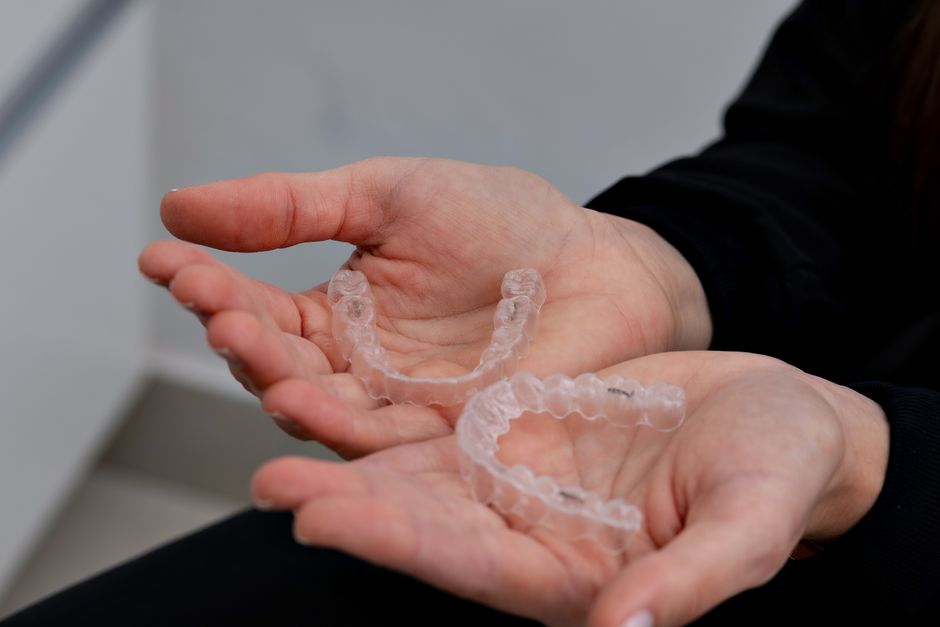
You can eat most of your normal diet with Invisalign, but the rules are simple: take the aligners out before you eat, and put them back in only after you brush and floss. Food and drink other than water should never go into your mouth while the trays are in. The main risks of eating with aligners in are staining, trapped food and sugar against your teeth, warping from heat, and cracks from hard bites. Follow those basics and treatment usually stays on track.
If you have just started treatment, the first week is the hardest. Your teeth are sore, the trays feel foreign, and eating can be awkward. That passes. What does not change is the routine around meals, and that routine is what protects your teeth and your treatment timeline.
Why Can’t You Eat With Invisalign Aligners In?
Aligners are thin plastic trays that fit tightly over your teeth. That tight fit is the whole point. It is also why food and aligners do not mix.
When you chew with trays in, food gets pushed between the plastic and your teeth. Sugars and starches sit there against enamel, sometimes for hours. Saliva cannot wash the area properly because the tray blocks it. That raises your risk of cavities and enamel damage.
The plastic itself is not built for biting. Aligners are made to hold a shape, not to absorb force. Biting into something hard can crack or deform a tray. A warped aligner no longer moves your teeth the way it was designed to, and you may need a replacement.
Heat is the other problem. Hot food and hot drinks can soften the plastic enough to distort it. Once a tray loses its shape, it is no longer doing its job.
There is also a staining issue. Coffee, tea, red wine, tomato sauce, and turmeric can discolor clear plastic. The aligners may not stain evenly, which makes them more visible in your mouth.
What Can You Drink With Invisalign In?
Water is the only drink that is safe to have with your aligners in. It does not stain, does not feed cavity-causing bacteria, and does not damage the plastic.
Everything else should come out first. That includes:
- Coffee and tea, hot or iced
- Soda, including diet soda
- Juice and smoothies
- Sports drinks and energy drinks
- Wine, beer, and cocktails
- Milk and plant-based milk
Some of these are obvious. Coffee stains. Soda is acidic. But milk surprises people. Milk contains sugar in the form of lactose, and it sits against your teeth the same way any other sugar does when a tray holds it in place.
If you drink something other than water, take the aligners out first. Rinse your mouth with water afterward. Then brush before you put the trays back in.
One practical note: your aligners need to be worn for a set number of hours each day for treatment to work as planned. Most clinicians aim for about 20 to 22 hours of wear per day. Every minute the trays are out for a drink counts against that total. That is a strong argument for keeping non-water drinks tied to meals rather than sipping them all day.
How Do You Handle Meals Without Falling Behind on Wear Time?
The challenge with Invisalign is not eating. It is the time the trays spend out of your mouth while you eat and then clean your teeth.
Three meals a day plus snacks, each followed by brushing, adds up. If a meal takes 30 minutes and brushing takes 5, that is 35 minutes out of your wear time, three times a day. Add snacks and it climbs fast.
A few habits help:
- Eat your meal in one sitting rather than grazing over an hour
- Keep snacks short and grouped with meals when possible
- Carry a travel toothbrush, paste, and floss so you can clean up wherever you are
- Rinse with water if you cannot brush right away, then brush as soon as you can
If you are at work or school, a small kit in your bag solves most of this. The people who struggle most with wear time are usually the ones who leave their cleaning supplies at home.
One clarification worth making: you do not need to brush after every single sip of water. Water is fine with trays in and does not require a cleaning routine.




Which Foods Are Most Likely to Damage Aligners or Teeth?
No food is banned from your diet. The question is whether you eat it with the trays in or out. Since the answer should always be out, food choices matter more for your teeth than for the plastic.
Still, some foods are worth planning around.
Staining foods and drinks can discolor aligners if residue is left on your teeth when you put the trays back in. Coffee, tea, red wine, berries, tomato-based sauces, curry, and turmeric are common culprits. Brushing before reinserting the trays reduces this.
Sugary and starchy foods feed the bacteria that cause cavities. This matters more with aligners because trays trap food and sugar against enamel. Sticky foods like dried fruit, caramel, and gummy candy are the hardest for saliva to clear.
Acidic foods and drinks soften enamel temporarily. Brushing right after acidic food or drink can wear away softened enamel. Waiting about 30 minutes before brushing is the standard advice, and rinsing with water in the meantime helps.
Hard foods like ice, hard candy, and nuts are a concern for your teeth in general, and a concern for aligners if you bite into them with trays in.
Does Eating With Aligners In Actually Slow Treatment?
It can, but not in the way most people assume. The damage is usually indirect.
A cracked or warped tray has to be replaced. That can mean a delay while a new one is made. A stained tray is not a functional problem, but many people replace them early for cosmetic reasons, which also costs time and money.
The bigger issue is wear time. If you take trays out for long, leisurely meals and snacks throughout the day, you may fall short of the daily wear target. Aligners only move teeth while they are in your mouth. Less wear time generally means slower progress, and in some cases, the next tray in the series does not fit properly because the teeth have not moved as expected.
Cavities are the most serious risk. A cavity that needs treatment can interrupt orthodontic care. Preventing that comes down to the same basics: take trays out to eat, clean your teeth before putting them back, and keep up with regular dental checkups.
What About Special Situations Like Dining Out or Traveling?
Eating out is manageable with a little planning. Bring a small case for your aligners so you are not wrapping them in a napkin, which is a common way people lose or damage them. Excuse yourself to the restroom to remove and reinsert them if you prefer privacy.
Travel adds a few wrinkles. Pack a spare case, a travel toothbrush, and floss. If you are flying, keep your aligner case in your carry-on rather than checked luggage.
For longer trips, keep your normal routine as close to normal as possible. The treatment does not pause because you are away from home.
How Should You Clean Your Aligners After Eating?
Clean your teeth first, then your aligners. Order matters. If you put trays back in over unbrushed teeth, you trap the food and sugar you just ate.
For the aligners themselves, lukewarm water and a soft toothbrush work well. Some clinicians recommend specific cleaning products or tablets. Hot water is the one thing to avoid, because it can warp the plastic.
Brush and floss your teeth before reinserting the trays. If you cannot brush, rinse thoroughly with water as a temporary measure and brush as soon as you can.
Frequently Asked Questions
Can I eat with my Invisalign aligners in?
No. Aligners should be removed before eating anything. Food gets trapped against your teeth and can stain, crack, or warp the trays.
Can I drink coffee with Invisalign in?
No. Coffee can stain the aligners and is acidic, so it should be consumed with the trays out. Rinse with water afterward and brush before putting them back in.
What happens if I accidentally eat with my aligners in?
One slip is unlikely to cause lasting harm, but check the tray for cracks or warping. If it no longer fits properly, contact your orthodontist about a replacement.
How long can I keep my aligners out while eating?
Aim to keep meals and cleanup short so you stay near the daily wear target your orthodontist set, which is often around 20 to 22 hours. Long, drawn-out meals and frequent snacking add up quickly.
