
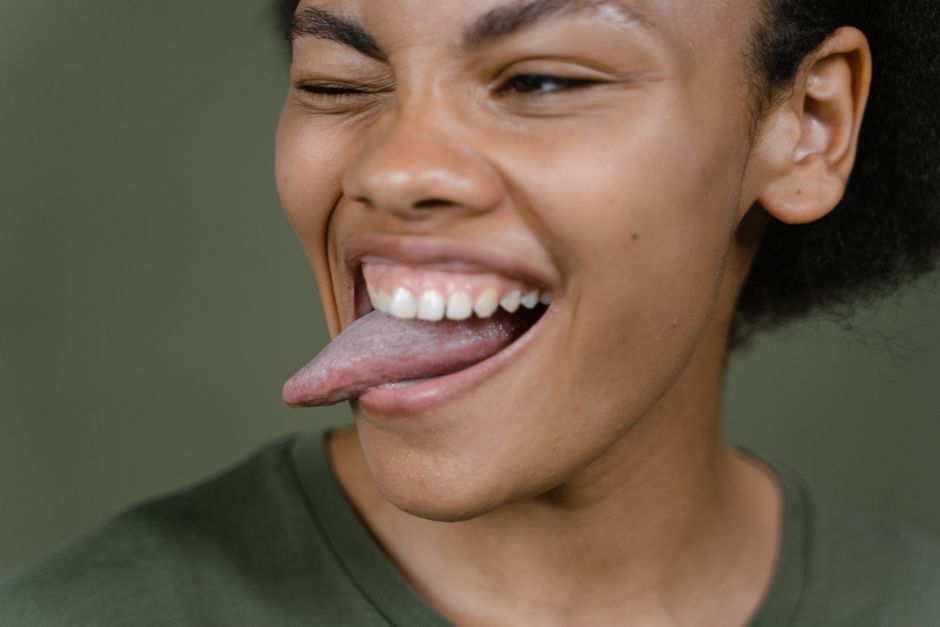
A lateral lisp is a speech sound disorder in which air escapes over the sides of the tongue instead of through the center of the mouth. This produces a “slushy” or “wet” quality on the sounds /s/ and /z/, and often on “sh,” “ch,” and “j.” It is one of four main types of lisp, and it is generally considered the hardest to correct because the tongue position that causes it is harder to retrain than the more common frontal lisp.
What Is a Lateral Lisp and How Does It Differ From Other Lisps?
A lateral lisp is defined by where the air goes, not by how the tongue looks. In typical /s/ production, the tongue forms a narrow groove down the center, and air travels forward through that groove to create a focused, high-pitched stream. In a lateral lisp, the tongue seal against the sides of the upper teeth or palate is incomplete. Air leaks sideways, and the result is a sound with a wet, bubbling quality that speech-language pathologists often describe as “slushy.”
This is different from the more familiar frontal lisp, sometimes called an interdental lisp. In a frontal lisp, the tongue pushes forward between the front teeth, and /s/ sounds more like “th.” A frontal lisp is common in young children and often resolves on its own. A lateral lisp is less common and much less likely to resolve without treatment.
A third type, the dentalized lisp, happens when the tongue presses against the back of the front teeth rather than protruding between them. The fourth type, the palatal lisp, involves the tongue touching the palate, muffling the sound. Each type has a distinct cause and a distinct correction approach.
One detail that surprises many parents: a lateral lisp is not simply a “baby” version of /s/ that a child will outgrow. The tongue is actually moving in a well-practiced but incorrect pattern. That pattern has to be unlearned, which is why it tends to need direct therapy.
What Does a Lateral Lisp Sound Like?
The signature of a lateral lisp is a wet, airy, or “slushy” sound. If you hold your hand near your own mouth and say a normal /s/, you feel a narrow, cool stream of air at the center. When a person with a lateral lisp says /s/, the air fans out to the sides, and the sound loses its sharp, hissing quality.
Listeners often describe the sound as:
- Wet or “spitty,” as if the person has something in their mouth
- Slushy or mushy, similar to a muffled /sh/
- Lacking the crisp, high-pitched whistle of a typical /s/
The sounds most often affected are /s/ and /z/, followed by the “sh,” “ch,” and “j” sounds, which are produced in a similar region of the mouth. In some speakers, the /t/ and /d/ sounds can also sound distorted because the tongue is already positioned incorrectly.
This is the key point about a lateral lisp: it is not a problem of the vocal cords or the voice. The sound source is fine. The problem is the shape and position of the tongue, which changes how the airflow is shaped into sound.
What Causes a Lateral Lisp?
For most people, no single cause can be identified. A lateral lisp is what clinicians call a functional speech sound disorder, meaning the structures of the mouth and the nerves that control them appear normal, but the learned movement pattern for /s/ is incorrect.
In other cases, there is a known contributing factor. These can include:
- Structural issues, such as a tongue thrust, a high or narrow palate, or dental alignment that makes a central groove hard to form
- Hearing loss, which can affect how a child learns to shape sounds
- Neurological conditions that affect tongue control and coordination
- Ankyloglossia (tongue-tie), though the evidence linking tongue-tie to lateral lisps specifically is limited and debated
Habit and imitation likely play a role too. A child may settle into a lateral tongue posture early and simply keep using it, even after the original trigger is gone.
It is worth being honest about the limits of what is known here. The research on why some children develop a lateral lisp and others do not is not settled. Many children with none of the factors above develop one, and many children with those factors do not. So while these factors are associated with lateral lisps, they do not predict them reliably.




How Common Is a Lateral Lisp and Who Does It Affect?
Speech sound disorders as a group are among the most common communication issues in childhood. A lateral lisp specifically is less common than a frontal lisp, though exact prevalence figures vary across studies and settings.
Lateral lisps appear in both children and adults. In children, they usually become noticeable around the time /s/ and /z/ should be developing, which is typically between ages 3 and 5. By around age 4 to 5, most children can produce a clear /s/. If a lateral lisp is still present well past that window, it is less likely to resolve on its own.
Adults can also have a lateral lisp. Some have had it since childhood and never received treatment. Others develop changes in tongue position after dental work, orthodontics, or a neurological event.
When Should a Lateral Lisp Be Evaluated?
A lateral lisp is one of the few speech issues that generally warrants an evaluation rather than a wait-and-see approach. Unlike a frontal lisp, which often self-corrects, a lateral lisp tends to persist and can become harder to change the longer it is practiced.
Consider an evaluation by a speech-language pathologist if:
- A child is around age 4 to 5 and still has a lateral lisp
- The lisp is affecting how others understand the child
- The child is becoming self-conscious or avoiding speaking
- An adult wants to change a long-standing lisp
Speech-language pathologists are the professionals trained to assess and treat speech sound disorders. In the United States, they are licensed by state and hold the Certificate of Clinical Competence from the American Speech-Language-Hearing Association, though requirements can change, so it is reasonable to verify credentials directly.
An evaluation typically includes listening to the person speak in conversation and in single words, and looking at how the tongue moves during speech. The clinician is assessing the type of lisp, which sounds are affected, and whether any structural or hearing factors are involved.
How Is a Lateral Lisp Treated?
Treatment for a lateral lisp is behavioral, not medical. There is no medication or device that corrects it. The core of therapy is teaching the tongue a new movement pattern and then practicing it until it becomes automatic.
A common starting point in therapy is helping the person feel the difference between central and lateral airflow. A clinician might use a straw, a mirror, or a hand near the mouth to give feedback about where the air is going. From there, the goal is to build a central groove in the tongue and direct the airstream forward.
Therapy usually moves through a sequence:
- Producing the target sound in isolation
- Practicing it in syllables
- Using it in single words
- Building up to sentences and conversation
Progress is often slow at first, especially for a lateral lisp, because the incorrect pattern is well established. Consistency between sessions matters, and home practice is usually part of the plan.
How long treatment takes varies widely. Some people make changes in a few months. Others, particularly those who have had a lateral lisp for many years, may need longer. It is not possible to predict an individual timeline with confidence, and any clinician who promises a fixed number of sessions is overstating what is known.
For adults, therapy can still help. The brain and tongue can learn new patterns at any age, though established habits may take more repetition to change.
Can a Lateral Lisp Be Prevented or Corrected at Home?
There is no proven way to prevent a lateral lisp. Because the causes are not fully understood, there is no reliable prevention strategy. What can be done is early identification, which gives therapy the best chance of working before the pattern becomes deeply set.
Home practice can support therapy, but it is not a substitute for an evaluation. If a lateral lisp is present, practicing the wrong tongue position at home can reinforce the error. This is why working with a speech-language pathologist matters: the clinician can confirm the tongue is moving correctly before practice begins.
Some general habits support speech development in young children, such as talking and reading with them and responding to their speech. These support language overall, but no specific home activity has been shown to prevent a lateral lisp.
Be cautious of apps, videos, and online programs that promise to fix a lisp quickly. No clinical evidence confirms that these tools correct a lateral lisp on their own, and a lateral lisp in particular needs feedback that a program usually cannot provide.
Frequently Asked Questions
What is a lateral lisp?
A lateral lisp is a speech sound disorder where air escapes over the sides of the tongue instead of through the center, making /s/ and /z/ sound wet or slushy. It is one of the less common lisp types and tends to need direct therapy.
What does a lateral lisp sound like?
It sounds wet, airy, or “slushy,” with the sharp hiss of a normal /s/ replaced by a muffled quality. The “sh,” “ch,” and “j” sounds are often affected too.
Do children outgrow a lateral lisp?
A lateral lisp is much less likely to resolve on its own than a frontal lisp. If it is still present around age 4 to 5, an evaluation by a speech-language pathologist is usually recommended.
Can a lateral lisp be corrected in adults?
Yes, adults can change a lateral lisp with speech therapy, though long-standing patterns may take more repetition. There is no medication or device that corrects it.
