
A “reduced salt area” on a food label is a specific zone on the packaging where the manufacturer highlights that the product contains less sodium than the standard version of that same food. This is a regulated claim, not a marketing slogan. When you see this label, the product must contain at least 25% less sodium than the original product it is compared to. It does not mean the food is low in salt, and it does not mean it is salt-free. It simply means the company has cut the sodium content compared to their own regular recipe.
Understanding this distinction matters because many people assume “reduced salt” means “healthy.” That is not always the case. A reduced-salt frozen dinner can still pack a significant amount of sodium per serving. The claim is about a comparison, not an absolute value. You still need to check the Nutrition Facts panel to see the actual milligrams of sodium in a single serving.
What Does “Reduced Salt” Legally Mean On A Food Label?
The term “reduced salt” is defined by the U.S. Food and Drug Administration (FDA). For a product to carry this label, it must contain at least 25% less sodium than the reference food. The reference food is usually the manufacturer’s regular product, but it can also be a competitor’s average product if the company states that comparison clearly.
This is a relative claim. It compares the new product to a standard version, not to a universal healthy threshold. A potato chip brand could label its chips “reduced salt” if it cuts sodium by 25%, even if the chips remain high in sodium overall. The label only tells you about the difference between two versions of a similar food.
Other label terms follow the same logic. “Light in sodium” or “lightly salted” means a 50% reduction. “No salt added” means no salt was added during processing, but the food may still contain natural sodium. “Unsalted” means the same thing. “Low sodium” is the only common claim that sets an absolute limit: 140 milligrams or less per serving.
How Much Sodium Is Actually In Reduced Salt Foods?
There is no single number that applies to all reduced-salt foods. The actual sodium content depends entirely on the product category and the starting recipe. A reduced-salt soup might contain 300 milligrams per serving, while a reduced-salt cracker might contain 80 milligrams per serving. Both are valid under the labeling rule, but they are very different amounts.
The only way to know the real number is to read the Nutrition Facts label. Look at the serving size first. Then check the sodium line. The FDA requires this information on nearly all packaged foods, so the data is always available. Do not rely on the front-of-package claim alone.
For context, the Dietary Guidelines for Americans recommend limiting sodium to less than 2,300 milligrams per day. That is about one teaspoon of salt. Most Americans consume well above this amount, averaging closer to 3,400 milligrams daily. A reduced-salt product can still push you toward that limit if you eat multiple servings or combine it with other salty foods.
Why Do Food Companies Use Reduced Salt Labels?
Manufacturers use these labels for two main reasons: consumer demand and regulatory pressure. Public health organizations have spent decades urging people to cut sodium intake because high sodium is linked to high blood pressure, which increases the risk of heart disease and stroke. Many consumers now actively look for lower-sodium options, so the label helps sales.
There is also the matter of taste expectations. Salt enhances flavor, suppresses bitterness, and acts as a preservative. If a company simply removed salt from a product, consumers would notice the difference immediately. The “reduced salt” label sets an expectation that the taste may be slightly different while still being acceptable. It is a compromise between health goals and palatability.
Sodium reduction is technically challenging. Salt contributes to texture in baked goods, controls fermentation in pickles, and prevents microbial growth in cured meats. Reformulating a product to reduce sodium without ruining its quality takes time and money. The label signals that this work has been done, even if the result is not drastically lower in sodium.



Reduced Salt vs. Low Sodium: What Is The Difference?
These two terms are often confused, but they mean very different things. Reduced salt is comparative. Low sodium is absolute. A product labeled “low sodium” must contain 140 milligrams or less per serving, no exceptions. A “reduced salt” product can contain any amount of sodium, as long as it is at least 25% less than the comparison food.
Here is a practical example. Suppose a regular can of soup contains 800 milligrams of sodium per serving. The reduced-salt version must contain 600 milligrams or less. That is a 25% cut, but 600 milligrams is still a substantial amount. In contrast, a low-sodium soup cannot exceed 140 milligrams per serving, regardless of what the regular version contains.
If your goal is to strictly limit sodium, look for the “low sodium” label or check the actual milligram count. If you are simply trying to cut back gradually, “reduced salt” may be a reasonable step. Just know that “reduced salt” does not mean “low salt.”
How To Use The Reduced Salt Label In Your Shopping Routine
Start by comparing products side by side. When you pick up a reduced-salt item, find the regular version of the same brand and compare the sodium per serving. This tells you the actual reduction. Then compare the reduced-salt version to other brands’ regular versions. Sometimes a competitor’s regular product is naturally lower in sodium than another brand’s reduced-salt product.
Pay attention to serving sizes. A package may appear to be a single serving, but the label might list two or three servings. If the reduced-salt soup has 300 milligrams per serving and the can contains two servings, you are consuming 600 milligrams if you eat the whole can. Always multiply the sodium per serving by the number of servings you actually eat.
Rinsing canned foods can help. Beans, vegetables, and tuna packed in water lose a meaningful portion of their sodium when rinsed and drained. Some research suggests rinsing can remove up to 40% of the sodium from canned beans. This is a practical step that works alongside label reading, though the exact reduction varies by product.
What About “Sea Salt” And “Himalayan Salt” Labels?
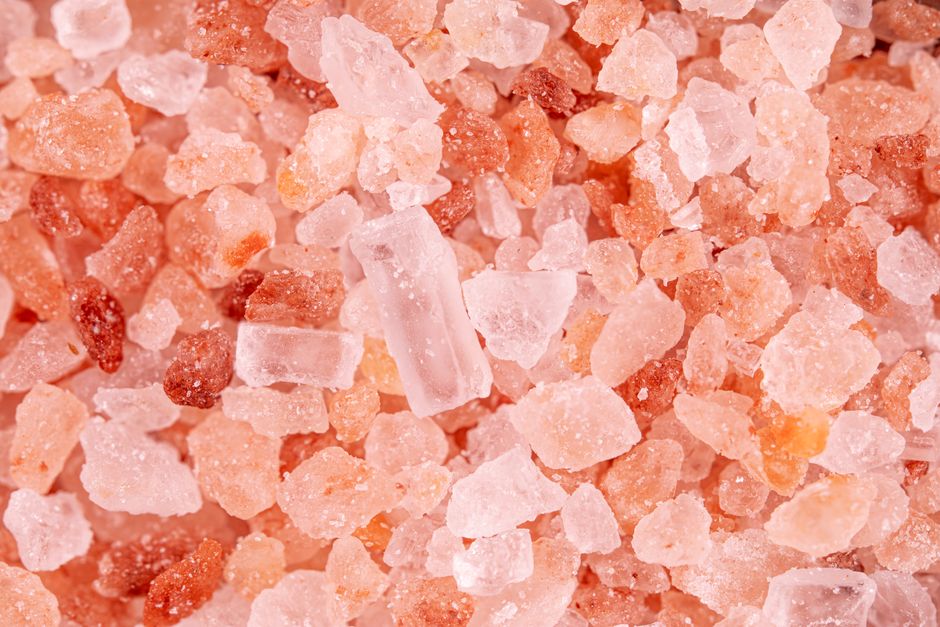
Sea salt and pink Himalayan salt are not lower in sodium than regular table salt. They are chemically almost identical in sodium content. The difference is in texture, mineral traces, and processing. Some people prefer their taste or believe they are healthier, but the sodium impact on your body is essentially the same.
If a product claims to use sea salt instead of table salt, check the sodium per serving anyway. The label may imply a health benefit that does not exist. A “sea salt” potato chip is still a salty potato chip. The reduced-salt label on such a product would still follow the same 25% reduction rule, but the baseline may already be high.
The takeaway is simple: judge foods by the numbers on the Nutrition Facts panel, not by the type of salt pictured on the front of the package.
Are Reduced Salt Products Healthier For Everyone?
For most people, reducing sodium intake is beneficial, especially if you have high blood pressure, kidney disease, or a family history of heart problems. The evidence linking high sodium intake to elevated blood pressure is strong and consistent across large populations. Cutting back on sodium generally lowers blood pressure in people who are salt-sensitive, which includes many older adults and people with hypertension.
However, sodium is not universally harmful. Your body needs sodium to maintain fluid balance, transmit nerve signals, and contract muscles. The kidneys regulate sodium levels tightly. For healthy people without hypertension, the relationship between moderate sodium intake and health outcomes is less clear. Some research even suggests that very low sodium intake may be associated with adverse effects in certain populations, though this remains debated.
The practical guidance remains the same: most Americans consume too much sodium, and reducing intake to the recommended 2,300 milligrams or less per day is a reasonable goal. A reduced-salt product can help you get there, but it is not a free pass to ignore the rest of your diet.
What To Look For Beyond The Reduced Salt Label
Check the ingredient list for hidden sodium sources. Monosodium glutamate (MSG), sodium bicarbonate (baking soda), sodium nitrate, sodium benzoate, and disodium phosphate all contribute to total sodium content. A product can be labeled “reduced salt” and still contain multiple sodium-based additives.
Also consider the whole nutritional picture. A reduced-salt frozen pizza might still be high in saturated fat and refined carbohydrates. Reducing sodium does not automatically make a food healthy. Use the label as one piece of information, not the final verdict.
When you see the reduced-salt label, ask yourself three questions: How much sodium is actually in one serving? How many servings will I eat? And what else is in this food? Answering those questions gives you more useful information than the front-of-package claim alone.
Frequently Asked Questions
Does reduced salt mean low sodium?
No. Reduced salt means the product has at least 25% less sodium than the regular version of the same food. Low sodium means 140 milligrams or less per serving, which is an absolute limit.
Is reduced salt the same as no salt added?
No. Reduced salt compares the product to a standard version. No salt added means no salt was added during processing, but the food may still contain natural sodium from its ingredients.
Can I trust the reduced salt label to be accurate?
Yes, the FDA regulates this claim and requires at least a 25% reduction from the reference food. However, you should still check the Nutrition Facts panel for the exact milligram amount per serving.
Is a reduced salt product always a healthy choice?
Not necessarily. A reduced salt product can still be high in sodium overall, and it may also be high in fat, sugar, or refined carbohydrates. Always review the full nutrition information.
