
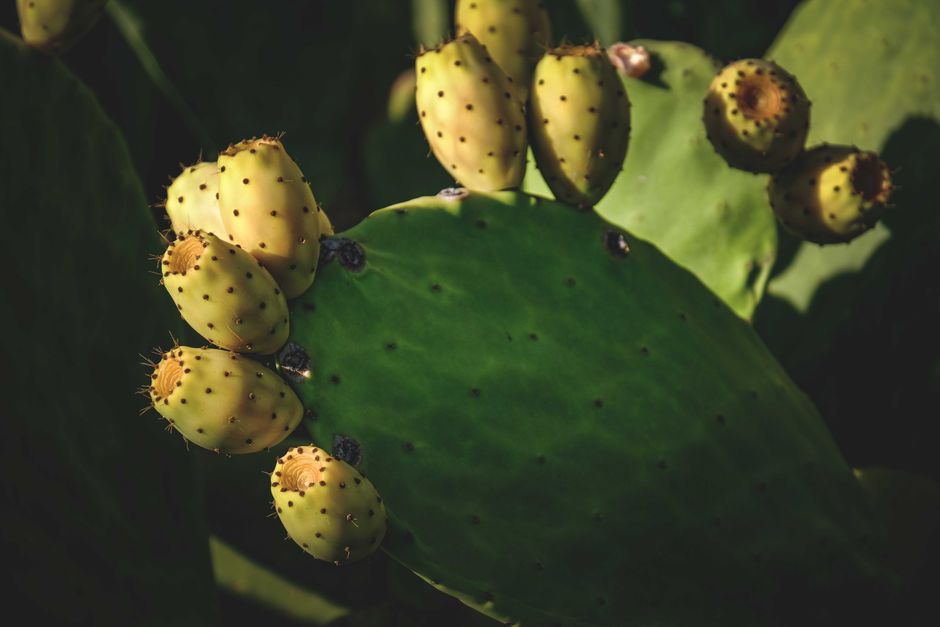
A prickly pear is the edible fruit of certain cactus species in the Opuntia genus. These cacti are native to the Americas and thrive in arid and semi-arid regions. The fruit is oval-shaped, ranges in color from green to deep red, and is covered in small, hair-like spines called glochids. Both the fruit and the fleshy cactus pads, known as nopales, are used in cooking and traditional medicine.
What Does a Prickly Pear Look and Taste Like?
The fruit grows directly from the flat, paddle-shaped segments of the cactus. Depending on the species and ripeness, the skin can be green, yellow, orange, red, or purple. The inside flesh is juicy and filled with hard seeds.
The flavor is often compared to a cross between a melon and a cucumber, with a subtle sweetness. Some varieties have a hint of citrus or berry flavor. Red and purple fruits tend to be sweeter than green ones.
Every part of the fruit’s exterior is covered in tiny barbed bristles. These glochids are nearly invisible but easily detach and lodge in skin, causing irritation. Glochids must be removed before eating. This is why commercial prickly pears are often sold already peeled or prepared.
What Is the Nutritional Profile of Prickly Pear?
Prickly pear is a low-calorie fruit with a meaningful amount of fiber and vitamin C. It also provides magnesium, potassium, and calcium. The fruit contains betalains, which are pigments with antioxidant properties. These compounds give the fruit its red and purple colors.
A standard serving of raw prickly pear (about 100 grams) contains roughly 40–60 calories. The exact values vary by species and growing conditions. The seeds are edible but hard, and many people spit them out or blend them into smoothies.
Nopales, the pads, are also nutritious. They are low in carbohydrates and provide soluble fiber, which can slow digestion. Both the fruit and pads are staples in Mexican and Southwestern cuisines.
What Are the Documented Health Benefits of Prickly Pear?
Research on prickly pear has focused on a few specific areas. The evidence is strongest for its effects on blood sugar and hangover symptoms.
Some studies suggest that consuming prickly pear fiber or extracts may help moderate blood sugar spikes after meals. The soluble fiber in the fruit and pads can slow carbohydrate absorption. A 2021 review of randomized controlled trials found that prickly pear supplementation was associated with modest reductions in fasting blood glucose and insulin levels in people with type 2 diabetes. However, the studies were small and used varying preparations, so the clinical significance remains uncertain.
One well-known study on prickly pear extract and hangovers was published in the Archives of Internal Medicine in 2004. It found that taking the extract before alcohol consumption reduced hangover symptoms by about half in some participants. The mechanism is not fully understood, but it may relate to the plant’s anti-inflammatory effects. This is a single study, and no large trials have confirmed the finding.
Prickly pear has also been studied for its antioxidant and anti-inflammatory activity in test tubes and animal models. These effects are biologically plausible because of the fruit’s betalain and flavonoid content. But no high-quality human trials have confirmed that prickly pear reduces inflammation or oxidative stress in people.





Does Prickly Pear Help with Blood Sugar Control?
Several small human studies have examined prickly pear’s effect on blood sugar. The results are promising but not definitive.
A 2016 meta-analysis of nine randomized trials found that prickly pear consumption was associated with a modest reduction in fasting blood glucose and insulin levels. The effect was more pronounced in people with type 2 diabetes than in healthy individuals. The authors noted that the studies were heterogeneous and used different parts of the plant and different doses.
The proposed mechanism involves the pectin and mucilage in the cactus. These soluble fibers form a gel in the digestive tract, which can slow the absorption of sugars. This is the same reason oat bran and psyllium help blunt post-meal glucose spikes.
If you have diabetes and want to try prickly pear, it is reasonable to do so as part of a balanced diet. But it should not replace prescribed diabetes medications. No evidence suggests that prickly pear alone can control blood sugar in people with diabetes.
Are There Any Risks or Side Effects?
Prickly pear is generally safe when consumed as food. The most common side effect is mild diarrhea, especially when eating large amounts of the fruit. The seeds and fiber can cause bloating in some people.
The glochids are the main physical hazard. If not fully removed, they can become embedded in the lips, tongue, or throat. In rare cases, glochids in the throat can cause swelling that requires medical attention. Always peel the fruit carefully and rinse it thoroughly before eating.
People with diabetes who take medication should monitor their blood sugar closely if they add prickly pear to their routine. Because the fruit may lower blood sugar, combining it with insulin or sulfonylureas could theoretically increase the risk of hypoglycemia. This interaction has not been well studied.
Pregnant and breastfeeding women do not have specific safety data for prickly pear supplements. Eating the fruit as food is unlikely to be harmful, but concentrated extracts have not been studied in these populations. No clinical guidelines currently exist for this group.
How Do You Prepare and Eat Prickly Pear Safely?
Preparation requires care because of the glochids. Thick rubber gloves help. Hold the fruit with tongs and rinse it under running water to remove loose bristles.
To peel, cut off both ends of the fruit. Make a single lengthwise slit through the skin. Use a knife to lift the skin away from the flesh, then discard the peel. The flesh can be sliced, cubed, or blended.
Common uses include:
- Raw slices in salads or fruit bowls
- Juice or smoothies
- Jams, jellies, and syrups
- Grilled or roasted nopales as a vegetable side dish
Do not eat the skin. It contains most of the glochids and has a tough, unpleasant texture. The seeds are safe to swallow but hard; blend them if you want a smoother texture.
What Is the Difference Between Prickly Pear Fruit and Nopales?
The fruit and the pads come from the same plant but are used differently.
Nopales are the young, tender pads of the cactus. They are harvested in spring and early summer. Nopales have a tart, slightly slimy texture similar to okra when cooked. They are commonly grilled, sautéed, or added to eggs, tacos, and salads. Nopales are lower in sugar than the fruit and higher in fiber per serving.
The fruit is harvested later in the season, typically from late summer through fall. It is sweeter and used more often in desserts, drinks, and snacks. Both parts of the plant are nutritious, but they serve different culinary roles.
Is Prickly Pear a Superfood?
The term superfood is a marketing label, not a scientific classification. Prickly pear is a nutritious fruit, but it does not have unique properties that make it superior to other fruits.
Its fiber and antioxidant content are genuine benefits. However, blueberries, pomegranates, and many other fruits offer similar nutritional value. The best diet includes a variety of colorful plant foods, not a single “superfood.”
Some supplement companies market prickly pear extracts as a weight loss aid or a cure for diabetes. No study has confirmed these claims. The evidence for blood sugar effects is modest, and no high-quality trials have shown that prickly pear alone produces meaningful weight loss.
Frequently Asked Questions
Can you eat prickly pear raw?
Yes, the flesh of the fruit is safe to eat raw once the skin and glochids are completely removed. Wash it thoroughly and peel it carefully before eating.
Does prickly pear lower blood sugar?
Some studies suggest that prickly pear fiber can modestly reduce blood sugar after meals, especially in people with type 2 diabetes. The effect is small, and it should not replace standard diabetes treatment.
What happens if you eat prickly pear seeds?
The seeds are edible and safe to swallow, though they are hard and may be unpleasant to chew. They pass through the digestive tract and are usually excreted whole.
Is prickly pear good for weight loss?
No clinical evidence currently confirms that prickly pear causes meaningful weight loss. It is a low-calorie, high-fiber food that can fit into a weight management plan, but it is not a standalone solution.
