
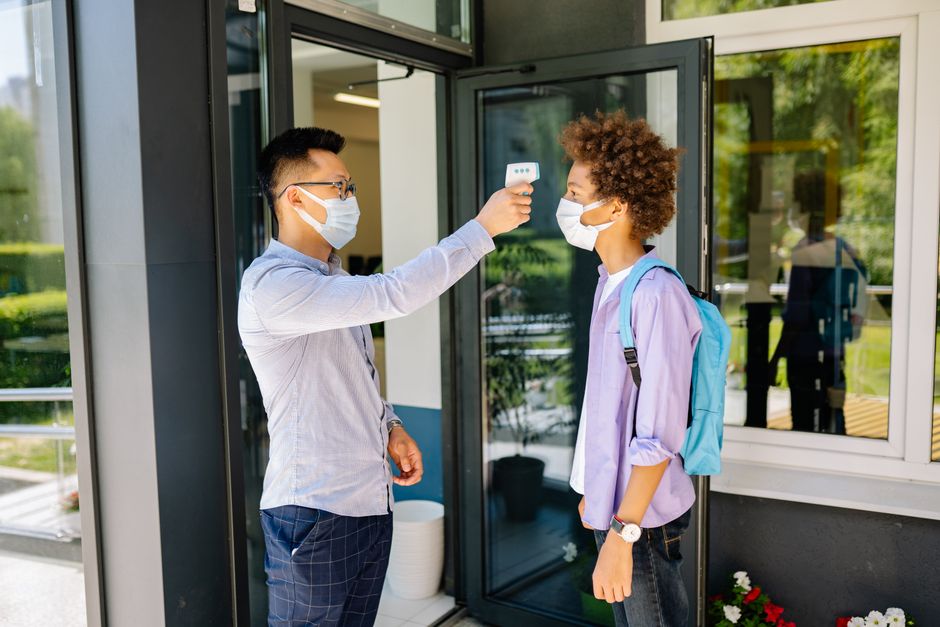
If you’ve ever pointed a thermometer at your forehead and stared at the number wondering whether 99.1 counts as a fever, you’re not alone. For most adults, a normal body temperature falls somewhere between 97°F (36.1°C) and 99°F (37.2°C) when measured orally. That range — not a single magic number — is what “normal” actually means. The classic 98.6°F figure is a useful reference point, but it was never meant to be a strict cutoff, and treating it like one causes a lot of unnecessary worry.
Why Is 98.6°F Not the Whole Story?
The 98.6°F number comes from 19th-century research by a German physician, Carl Wunderlich, who averaged readings from thousands of patients. Modern studies using better thermometers have found that average human body temperature is often a bit lower — closer to 97.5°F to 98.2°F in many adults. That doesn’t mean Wunderlich was wrong. It means “average” and “normal” are not the same thing.
Body temperature is a range, not a fixed point. It shifts throughout the day, varies between people, and depends heavily on where and how you measure it. A temperature that would be low for one person might be completely typical for another.
What matters more than any single reading is your personal baseline. If you usually run around 97.8°F and suddenly spike to 100.4°F, that’s meaningful — even though 97.8°F itself might look “low” on a chart.
What Is a Normal Temperature by Measurement Method?
Where you measure makes a real difference. Oral, ear, forehead, armpit, and rectal readings all produce different numbers from the same body. Here’s how the general ranges compare:
| Method | Typical Normal Range | Notes |
|---|---|---|
| Oral (mouth) | 97°F – 99°F (36.1°C – 37.2°C) | Most common in adults; wait 15–30 minutes after eating or drinking |
| Rectal | 0.5°F – 1°F higher than oral | Considered most accurate; rarely used in adults outside clinical settings |
| Ear (tympanic) | Roughly similar to oral, sometimes slightly higher | Accuracy depends on proper placement; earwax can affect readings |
| Axillary (armpit) | 0.5°F – 1°F lower than oral | Least accurate; often used in children as a first check |
| Forehead (temporal) | Varies; often close to oral | Convenient but affected by sweating, environment, and device quality |
Rectal thermometers give the closest reading to your true core temperature. But for most adults checking at home, an oral reading is reliable enough if done correctly. The key is consistency — use the same method each time so you’re comparing apples to apples.
What Causes Temperature to Fluctuate During the Day?
Your body doesn’t hold a steady temperature around the clock. It follows a daily rhythm, and several everyday factors push it up or down.
- Time of day: Temperature is usually lowest in the early morning and highest in the late afternoon or early evening. A swing of about 1°F across the day is typical.
- Physical activity: Exercise raises core temperature temporarily. A hard workout can push it up by a degree or more.
- Hormones: In women who menstruate, temperature rises slightly after ovulation and stays a bit higher until the next period.
- Food and drink: Hot beverages, cold drinks, and recent meals can affect oral readings for 15–30 minutes.
- Environment: A hot room, heavy clothing, or a recent hot shower can nudge a surface reading upward.
- Age: Older adults often run slightly cooler than younger adults. A temperature of 97°F may be perfectly normal for a 75-year-old.
This is why a single reading rarely tells the full story. If you feel fine and your temperature is 99°F at 6 p.m., that may simply be your daily peak. If the same reading shows up at 6 a.m. along with chills and body aches, it deserves more attention.



When Does a Temperature Become a Fever?
In adults, a temperature of 100.4°F (38°C) or higher is generally considered a fever. This threshold is widely used in clinical settings and is a practical cutoff for “something is going on.”
Below that, the picture is murkier. A reading between 99°F and 100.4°F is often called a low-grade temperature. Some clinicians treat it as a mild fever; others see it as within the upper range of normal, especially if it’s late in the day or after activity. The evidence doesn’t support a hard rule here, and how much it matters depends on your symptoms and your personal baseline.
What’s more useful than fixating on the exact number is asking: How do I feel? A fever is a symptom, not a disease. It’s your immune system raising the body’s thermostat to make conditions less favorable for certain pathogens. The number itself doesn’t tell you what’s causing it or how sick you are.
What About a Temperature That’s Below Normal?
A body temperature below 95°F (35°C) is considered hypothermia and is a medical emergency. But readings between 95°F and 97°F are trickier to interpret.
Some adults naturally run low. If your baseline is 97.2°F and you feel well, that’s likely just your normal. A low reading becomes concerning when it comes with symptoms like confusion, shivering, fatigue, or cold, pale skin — especially after prolonged cold exposure or in someone with an underactive thyroid.
Certain medications, alcohol use, and some metabolic conditions can also lower body temperature. If a low reading is new for you and doesn’t bounce back with warming up, it’s worth a call to a healthcare provider.
How Should You Take Your Temperature Correctly?
Getting an accurate reading is mostly about technique. Small mistakes can shift the number by a degree or more and send you down the wrong path.
- Wait at least 15–30 minutes after eating, drinking, smoking, or exercising before taking an oral reading.
- Place the thermometer tip well under the tongue, toward the back, and close your lips — not your teeth — around it.
- Follow the device’s instructions for how long to hold it. Digital thermometers usually beep when done.
- For ear thermometers, make sure the probe fits snugly and points toward the eardrum. Earwax or a poor seal can throw off the reading.
- Take more than one reading if the first seems off. Compare with how you feel.
If you’re tracking a fever over time, write down the number, the time, and the method. That record is far more useful to a clinician than a single snapshot.
Does a Higher Temperature Always Mean a Worse Illness?
No. The height of a fever doesn’t reliably match how serious an illness is. Some mild viral infections spike temperatures to 102°F or higher, while some serious infections — particularly in older adults or people with weakened immune systems — produce little or no fever at all.
This is an important point. In older adults, a serious infection like pneumonia can sometimes show up with a temperature that’s only mildly elevated, or even normal. That’s one reason clinicians look at the whole picture: heart rate, breathing, mental status, and how the person looks and feels.
For most healthy adults, a fever on its own isn’t dangerous. The number is a signal, not a score. What matters is the pattern, the accompanying symptoms, and how long it lasts.
When Should You Seek Medical Care?
Most fevers in adults pass on their own within a few days. But some situations call for a professional evaluation, and it’s better to err on the side of checking.
- A temperature of 103°F (39.4°C) or higher that doesn’t come down with fever-reducing medication
- A fever lasting more than three days
- Fever with severe headache, stiff neck, rash, confusion, or difficulty breathing
- Fever in someone who is pregnant, elderly, or has a weakened immune system
- Fever after recent travel or hospitalization
These aren’t rigid rules — they’re general guideposts. If something feels wrong, trust that instinct and reach out. A clinician can assess what a number alone can’t.
Frequently Asked Questions
What is a normal temp in adults?
A normal oral temperature in adults generally falls between 97°F and 99°F (36.1°C to 37.2°C). Individual baselines vary, and time of day, activity, and measurement method all affect the reading.
Is 99°F considered a fever in adults?
No, 99°F is generally not considered a fever. The standard threshold for fever in adults is 100.4°F (38°C) or higher, though some clinicians treat 99°F to 100.4°F as a low-grade temperature.
Why does my temperature change throughout the day?
Body temperature follows a daily rhythm, typically running lowest in the early morning and highest in the late afternoon or evening. A swing of about 1°F across the day is normal.
Which thermometer method is most accurate for adults?
Rectal thermometers give the reading closest to core body temperature, but oral thermometers are reliable for most adults when used correctly. Ear and forehead devices can be accurate but depend heavily on proper technique.
