
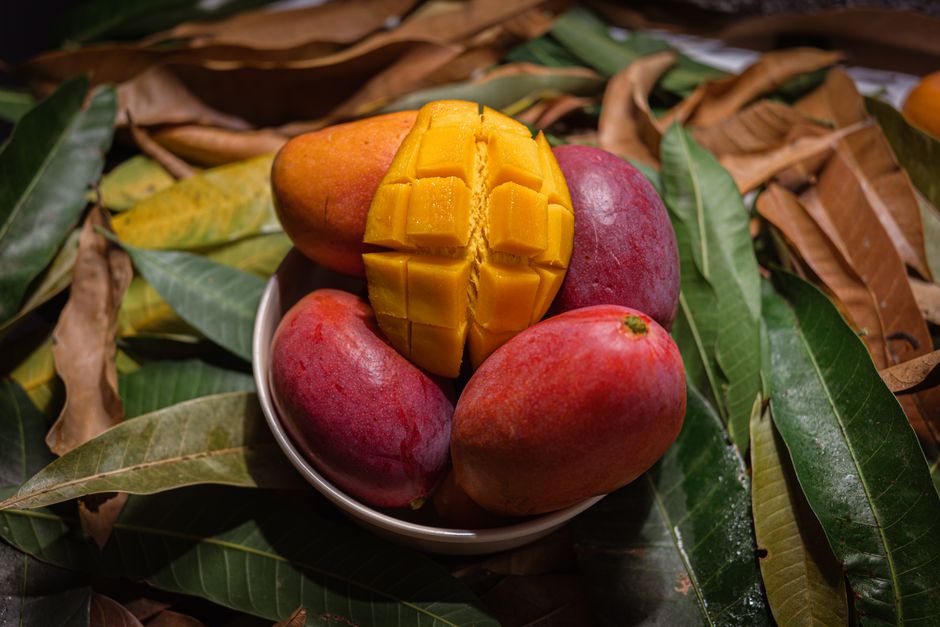
A mango is a sweet, juicy fruit that grows on tropical trees native to South Asia. It has a large central pit, a thin skin that ranges from green to red to yellow, and soft flesh that is bright orange when ripe. People have been eating mangoes for thousands of years, and today they are one of the most popular fruits in the world. You have likely seen them in grocery stores, but you might not know how varied they are or what makes them different from other tropical fruits.
What Is a Mango Exactly?
A mango is the fruit of the Mangifera indica tree. These trees can grow over 100 feet tall and live for hundreds of years. The fruit itself is technically a drupe, which means it has a fleshy outer part surrounding a hard shell with a seed inside. Peaches, plums, and olives are also drupes.
There are hundreds of mango varieties grown around the world. The most common ones in US grocery stores are the Tommy Atkins, Kent, and Ataulfo (also called honey or champagne mangoes). Each has a slightly different taste, texture, and fiber content. Ataulfo mangoes are smaller, creamier, and less stringy. Tommy Atkins mangoes are larger and more fibrous.
Mangoes are not just one thing. The experience of eating a mango depends heavily on its variety and ripeness. An unripe mango is firm, sour, and often used in savory dishes. A ripe mango is soft, sweet, and eaten raw or blended into drinks.
Where Do Mangoes Come From and How Are They Grown?
Mangoes originated in the region between eastern India and Myanmar over 4,000 years ago. From there they spread to Southeast Asia, then to Africa, and eventually to the Americas. Spanish explorers brought mangoes to Mexico and the Philippines in the 16th century.
Today, India is by far the largest producer of mangoes, growing over 40% of the world’s supply. Other major producers include China, Thailand, Indonesia, and Mexico. In the United States, mangoes are grown commercially in Florida, Hawaii, and California, but the climate limits production.
Mango trees need warm, frost-free conditions to thrive. They grow best in tropical and subtropical climates with a distinct dry season. The dry season helps trigger flowering. After flowering, it takes three to six months for the fruit to mature, depending on the variety.
Harvesting mangoes is mostly done by hand. Workers use long poles with baskets attached to pick the fruit without bruising it. Mangoes are typically harvested when they are mature but still firm. They ripen off the tree. This is why mangoes in stores are often hard and need a few days at home to soften.
What Does a Mango Taste Like?
The flavor of a ripe mango is hard to describe because it is unlike any other fruit. It is sweet but not cloying, with notes of peach, pineapple, and apricot. Some varieties have a hint of pine or citrus. The texture is smooth and juicy, though some mangoes have fibrous strands that get stuck in your teeth.
Unripe mangoes taste completely different. They are tart, sour, and crisp. In many cultures, green mango is eaten with salt, chili, or fish sauce. It is a common street snack in Southeast Asia and Mexico. The sourness comes from high levels of citric and malic acids that decrease as the fruit ripens.
The sweetness of a ripe mango comes from natural sugars. As the fruit ripens, starches convert into sucrose, glucose, and fructose. A fully ripe mango can be 14-18% sugar by weight. That is sweeter than most apples or oranges.





What Are the Health Benefits of Eating Mangoes?
Mangoes are nutrient-dense. A one-cup serving of sliced mango provides about 100 calories and delivers a significant amount of vitamin C. That same serving gives you two-thirds of your daily vitamin C needs. It also provides vitamin A, folate, copper, and vitamin E.
Research shows that mangoes are rich in antioxidants, particularly mangiferin, quercetin, and gallic acid. These compounds help neutralize free radicals in the body. Some studies suggest that the polyphenols in mangoes may reduce inflammation and oxidative stress, though most of this research is in cells or animals, not humans.
Mangoes also contain fiber, mostly soluble fiber. One cup provides about 3 grams of fiber. Fiber supports digestion and helps regulate blood sugar. Current research suggests that eating whole fruit like mango may be better for blood sugar control than drinking fruit juice, even if the juice is unsweetened.
Some people worry that mangoes are too sugary because they taste very sweet. But whole mangoes come with fiber, water, and micronutrients that slow down sugar absorption. The glycemic index of mango is moderate, around 51, which is similar to a banana or pineapple. For most people, eating mango in normal portions is not a problem.
How Do You Pick, Cut, and Store a Mango?
Picking a good mango is mostly about feel, not color. Color varies by variety and does not always indicate ripeness. The best test is gentle pressure. A ripe mango yields slightly when you squeeze it, similar to a ripe avocado. It should not be mushy or have dark soft spots.
Smell is another clue. A ripe mango has a sweet, fruity aroma near the stem. If it smells sour or fermented, it is overripe. If it has no smell, it is not ready.
Cutting a mango takes practice because of the large flat pit in the center. The pit is not round like a peach pit. It is oblong and runs through the middle of the fruit. The standard method is to stand the mango on its end and slice off the two “cheeks” on either side of the pit. Then score the flesh in a grid pattern without cutting through the skin, and scoop out the cubes with a spoon.
For storage, keep unripe mangoes at room temperature. Putting them in the refrigerator before they are ripe stops the ripening process and can make them mealy. Once ripe, mangoes can be stored in the refrigerator for up to five days. Cut mango should be kept in a sealed container in the fridge and eaten within two days.
How Do You Use Mango in Cooking and Recipes?
Mango is incredibly versatile. In its raw ripe form, it works well in smoothies, fruit salads, and yogurt bowls. It can be blended into sauces and dressings for a sweet tang. Mango lassi, a popular Indian drink, blends ripe mango with yogurt and a pinch of cardamom.
Green mango is used in savory dishes. In Thai cuisine, green mango is shredded into a spicy salad called som tam mamuang with chili, lime, fish sauce, and peanuts. In the Philippines, it is dipped in shrimp paste or salt. In Mexico, it is eaten with chili powder and lime.
Mango also works in cooked dishes. It can be grilled, roasted, or simmered into chutneys and curries. Grilled mango develops a caramelized surface while staying soft inside. It pairs well with pork, chicken, and fish. Mango salsa, made with diced mango, onion, cilantro, and lime juice, is a common topping for tacos and grilled fish.
Dried mango is another option, but read the label. Many dried mango products are loaded with added sugar. Unsweetened dried mango is available but harder to find. It is chewy and intensely sweet because the water is removed, concentrating the natural sugar.
What Are Common Misconceptions About Mangoes?
One common myth is that mangoes are high in fat. They are not. A whole mango has less than 1 gram of fat. The creamy texture comes from the soft flesh and natural sugars, not oil.
Another myth is that mango skin is poisonous. Mango skin is not poisonous, but it contains urushiol, the same compound in poison ivy and poison oak. Some people get a rash on their lips or hands from handling mango skin. This is rare but real. If you are sensitive to poison ivy, you might react to mango skin. Most people peel mangoes because the skin is tough and bitter, not because it is dangerous.
Some people believe that mangoes cause pimples or acne. There is no evidence that eating mango directly causes breakouts. However, some people report skin reactions after handling mango skin, which is separate from eating the flesh.
A third misconception is that the best mangoes are always red. Red color on a mango is often just sun exposure, not ripeness. Some of the sweetest mango varieties are green even when fully ripe. Rely on feel and smell, not color, to judge ripeness.
| Variety | Color When Ripe | Fiber | Sweetness | Best Use |
|---|---|---|---|---|
| Tommy Atkins | Red with green and yellow | High fiber, stringy | Mildly sweet | Juice, cooking |
| Kent | Green with red blush | Low fiber | Very sweet | Eating fresh |
| Ataulfo (Honey) | Golden yellow | Very low fiber | Very sweet, creamy | Eating fresh, smoothies |
| Haden | Red with green and yellow specks | Moderate fiber | Sweet, rich | Eating fresh, desserts |
Frequently Asked Questions
Can you eat mango skin?
Yes, but it is tough and bitter. The skin contains urushiol, which can cause a rash in people sensitive to poison ivy.
How do you ripen a mango faster?
Place it in a paper bag at room temperature. The trapped ethylene gas speeds up ripening. Adding a banana or apple helps even more.
Are mangoes good for people with diabetes?
In moderate portions, yes. Mango has a moderate glycemic index and provides fiber that slows sugar absorption. Stick to one serving, about one cup.
What is the difference between a mango and a peach?
Both are drupes, but mangoes are tropical with a flat pit, thicker skin, and a more intense sweet-tart flavor. Peaches have a round pit and fuzzy skin.
