
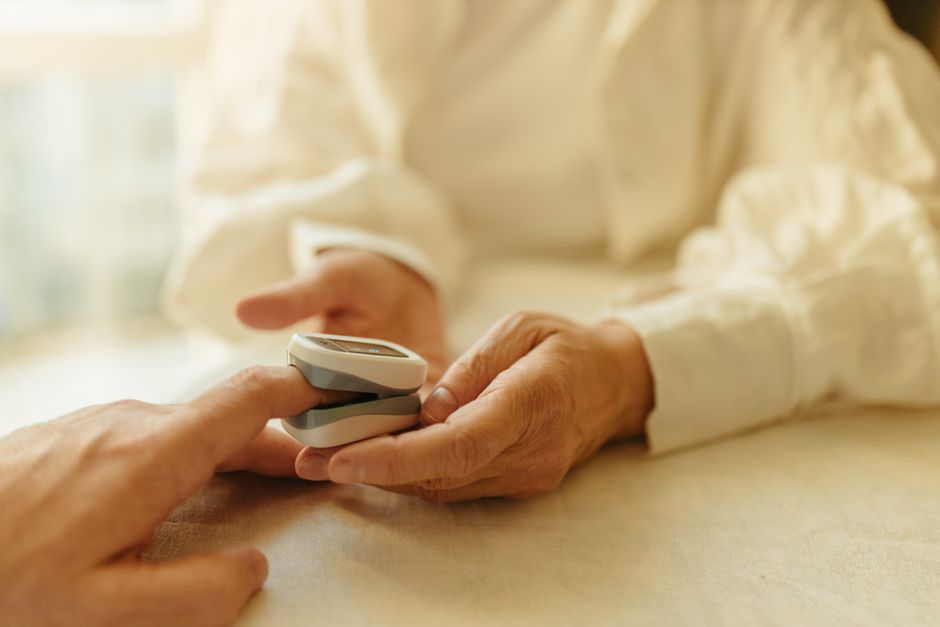
A good oxygen level for most healthy adults is an oxygen saturation (SpO2) between 95% and 100% when measured with a pulse oximeter at rest. Levels between 90% and 94% are considered low and worth discussing with a doctor. Anything below 90% is a medical concern that needs prompt attention. These numbers apply to people without chronic lung disease — for those with conditions like COPD, target ranges can be different and are set by a clinician.
What Is A Good Oxygen Level?
Oxygen saturation measures how much of the hemoglobin in your blood is carrying oxygen. Hemoglobin is the protein in red blood cells that picks up oxygen in the lungs and delivers it to tissues throughout the body. When a pulse oximeter reads 98%, it means roughly 98% of the available hemoglobin binding sites are occupied by oxygen.
For healthy adults at sea level, the normal range is 95% to 100%. This is well established in clinical practice and medical references. Values in this range mean your lungs and circulation are doing their job at rest.
It is normal for oxygen saturation to fluctuate slightly. A reading of 97% one minute and 98% the next is not a concern. Pulse oximeters have a margin of error of roughly 2% to 3%, so small shifts are usually just measurement variation, not a real change in your body.
One thing many people do not realize: oxygen saturation and oxygen delivery are not the same thing. A normal SpO2 tells you hemoglobin is well-loaded with oxygen. It does not tell you how well oxygen is reaching your tissues, how much hemoglobin you have, or whether your heart is pumping effectively. That is why a single number on a device never tells the whole story.
What Do the Numbers Mean?
The following ranges reflect standard clinical interpretation for adults without chronic respiratory conditions.
| SpO2 Range | What It Generally Means |
|---|---|
| 95% to 100% | Normal for healthy adults at sea level |
| 90% to 94% | Low — worth contacting a doctor, especially if persistent |
| Below 90% | Concerning — seek medical attention |
| Below 88% | Serious — emergency evaluation needed |
These thresholds are widely used in clinical settings. However, they are not universal. People with chronic obstructive pulmonary disease (COPD) or other long-term lung conditions may have baseline readings in the low 90s that are normal for them. Their doctors often set individual target ranges. A number that alarms one person may be routine for another.
Altitude also changes things. At higher elevations, the air contains less oxygen, and healthy residents may have lower baseline SpO2 readings. The standard 95% to 100% range assumes sea level.
How Do You Measure Oxygen Level at Home?
A pulse oximeter is a small clip-like device that shines light through your fingertip. It estimates oxygen saturation by measuring how much light is absorbed by oxygen-rich versus oxygen-poor blood. These devices are widely available and easy to use.
To get a reliable reading:
- Rest for a few minutes before measuring
- Make sure your hand is warm — cold fingers reduce accuracy
- Remove nail polish, which can interfere with the light sensor
- Sit still and breathe normally during the reading
- Wait for the number to stabilize before recording it
Pulse oximeters are useful screening tools, but they have real limits. Poor circulation, cold hands, dark nail polish, and motion can all produce inaccurate readings. The device also cannot tell you how well your lungs are exchanging carbon dioxide, which is a separate and important function.
If you get a reading that concerns you, take it again after a few minutes. One low reading does not necessarily mean a problem. A pattern of low readings does warrant a call to your doctor.





What Causes Low Oxygen Levels?
Low blood oxygen — called hypoxemia — has many possible causes. The most common involve the lungs, heart, or blood. Conditions that can reduce oxygen saturation include:
- Lung conditions such as pneumonia, asthma flare-ups, COPD, and pulmonary embolism
- Heart conditions that affect blood flow through the lungs
- Anemia, which reduces the number of red blood cells available to carry oxygen
- Sleep apnea, which causes repeated drops in oxygen during sleep
- High altitude, where the air itself has less oxygen
Some causes are temporary and mild. Others are serious. The underlying reason matters far more than the number alone. A person with a chronic condition may function well at 92%, while a healthy person who suddenly drops to 92% may be in trouble.
Symptoms that often accompany genuinely low oxygen include shortness of breath, confusion, chest pain, rapid heartbeat, and bluish tint to lips or fingertips. When these appear alongside a low reading, seek medical care.
When Should You Be Concerned?
You should contact a doctor if your oxygen saturation stays at 94% or below, especially if you also feel unwell. If it drops below 90%, that is a reason to seek medical care promptly. If it falls below 88%, treat it as an emergency.
Context matters as much as the number. A reading of 93% in someone with no symptoms who just came in from cold weather may be temporary. The same reading in someone with shortness of breath, chest pain, or a fever is more concerning.
Do not rely on a home oximeter to rule out serious illness. These devices can miss problems. If you feel significantly unwell — struggling to breathe, confused, or unable to speak in full sentences — seek emergency care regardless of what the device says.
What About Oxygen Levels During Sleep?
Oxygen saturation normally stays in the healthy range during sleep, but it can dip slightly. Brief drops are common and usually not harmful in healthy people. However, repeated or prolonged drops during sleep can be a sign of sleep apnea, a condition where breathing pauses repeatedly during the night.
Sleep apnea is common and often undiagnosed. Signs include loud snoring, gasping during sleep, morning headaches, and excessive daytime tiredness. If these sound familiar, a doctor can arrange a sleep study to measure oxygen levels overnight. Home oximeters are not designed to diagnose sleep apnea on their own.
Does Age or Health Condition Change the Target?
For most healthy adults, the 95% to 100% range holds at any age. Age alone does not lower the normal range. What changes the picture is underlying disease.
People with chronic lung disease often have lower baseline oxygen levels that their bodies have adapted to. In these cases, doctors set individual target ranges. Giving too much supplemental oxygen to someone with severe COPD can be harmful, which is why oxygen therapy in these situations is carefully managed by a clinician.
Pregnancy slightly changes breathing patterns and oxygen demand, but normal saturation remains in the same general range for healthy pregnant women. Any concerns during pregnancy should be directed to a healthcare provider rather than self-monitored.
For children and infants, normal ranges are similar to adults, but interpreting readings requires a clinician. No home oximeter reading should be used to make decisions about a child’s breathing without medical guidance.
What Does Oxygen Saturation Not Tell You?
A normal oxygen saturation does not guarantee that your tissues are getting enough oxygen. Several things can interfere.
Anemia is a clear example. If you have too few red blood cells, each one may be fully loaded with oxygen, so your SpO2 looks normal. But there are fewer cells overall, so less oxygen reaches your tissues. The oximeter reads fine while the body struggles.
Carbon monoxide poisoning is another case. Carbon monoxide binds to hemoglobin far more tightly than oxygen does. A standard pulse oximeter cannot distinguish between the two, so it may show a falsely normal reading even when oxygen delivery is severely impaired.
This is why oxygen saturation is one piece of information, not the whole picture. Symptoms, medical history, and other tests all matter. A number on a screen never replaces how you actually feel or a doctor’s assessment.
Frequently Asked Questions
What is a good oxygen level for a healthy adult?
A good oxygen level is 95% to 100% for most healthy adults at sea level. Readings in this range mean your blood is carrying oxygen normally at rest.
Is 92% oxygen level dangerous?
A reading of 92% is below the normal range and worth discussing with a doctor, especially if it persists or comes with symptoms like shortness of breath. It is not automatically an emergency, but it should not be ignored.
Can I check my oxygen level without a device?
No reliable way exists to measure blood oxygen without a device. Symptoms like shortness of breath or confusion can suggest low oxygen, but only a pulse oximeter or a clinical blood test can measure it.
Does low oxygen always cause symptoms?
No, mild drops in oxygen often cause no noticeable symptoms, which is why some people are surprised by a low reading. Significant or sudden drops usually do cause symptoms like breathlessness or confusion.
