
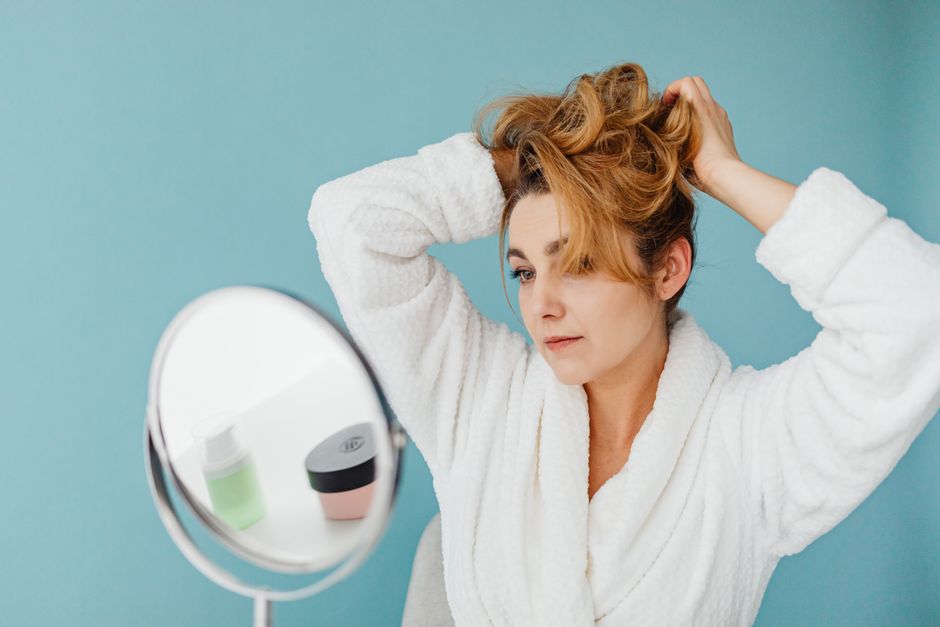
A good hair routine is simply a consistent set of steps that keeps your scalp healthy and your hair strong. It is not about expensive products or complicated steps. At its core, a good routine cleanses your scalp without stripping it, moisturizes your hair based on its type, and protects it from daily damage like heat and sun. Most people overcomplicate this. The science is actually straightforward: healthy hair grows from a healthy scalp, and most damage comes from how we handle hair when it is wet.
What Does a Good Hair Routine Actually Look Like?
A solid routine has three non-negotiable parts: cleansing, conditioning, and protecting. Washing frequency depends on your scalp type, not a calendar. People with oily scalps often need to wash every day or every other day. People with dry or curly hair can go longer between washes. The American Academy of Dermatology recommends washing oily hair more often and dry hair less often. That is the only universal rule.
Conditioning is not optional. Every hair type benefits from conditioner. It reduces friction, prevents breakage, and adds moisture. The trick is to apply conditioner mainly to the mid-lengths and ends, not the scalp. The scalp produces its own oil. The ends do not. That is where conditioner matters most.
Protecting means using heat protectant before any hot tool, avoiding tight hairstyles that pull on the roots, and sleeping on a silk or satin pillowcase if your hair is fragile. Cotton pillowcases create friction that leads to breakage and frizz. Silk reduces that friction significantly.
How Often Should You Wash Your Hair?
There is no single right answer. Research published in the Journal of the American Academy of Dermatology found that washing hair too little can lead to buildup and inflammation on the scalp. Washing too often can strip natural oils and cause dryness. The sweet spot depends on your scalp sebum production.
If your scalp feels greasy by the end of day two, wash every other day or daily. If your scalp stays comfortable for three or four days, wash twice a week. Curly and coily hair textures tend to be drier because the natural oil has a harder time traveling down the hair shaft. Those textures often do best with washing once a week or every ten days. This is not a rule. It is a starting point. Adjust based on how your scalp feels, not how many days it has been.
What Ingredients Actually Matter in Shampoo and Conditioner?
Most marketing claims are noise. The ingredients that matter are the ones that clean effectively without damaging the hair shaft. Sulfates like sodium lauryl sulfate are effective cleansers. They are not inherently bad, but they can be drying for some people. If your hair feels straw-like after washing, try a sulfate-free shampoo. If your scalp is oily and your hair feels fine, sulfates are not your enemy.
Silicones like dimethicone coat the hair to make it feel smooth. They are not harmful, but they can build up over time and require stronger cleansers to remove. If you use silicones, you may need a clarifying shampoo every few weeks. For most people, this is unnecessary complexity. A simple shampoo and conditioner without heavy silicones works fine.
Ingredients with real evidence behind them include:
- Ketoconazole — an antifungal that reduces dandruff and scalp inflammation. Found in some over-the-counter dandruff shampoos.
- Biotin — widely claimed to help hair growth, but oral biotin only helps if you are actually deficient. Topical biotin has little evidence.
- Minoxidil — the only topical ingredient approved by the FDA for hair regrowth. It is not in regular shampoos. It is a separate treatment.
- Panthenol (pro-vitamin B5) — a humectant that attracts moisture to the hair shaft. It has decent evidence for reducing breakage.





What Is the Right Way to Brush or Comb Hair?
Most people brush their hair wrong. Hair is weakest when it is wet. Brushing wet hair aggressively stretches and snaps the strands. The correct approach is to detangle hair while it is still wet but coated with conditioner. Use a wide-tooth comb. Start at the bottom and work upward. Never start at the scalp and yank down. That is the fastest way to cause split ends and breakage.
For dry hair, use a brush with flexible bristles. Boar bristle brushes distribute scalp oil down the hair shaft, which can add shine. But for curly or coily hair, dry brushing causes frizz and breakage. Those textures should only be detangled when wet with conditioner. The general rule is: straight hair can handle more brushing, curly hair needs more care.
| Hair Type | Best Detangling Method | Tool |
|---|---|---|
| Straight or fine | Dry or damp, gentle strokes | Paddle brush or boar bristle |
| Wavy | Damp with leave-in conditioner | Wide-tooth comb |
| Curly or coily | Wet with conditioner only | Wide-tooth comb or fingers |
Does What Is a Good Hair Routine Include Heat Styling?
Heat styling is the single biggest preventable cause of hair damage. Research from the International Journal of Trichology confirms that temperatures above 200 degrees Celsius cause structural changes in the hair protein. The hair becomes weaker, more porous, and more prone to breakage. If you use heat, keep the temperature as low as possible. A heat protectant spray is not optional. It creates a barrier that reduces moisture loss.
Air drying is not always better. Wet hair is fragile. Leaving hair wet for hours, especially if it is long or thick, can cause swelling and damage to the cuticle. The gentlest approach is to blot hair dry with a microfiber towel or a cotton t-shirt. Regular towels have rough loops that catch and tear the hair cuticle. Pat or squeeze the hair. Do not rub.
If you must use a blow dryer, keep it on low heat and hold it six inches away. Use a diffuser if you have curly hair. The goal is to reduce the time the hair spends wet without exposing it to excessive heat. That balance is different for everyone.
What Should You Avoid in a Hair Routine?
A few common habits cause more harm than most people realize. Tight ponytails, buns, or braids can cause traction alopecia. This is a form of hair loss caused by constant pulling on the hair follicles. The American Academy of Dermatology states that traction alopecia is reversible if caught early, but it can become permanent if the pulling continues for years. If your scalp hurts after wearing a style, it is too tight.
Brushing hair 100 strokes a night is a myth. That practice comes from the Victorian era and has no scientific basis. It actually increases friction and breakage. Brush only enough to detangle and distribute oils. Over-brushing does not make hair healthier.
Another common mistake is skipping conditioner because hair feels oily. Oily scalps still need conditioned ends. The oil from your scalp does not reach the ends of long hair. Skipping conditioner leaves those ends dry and brittle. Apply conditioner from the ears down. That keeps the scalp clean and the ends protected.
Common Misconceptions About Hair Routines
Many people believe that trimming hair makes it grow faster. It does not. Hair growth happens at the scalp, not the ends. Trimming removes split ends and prevents breakage from traveling up the shaft. That makes hair look healthier and fuller, but it does not change the growth rate. The average hair growth rate is about half an inch per month. No product changes that.
Another widespread claim is that you can “repair” damaged hair. You cannot. Once the hair shaft is damaged, it stays damaged until it is cut off. Products labeled as “repair” or “restore” fill in gaps in the cuticle temporarily. They make hair feel better, but they do not reverse structural damage. The only real fix is time and preventing further damage.
Some people also believe that washing hair less often trains the scalp to produce less oil. This is not supported by evidence. Sebum production is regulated by hormones, not washing frequency. Washing less often may make hair look greasy for longer, but it does not change how much oil your scalp actually makes.
Frequently Asked Questions
How often should I wash my hair for optimal health?
Wash based on your scalp type, not a fixed schedule. Oily scalps need washing every 1-2 days, dry scalps every 3-7 days, and curly or coily hair every 7-14 days.
Does brushing hair 100 times a night make it healthier?
No, this is an outdated myth. Over-brushing increases friction and breakage. Brush only enough to detangle and distribute natural oils.
Can hair products actually repair split ends?
No. Split ends cannot be repaired. Products can temporarily seal them, but the only permanent fix is trimming the damaged portion off.
Is sulfate-free shampoo always better?
No. Sulfate-free shampoos are gentler and better for dry or color-treated hair, but people with oily scalps may need sulfates to clean effectively.
