
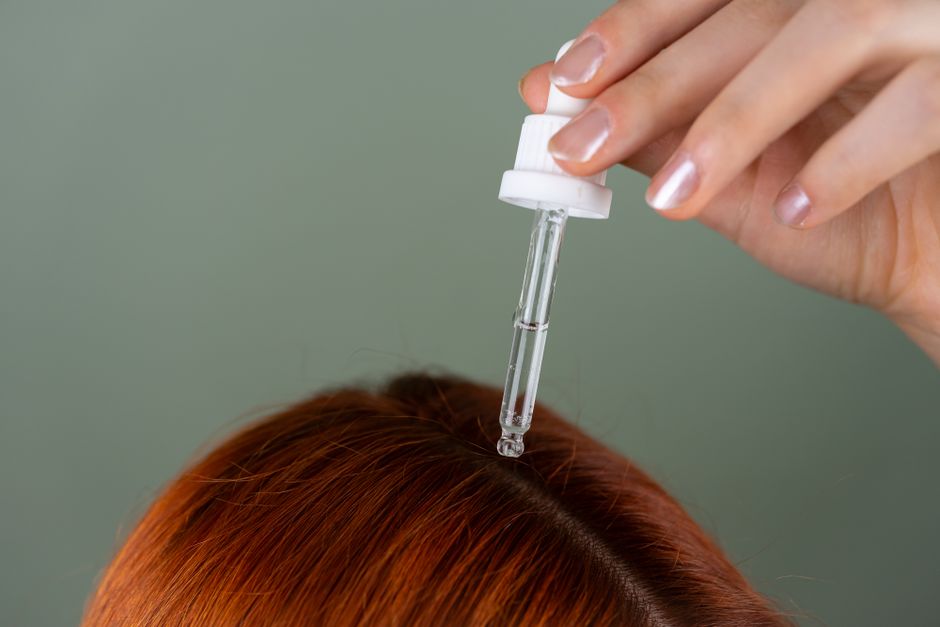
Hair growth can feel like a mystery. You do all the right things—eat well, avoid heat, buy expensive shampoos—and still see no change. The honest answer is usually simpler than you think. Most cases of stalled hair growth come down to one of three root causes: genetics, inflammation, or a nutritional gap. Everything else is either a symptom or a myth.
What Actually Stops Hair from Growing?
Hair grows in cycles. The growth phase lasts 2 to 7 years for most people. After that, the hair falls out and a new one starts. This is normal.
What stops your hair from growing is when this cycle gets disrupted. The growth phase becomes shorter. The rest phase becomes longer. Eventually, the follicle produces thinner hair or stops producing hair altogether.
Research published in the Journal of the American Academy of Dermatology shows that the most common disruptor is a hormone called dihydrotestosterone, or DHT. DHT binds to hair follicles and shrinks them over time. This is the primary driver of male and female pattern baldness.
But DHT is not the only cause. Inflammation from conditions like seborrheic dermatitis or scalp psoriasis can damage follicles directly. Nutrient deficiencies—especially iron, zinc, and vitamin D—can also slow or stop growth. The CDC reports that iron deficiency affects nearly 10% of women in the US, and hair loss is one of its earliest signs.
Does Stress Really Stop Hair Growth?
Yes, but not in the way most people think. Stress does not make your hair fall out immediately. It triggers a condition called telogen effluvium.
Telogen effluvium pushes many hairs into the resting phase at the same time. About 2 to 3 months after a stressful event, you may notice clumps of hair shedding. This is temporary. Once the stressor is removed, hair typically grows back within 6 months.
The American Academy of Dermatology states that telogen effluvium is the second most common cause of hair loss seen by dermatologists. The first is androgenetic alopecia, or pattern baldness.
Chronic stress is different. Long-term stress keeps cortisol levels high. Some studies suggest that high cortisol may interfere with the hair follicle’s ability to enter the growth phase. The evidence here is moderate—not as strong as for telogen effluvium—but it is plausible.
Can Diet Alone Fix Hair Growth?
It depends on whether you have a deficiency. If your iron levels are low, taking iron can restore growth. If your vitamin D is low, correcting it helps. If everything is normal, adding more nutrients will not make hair grow faster.
This is where a lot of misinformation lives. Many hair supplements contain biotin, collagen, and a dozen other ingredients. Strong evidence shows that biotin only helps if you are actually deficient in biotin. Biotin deficiency is rare. The National Institutes of Health estimates that most people get enough biotin from food alone.
Protein is another area of confusion. Hair is made of keratin, which is a protein. If you are severely protein deficient, your hair may thin. But in the US, protein deficiency is uncommon. Eating extra protein beyond your needs will not grow more hair.
What does have solid evidence is iron. A 2021 study in the Journal of Drugs in Dermatology found that iron deficiency was present in 35% of women with hair loss. If you are a woman with unexplained hair thinning, a ferritin blood test is worth asking for.





Why Won’T Your Hair Grow Past a Certain Length?
Some people can grow hair to their waist. Others hit shoulder length and stop. This is not necessarily a sign of a problem.
Every person has a maximum hair length determined by their genetics. This is called the terminal length. It is the length your hair reaches when the growth phase ends. For some, that phase is 2 years. For others, it is 6 years.
If your hair used to grow long and now it stops, that is different. That suggests something changed. Common culprits include hormonal shifts like pregnancy or menopause, thyroid disorders, or cumulative damage from heat styling and chemical treatments.
Damage does not stop growth at the root. But it breaks the hair shaft. If the hair breaks off at the same rate it grows, it never gets longer. This is often mistaken for a growth problem when it is really a breakage problem.
The table below summarizes the difference between growth issues and breakage issues:
| Symptom | Likely Cause | What to Check |
|---|---|---|
| Hair thinning all over | Nutritional deficiency or telogen effluvium | Iron, vitamin D, thyroid panel |
| Receding hairline or crown thinning | Androgenetic alopecia (pattern baldness) | Family history, DHT levels |
| Hair breaks at ends, root is fine | Mechanical or heat damage | Styling habits, products used |
| Scalp itching, flaking, redness | Inflammatory condition | Dermatologist exam |
What Actually Works According to Research
Two treatments have the strongest evidence for regrowing hair: minoxidil and finasteride. Both are FDA-approved.
Minoxidil, sold as Rogaine, is applied to the scalp. Research shows it increases blood flow to follicles and extends the growth phase. About 40% of men and women see noticeable regrowth after 6 months of consistent use. It works best on the crown, not the receding hairline.
Finasteride is a pill that blocks the conversion of testosterone to DHT. Studies published in the New England Journal of Medicine found that finasteride stops hair loss progression in 80% of men and leads to some regrowth in 66%. It is not approved for women of childbearing age due to birth defect risks.
Low-level laser therapy also has some evidence. The FDA has cleared several laser devices for hair growth. A 2014 review in the American Journal of Clinical Dermatology found that laser therapy improved hair density in men and women with pattern baldness. The effect is modest compared to medication.
For women specifically, spironolactone is sometimes used off-label. It is a diuretic that also blocks androgens. Some studies suggest it helps with female pattern hair loss, but the evidence is not as strong as for minoxidil.
Common Misconceptions About Hair Growth
The internet is full of claims that sound scientific but are not backed by evidence. Here are a few to ignore:
- Scalp massages grow hair. Massage increases blood flow temporarily. No study has shown it grows hair. It feels nice but does not change follicle biology.
- Rice water makes hair grow. This is widely claimed online. There is no clinical evidence that rice water affects hair growth. The amino acids and inositol in rice water may reduce breakage, but they do not activate follicles.
- Hair oils treat the root. Oils coat the hair shaft. They can reduce moisture loss and prevent breakage. They do not reach the follicle or change growth rate.
- Cutting hair makes it grow faster. Hair growth happens at the scalp, not the ends. Trimming removes split ends and makes hair look healthier. It does not speed up growth.
One non-obvious fact worth knowing: hair grows about half an inch per month on average. That is 6 inches per year. If you are not seeing that, either your growth phase is shortening or your hair is breaking. There is no way to speed up the biological rate beyond that for most people.
When to See a Doctor
If your hair loss is sudden, patchy, or accompanied by other symptoms like fatigue or weight changes, see a doctor. These can signal an underlying medical condition that needs treatment.
Thyroid disorders are a common cause of diffuse hair thinning. Both hyperthyroidism and hypothyroidism can disrupt the hair cycle. A simple blood test can rule this out.
Autoimmune conditions like alopecia areata cause round patches of hair loss. This is different from pattern baldness. A dermatologist can diagnose it and discuss treatment options like corticosteroid injections.
If you have been losing hair for more than 6 months and have not seen a doctor, it is worth going. Many causes are reversible if caught early. Waiting too long can make regrowth harder.
Frequently Asked Questions
Why won’t my hair grow past a certain length?
Your genetics determine your maximum hair length based on how long your growth phase lasts. If it changed recently, check for breakage or hormonal shifts.
Can vitamins make my hair grow faster?
Only if you are deficient in that specific vitamin. Taking extra when levels are normal will not speed up growth.
Does washing hair less help it grow?
No. Washing frequency does not affect the growth cycle. Scalp health matters more than how often you shampoo.
Is hair loss from stress permanent?
Usually not. Telogen effluvium from stress is temporary and hair grows back within 6 months once the stressor is gone.
