
A foot corn or callus is a thickened patch of skin that forms in response to repeated friction or pressure. A corn is small, round, and has a hard center, while a callus is a broader, flatter area of thickened skin. Neither is dangerous by itself, but both can cause discomfort and can signal that your footwear or foot mechanics need attention.
What Is the Difference Between a Corn and a Callus?
Corn and callus are often used as if they mean the same thing. They do not.
A callus is a wide, flat area of thickened skin. It usually appears on the bottom of the foot, the heel, or the ball of the foot. Calluses rarely hurt unless they crack or become very thick.
A corn is smaller and more defined. It has a dense core that points inward. Corns usually form on the tops or sides of toes, where skin rubs against shoes. They can be painful because that central core presses on nerves underneath.
There is also a soft corn. It forms between toes, where moisture keeps the skin soft. Soft corns can look whitish and feel rubbery. They are still corns, just in a different environment.
What Causes a Foot Corn or Callus to Form?
Your skin thickens to protect itself. When a specific spot on your foot is rubbed or pressed repeatedly, the skin cells build up faster than they can shed. That buildup is the corn or callus.
The most common cause is footwear. Shoes that are too tight pinch the toes. Shoes that are too loose let the foot slide and rub. High heels put heavy pressure on the ball of the foot. Seams inside a shoe can rub against a toe repeatedly with every step.
Foot structure plays a role too. A bunion can push the big toe against the second toe, creating friction. Hammertoes cause toes to curl and rub against the top of the shoe. Flat feet or high arches change where pressure lands on the sole of the foot.
Walking style matters as well. If you walk with a heavy step or an unusual gait, certain spots take more force than others.
Are Foot Corns and Calluses Dangerous?
For most people, no. A corn or callus is a normal protective response. It is not an infection and it is not a tumor.
The risk changes if you have certain health conditions.
People with diabetes need to be careful. Diabetes can reduce blood flow to the feet and cause nerve damage called peripheral neuropathy. If you cannot feel your feet well, a corn can become a wound without you noticing. A small break in the skin can then become a serious infection.
People with poor circulation for other reasons face similar risks. If your feet heal slowly, or if you have had foot ulcers before, treat any corn or callus with extra caution.



How Can You Treat a Foot Corn or Callus at Home?
Mild corns and calluses can often be managed at home. The goal is to remove the source of pressure and gently reduce the thickened skin.
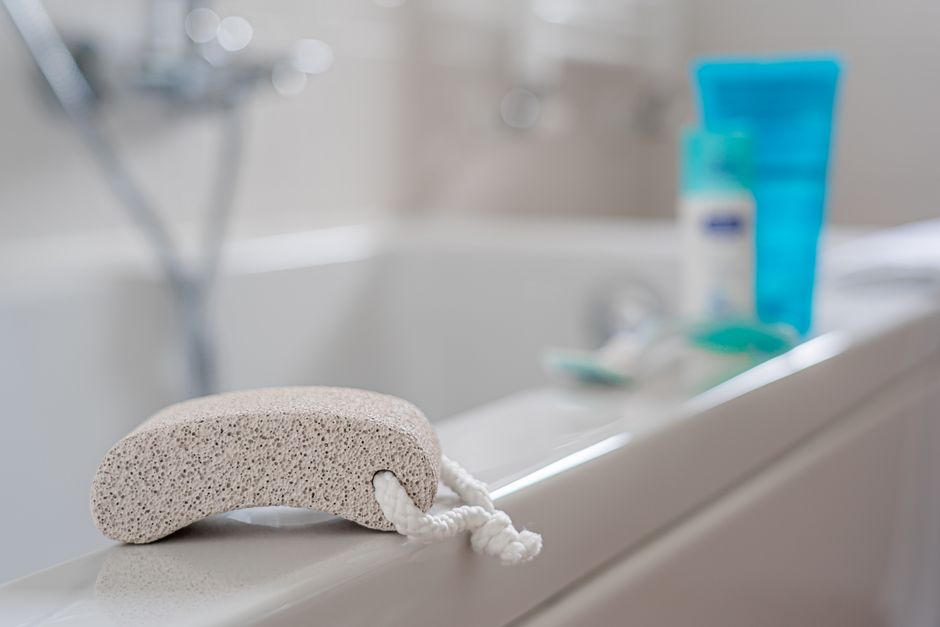
Soak your foot in warm water for 10 minutes. This softens the skin. Then use a pumice stone or a foot file to gently rub the thickened area. Use light pressure and stop if it hurts. Do this after a shower or bath, when the skin is already soft.
Moisturize daily. Creams with urea or lactic acid help soften thick skin over time. These are available over the counter.
Use padding to protect the area. Donut-shaped pads or moleskin can be placed around a corn to keep pressure off it. These are sold at most drugstores.
Address the footwear. This is the most important step. If your shoes are tight, get wider shoes. If seams rub, wear different socks. If high heels cause the problem, wear them less often.
When Should You See a Doctor?
See a doctor if the corn or callus is very painful, if it bleeds, or if you see signs of infection. Signs of infection include redness, warmth, swelling, and drainage.
See a doctor if you have diabetes, peripheral artery disease, or any condition that reduces blood flow to your feet. Do not attempt to treat these at home without medical guidance.
See a doctor if home treatment does not help after a few weeks. A persistent corn can sometimes be mistaken for a wart, a foreign body, or in rare cases, a skin growth that needs evaluation.
Do not cut corns or calluses yourself with a razor blade or scissors. This is especially dangerous if you have diabetes or poor circulation. Even in healthy people, cutting carries a risk of infection.
What Does a Doctor Do for Persistent Corns and Calluses?
A doctor or podiatrist can safely trim the thickened skin with a sterile scalpel. This is quick and usually painless. It provides immediate relief but does not fix the underlying cause.
For corns that keep returning, a doctor may recommend custom orthotics. These are shoe inserts made to correct your foot mechanics and redistribute pressure. They are more effective than generic over-the-counter pads for structural problems.
In some cases, a doctor may treat an underlying deformity. If a bunion or hammertoe is causing the corn, surgery may be an option. This is not a first-line treatment. It is considered only when conservative measures fail and pain is significant.
What Is the Best Way to Prevent Foot Corns and Calluses?
Prevention is mostly about footwear and foot care.
Wear shoes that fit properly. Your toes should have room to move. The shoe should not pinch at the widest part of your foot. There should be about a half-inch of space between your longest toe and the end of the shoe.
Break in new shoes gradually. Wear them for short periods at home before wearing them all day.
Wear socks that fit well and do not bunch up. Socks with seams can rub against toes, so consider seamless options if you are prone to corns.
Moisturize your feet daily. Dry skin cracks more easily and is more prone to thickening.
Check your feet regularly. Look at the tops, bottoms, and between your toes. Catching a problem early is easier than treating it later.
Can Over-the-Counter Corn Removers Help?
Over-the-counter corn removers contain salicylic acid. This acid dissolves the thickened skin. These products can work for healthy people with mild corns.
Use them exactly as directed. They come as drops, pads, or liquids. They are meant to be applied only to the corn, not to surrounding healthy skin.
Do not use salicylic acid products if you have diabetes or poor circulation. They can damage healthy skin and create a wound that is slow to heal. If you are unsure whether these products are safe for you, ask a doctor first.
Some research suggests that salicylic acid works best when combined with regular filing and moisturizing. The acid alone is often not enough.
Are Corns and Calluses the Same as Plantar Warts?
No. They look similar but they are different conditions.
A plantar wart is caused by a virus, the human papillomavirus. It grows on the bottom of the foot. Warts have tiny black dots in the center, which are small clotted blood vessels. They can be painful when squeezed from the sides.
A corn has no blood vessels. It is just thickened skin. It is painful when pressed directly on the center.
If you are not sure what you have, a doctor can tell the difference quickly. Treating a wart like a corn will not work because warts need different treatment.
Frequently Asked Questions
Can a corn or callus go away on its own?
Yes, if you remove the source of friction or pressure. Once the rubbing stops, the skin will gradually return to normal thickness over several weeks.
Is it safe to cut off a corn with a razor blade?
No. Cutting corns yourself risks infection and bleeding, especially if you have diabetes or poor circulation. See a doctor or podiatrist for safe removal.
Why does my corn hurt even though it is just thick skin?
The corn has a hard central core that presses down on nerves in the deeper layers of skin. That pressure is what causes the pain.
Are corn pads with salicylic acid safe for everyone?
No. People with diabetes or poor circulation should not use salicylic acid products because they can damage healthy skin and lead to slow-healing wounds.
