
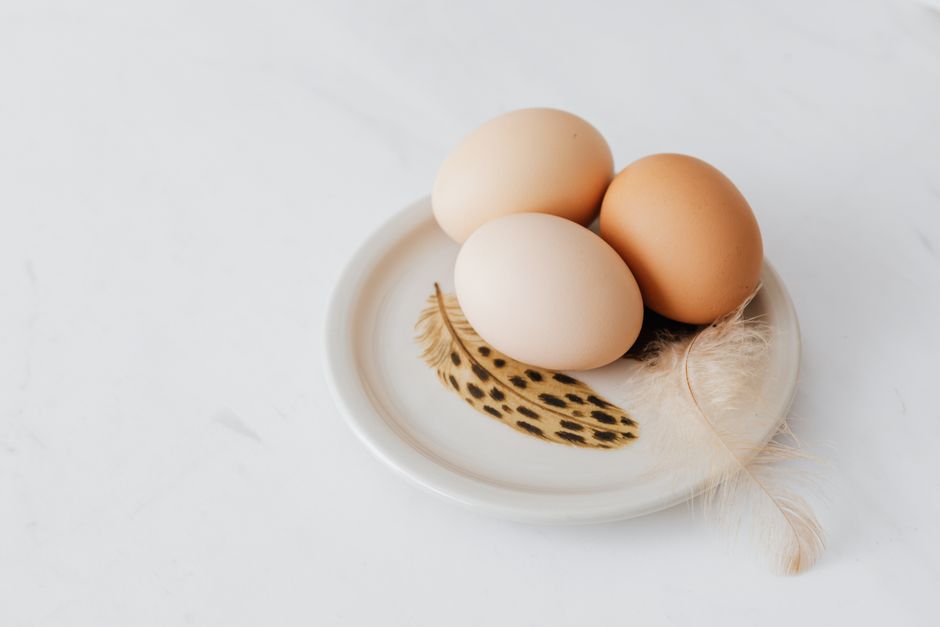
A feather is made almost entirely of keratin, the same family of structural proteins found in hair, nails, and hooves. But a feather is not a single solid strand. It is a branching structure built from a central shaft, hundreds of parallel barbs, and millions of tiny hooks that lock those barbs together. That architecture is what makes a feather light enough to fly with and strong enough to survive wind, rain, and constant wear.
What Is a Feather Made Of From Protein to Structure?
Keratin is the main building material. It is a fibrous protein, meaning its molecules form long chains rather than compact globules. In feathers, those chains are packed into sheets and tubes that resist bending and stretching.
Two keratin types matter here. Alpha-keratin is the softer, flexible form found in mammalian hair and skin. Beta-keratin is stiffer and appears in the feathers, scales, and claws of birds and reptiles. Feathers are built largely from beta-keratin, which is one reason a feather holds its shape far better than a strand of human hair of similar thickness.
The protein itself is only half the story. Keratin is rich in the amino acid cysteine, which contains sulfur. Sulfur atoms on neighboring protein chains bond to each other, forming disulfide cross-links. These cross-links act like tiny stitches holding the protein sheets together. The more cross-linking, the tougher the material. This is the same chemistry that makes hair resistant to stretching and gives permanent hair treatments their effect.
By weight, a feather is roughly 90 percent protein, with small amounts of water and trace minerals. There is no bone, no muscle, and no living tissue in a mature feather. Once a feather finishes growing, the blood supply inside it withdraws, and what remains is essentially a dead protein structure that the bird maintains and eventually replaces.
How Is a Feather Structured From Shaft to Tip?
The central spine is called the rachis. It runs from the base to the tip and gives the feather its overall stiffness. At the very bottom, below the skin line, is the calamus or quill — a hollow, round tube with no barbs. It anchors the feather in the follicle.
Branching off both sides of the rachis are the barbs. These form the flat surface, or vane, of the feather. Each barb is itself a miniature version of the whole, with its own smaller branches called barbules.
Here is where the design gets precise. Barbules on one side of a barb carry tiny hooks. Barbules on the other side carry a grooved ridge. The hooks catch into the grooves of the neighboring barb, zipping the barbs together into a smooth, continuous surface. This is why you can run a fingernail along a feather, separate the barbs, and then smooth them back into place. You are literally re-zipping microscopic hooks.
That interlocking system is the key mechanical feature. It turns thousands of separate strands into a single stiff, aerodynamic sheet, while still allowing the feather to flex under load instead of snapping.
Why Is a Feather So Light but So Strong?
Feathers are among the strongest materials for their weight in the natural world, and the reason is mostly geometry rather than chemistry. The rachis is not solid. It is a hollow tube with internal foam-like support in many species. A hollow tube resists bending almost as well as a solid rod of the same diameter, at a fraction of the weight.
The vane works the same way. Instead of a solid sheet, it is a lattice of barbs and barbules with air between them. Air contributes nothing to weight but the structure still spreads force across a wide area.
This combination — strong material, hollow core, branched lattice — is a classic engineering principle. Human engineers use the same idea in aircraft wings and lightweight beams. Birds arrived at it long before we did.
One clarification worth making: a feather’s strength is directional. It resists bending along the shaft far better than it resists being pulled apart sideways. That is why a feather flexes in flight but can tear if caught on a branch. The structure is optimized for the forces a bird actually encounters, not for every possible force.




What Are the Different Types of Feathers and What Does Each Do?
Not all feathers are built the same way, because they do not all do the same job. The basic protein chemistry is shared, but the proportions and arrangement differ.
| Feather Type | Main Structure | Primary Function |
|---|---|---|
| Contour feathers | Stiff rachis, tightly zipped vane | Flight and outer body covering |
| Down feathers | Short or absent rachis, loose barbules with no hooks | Trapping air for insulation |
| Flight feathers | Long, asymmetric vane, strong rachis | Generating lift and steering |
| Filoplumes | Thin shaft with a small tuft at the tip | Sensing feather position |
| Bristles | Stiff, simple shaft | Protecting eyes and filtering air |
Down feathers are the clearest contrast. Their barbules lack the hooks that zip barbs together, so the structure stays loose and fluffy. That looseness is the point — it traps a layer of still air, and still air is an excellent insulator. This is why down is so effective in cold weather and why it is used in jackets and bedding.
Filoplumes are less familiar. They are small, hair-like feathers packed with sensory receptors at the base. They appear to feed the bird information about the position of its larger feathers, which helps with fine flight control. The evidence for this function is strong but not fully mapped in every species.
How Does a Feather Grow?
A growing feather develops inside a tube called a follicle in the skin. The cells at the base divide and push upward, laying down keratin in a precise pattern. The barbs and barbules form while the feather is still wrapped in a protective sheath.
As the feather matures, the blood supply that fed it withdraws. The sheath dries and flakes away, and the feather unfurls into its final shape. From that point on, it is no longer living tissue. A damaged feather cannot repair itself the way skin can. Birds manage this by molting — shedding old feathers and growing new ones on a regular cycle.
Feather color comes from two separate sources. Pigments called melanins produce blacks, browns, and grays, and they also add structural strength to the feather. Carotenoid pigments, which birds must get from food, produce yellows, oranges, and reds. Blues and iridescent greens usually come not from pigment at all but from microscopic structures in the barbules that reflect specific wavelengths of light. This is called structural color, and it is a different mechanism entirely from pigment.
What Does This Mean for Human Hair and Nails?
People often assume feathers and hair are basically the same material. They are related, but not identical. Human hair, nails, and the outer layer of skin are built from alpha-keratin. Feathers are built largely from beta-keratin. Both use disulfide cross-linking for strength, which is why they behave similarly in some ways and differently in others.
The shared chemistry explains a few everyday things. It is why hair and nails both contain sulfur-rich bonds that can be broken and reformed by chemical treatments. It is why both are resistant to ordinary wear. And it is why both are, like feathers, no longer living once fully formed.
What feathers have that hair does not is the interlocking barbule system. Hair is a single strand. A feather is a self-assembling sheet. That structural difference, more than the protein itself, is what makes a feather suited for flight.
Frequently Asked Questions
Is a feather made of keratin?
Yes. A mature feather is roughly 90 percent protein by weight, and that protein is mostly beta-keratin. Small amounts of water and trace minerals make up the rest.
Are feathers alive?
No. Once a feather finishes growing, its blood supply withdraws and it becomes a dead protein structure. Birds replace worn feathers through molting rather than repairing them.
Why do feathers stay zipped together?
Tiny hooks on one set of barbules catch into grooves on the neighboring set, locking the barbs into a smooth surface. You can separate them by hand and smooth them back because the hooks re-engage.
What makes down feathers different from flight feathers?
Down barbules lack the hooks that zip barbs together, so the structure stays loose and traps air for insulation. Flight feathers have tightly interlocked vanes that form a stiff surface for lift.
