
Fat content in meat varies enormously depending on the animal, the cut, and how the meat was raised and trimmed. Some cuts are over half fat by weight before cooking, while others are lean enough to sit alongside chicken breast. Knowing which is which matters for anyone watching saturated fat, calories, or heart health.
Fat in meat is not one thing. It is a mix of saturated, monounsaturated, and polyunsaturated fatty acids, and the balance shifts with the species and the cut. Fat also carries flavor and moisture, which is why the fattiest cuts tend to be the most tender. This guide covers fat content by cut, what the numbers mean, and how cooking changes what ends up on your plate.
What Is A Fatty Meat Cuts Fat Content And More?
Fat content is the percentage of a meat’s weight that is fat, usually measured on raw meat. A cut labeled 30% fat has roughly 30 grams of fat per 100 grams of raw meat. The rest is water, protein, and a small amount of minerals and other compounds.
Two things trip people up here. First, fat content is usually reported on raw weight, but cooking removes water. A fatty cut loses water during cooking, so its fat percentage by weight goes up even though no fat was added. Second, the visible fat you trim off is not the whole story. Fat is also marbled through the muscle fibers, and that intramuscular fat cannot be trimmed away.
The USDA tracks fat content for thousands of foods in its FoodData Central database. Those figures are the most reliable reference for raw and cooked cuts in the US. The numbers below draw on that kind of standard nutrition data.
Which Meat Cuts Are Highest In Fat?
Pork and lamb tend to have the fattiest common cuts, followed by fatty beef cuts and processed meats. Poultry is generally leaner, with one large exception: the skin.
Here is a rough picture of fat content per 100 grams of raw meat for well-known cuts, based on standard USDA nutrition data. Values vary by trim level and the specific product.
| Cut | Approximate fat (raw, per 100 g) |
|---|---|
| Pork belly | About 50 g |
| Beef ribeye (untrimmed) | About 25–30 g |
| Lamb shoulder | About 20–25 g |
| Pork shoulder | About 20 g |
| Beef brisket (untrimmed) | About 20 g |
| Chicken thigh with skin | About 15 g |
| Beef sirloin (trimmed) | About 8–10 g |
| Chicken breast without skin | About 2–3 g |
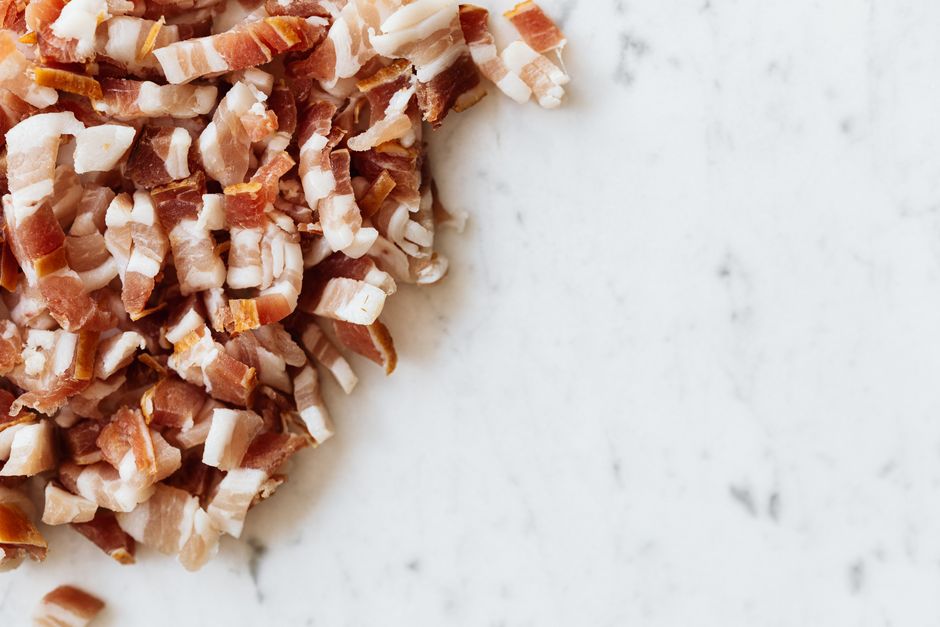
Pork belly is the standout. It is roughly half fat by weight, which is why it becomes bacon. Chicken breast without skin is close to the leanest meat available. The gap between these two is more than tenfold.
Processed meats deserve their own mention. Sausage, salami, hot dogs, and bacon are typically high in fat and also high in sodium. Their fat content varies widely by product, so the label is the only reliable source.
How Much Of Meat Fat Is Saturated?
Roughly 30 to 40 percent of the fat in most red meat is saturated, with the rest mostly monounsaturated. Beef and lamb carry more saturated fat than chicken or turkey. Pork sits in between.
This matters because saturated fat intake is the one dietary fat most consistently linked to LDL cholesterol in research. The American Heart Association has long advised keeping saturated fat to a modest share of daily calories. Current US dietary guidelines also recommend limiting saturated fat to less than 10 percent of daily calories.
That does not mean fatty meat is off limits. It means the amount and frequency matter. A person eating a 12-ounce ribeye is taking in far more saturated fat than someone eating a 4-ounce trimmed sirloin. Portion and trim level do most of the work.
One clarification worth making: grass-fed beef has a somewhat different fatty acid profile than grain-fed, with modestly more omega-3 fats. The difference is real but small. It does not turn a fatty cut into a lean one.





Does Cooking Change The Fat Content?
Cooking does not create or destroy fat, but it changes the percentage. As meat cooks, water evaporates and drips out. Fat renders and some of it drains away. The net effect depends on the cooking method.
Grilling and broiling let rendered fat drip off, which can lower the total fat on the plate. Pan-frying in added oil does the opposite. Braising keeps everything in the pot, so the fat stays unless you skim it.
Here is the non-obvious part. A cooked burger patty can show a higher fat percentage than the raw meat it came from, even after some fat has dripped away. That is because it lost more water than fat. If you compare labels, compare raw to raw or cooked to cooked. Mixing the two leads to wrong conclusions.
Trimming visible fat before cooking is one of the simplest ways to reduce fat. On a beef roast or pork chop, external fat can be cut away with a knife. Intramuscular marbling cannot be removed.
How Can You Choose Leaner Cuts?
Lean cuts are widely available and usually cheaper than fatty ones. The USDA defines a lean cut as one with less than 10 grams of total fat, 4.5 grams or less of saturated fat, and less than 95 milligrams of cholesterol per 100 grams. “Extra lean” means less than 5 grams of total fat and less than 2 grams of saturated fat per 100 grams.
Those thresholds come from USDA labeling standards for meat and poultry. They are useful shorthand when shopping.
- Beef: eye of round, top round, bottom round, and sirloin are among the leanest. Look for “round” and “loin” in the name.
- Pork: tenderloin and loin chops are lean. Shoulder and belly are not.
- Poultry: breast without skin is leanest. Removing skin from thighs or drumsticks cuts fat substantially.
- Lamb: leg and loin are leaner than shoulder or rib.
Ground meat is its own category. The label percentage refers to lean-to-fat ratio by weight, so 90% lean ground beef has about 10% fat. That is a useful guide, though actual fat can vary somewhat from the stated ratio.
Is Fatty Meat Bad For You?
Fatty meat is not inherently harmful, but regular intake of large amounts is linked to higher saturated fat and calorie intake. The evidence on health outcomes is more mixed than headlines suggest.
Observational studies have found associations between high processed meat intake and higher rates of cardiovascular disease and some cancers. The picture for unprocessed red meat is less clear, and researchers continue to debate how much of the association is due to the meat itself versus other lifestyle factors.
What is well established: saturated fat raises LDL cholesterol in controlled feeding studies. LDL cholesterol is a causal factor in atherosclerosis. That chain is solid. What is less certain is how much any single food contributes at the population level.
The practical takeaway most clinicians would support is moderation and variety. Fatty cuts can fit in a balanced diet. Leaner cuts make it easier to keep saturated fat within recommended limits without counting every gram.
Does Fat Content Affect Nutrition Beyond Calories?
Fat is the most calorie-dense nutrient, at 9 calories per gram versus 4 for protein and carbohydrate. That is why fatty cuts carry far more calories than lean ones. A 100-gram portion of pork belly has roughly 450 calories, while the same weight of skinless chicken breast has around 120.
Fat also carries fat-soluble vitamins and contributes to satiety, the feeling of fullness after eating. Some people find fattier meat more satisfying, which can affect how much they eat overall. That is a real effect, though hard to quantify.
Protein content stays fairly stable across cuts of the same animal. The main variables are fat, calories, and saturated fat. If you are tracking any of those, the cut matters more than the species.
Frequently Asked Questions
Which meat has the highest fat content?
Pork belly is among the fattiest common cuts, at roughly 50% fat by weight raw. Untrimmed beef ribeye and lamb shoulder are also high, generally in the 20–30% range.
Is chicken thigh fattier than breast?
Yes, considerably. Chicken thigh with skin has roughly five times the fat of skinless breast per 100 grams. Removing the skin narrows the gap but thigh remains fattier.
Does trimming fat off meat reduce calories?
Yes. Visible fat can be cut away before cooking, which lowers both fat and calories. Intramuscular marbling cannot be trimmed, so choose a leaner cut if that matters to you.
Is 90% lean ground beef low in fat?
It is moderately lean, with about 10% fat by weight. That meets neither the USDA “lean” nor “extra lean” standard, which are defined per 100 grams of cooked or raw product.
