
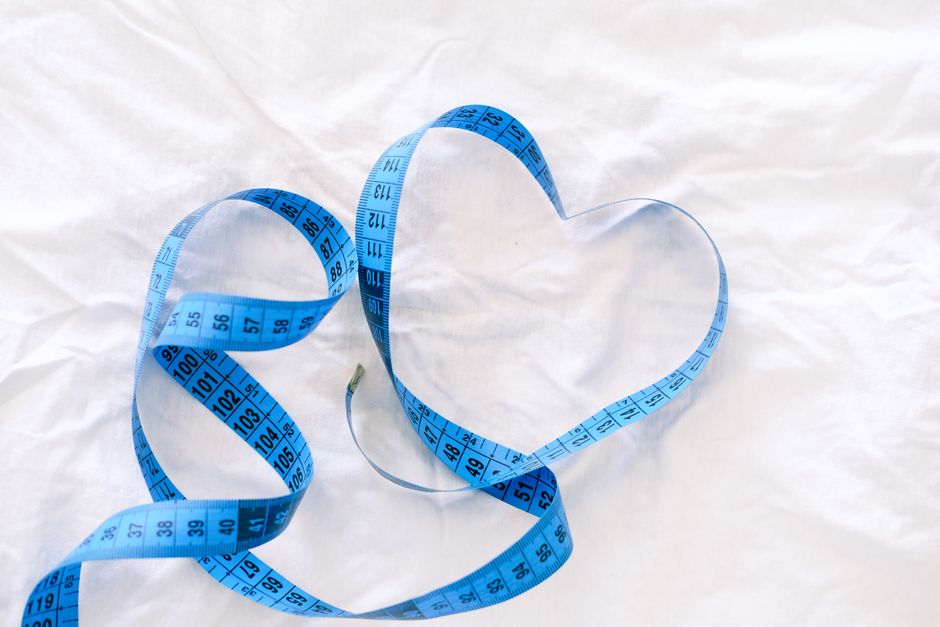
Stepping on a bathroom scale tells you how much you weigh, but it says nothing about what that weight is made of. Body fat measurement answers a different question: how much of your body is fat tissue and how much is lean tissue like muscle, bone, and water. You can measure body fat in several ways, ranging from a simple tape measure around your waist to a clinical scan that costs hundreds of dollars. Each method trades accuracy for convenience in a different way.
Why Does Body Fat Percentage Matter More Than Weight?
Two people can weigh exactly the same and have completely different health profiles. One might carry 15 percent body fat and a lot of muscle. The other might carry 35 percent body fat and very little muscle. The scale cannot tell them apart.
Body fat percentage is the share of your total weight that comes from fat tissue. The rest is called fat-free mass, which includes muscle, bone, organs, and water. This distinction matters because excess fat tissue, particularly around the abdomen, is linked to higher risks of type 2 diabetes, heart disease, and certain cancers. Muscle mass, on the other hand, supports metabolism, mobility, and blood sugar control.
Body mass index (BMI) is the tool most doctors use as a first screen. BMI is calculated from height and weight alone. A BMI of 30 or above falls into the obesity category according to established guidelines. But BMI has a well-known blind spot: it cannot distinguish between an athlete with dense muscle and a sedentary person with high fat. Some people with a normal BMI carry a high percentage of body fat, a pattern sometimes called normal-weight obesity.
That said, BMI remains useful at the population level and as a quick starting point in a clinical visit. It is not a body fat measurement. It is a weight-to-height ratio that correlates with body fat in large groups but can be misleading for any single individual.
How Can I Measure My Body Fat Methods Explained
No method available outside a research lab is perfectly accurate. Every technique estimates body fat rather than measuring it directly. The most accurate methods tend to be the least practical, and the most convenient methods carry the widest error margins.
Here is a comparison of the main options:
| Method | Accuracy | Cost | Accessibility |
|---|---|---|---|
| DEXA scan | High | $50–$150 per scan | Requires a clinic or imaging center |
| Hydrostatic weighing | High | $40–$100 | Limited to research or specialty facilities |
| Bod Pod (air displacement) | Moderate to high | $30–$75 | Available at some clinics and universities |
| Skinfold calipers | Moderate | $10–$30 for calipers | Widely available; needs a trained tester |
| Bioelectrical impedance (BIA) | Low to moderate | $20–$100 for a scale | Home use; very common |
| Waist circumference | Indirect estimate | Free | Anyone with a tape measure |
Costs vary by location and provider. The accuracy column reflects general agreement in the research literature, not a precise ranking.
What Is a DEXA Scan and How Accurate Is It?
Dual-energy X-ray absorptiometry, usually called DEXA or DXA, is widely considered the most reliable body composition method available outside of research settings. It uses two low-dose X-ray beams to distinguish fat tissue, lean tissue, and bone mineral. A single scan takes about 10 to 20 minutes and produces a detailed breakdown by body region.
DEXA was originally developed to measure bone density. Its use for body composition came later and has been validated in many studies. It can separate visceral fat (the fat around internal organs) from subcutaneous fat (fat under the skin), which matters because visceral fat carries a stronger link to metabolic disease.
DEXA is not perfect. Different machines and software versions can produce slightly different results. Body position, hydration, and recent food intake can shift the numbers a little. But for tracking changes over time using the same machine and protocol, it is about as good as it gets.
The radiation exposure from a DEXA scan is very low, roughly comparable to a day of natural background radiation. Still, it is not typically recommended for pregnant women.



How Do Skinfold Calipers and Bioelectrical Impedance Compare?
Skinfold calipers and bioelectrical impedance analysis (BIA) are the two methods most people encounter outside a medical setting. They sit in the middle and low end of the accuracy range, respectively.
Skinfold Calipers
A trained tester pinches folds of skin and underlying fat at specific sites, usually three to seven locations, and measures the thickness with calipers. Those measurements go into a formula that estimates total body fat.
The results depend heavily on the tester’s skill. Two experienced testers using the same calipers on the same person can get different numbers. The formulas themselves were developed on specific populations and may not apply equally well to everyone. For tracking your own changes over time with the same tester, calipers can be useful. For comparing yourself to a standard, they are less reliable.
Bioelectrical Impedance Analysis
BIA sends a weak electrical current through your body. Fat conducts electricity poorly; water and muscle conduct it well. The device measures resistance and uses that to estimate body fat.
The problem is that BIA is heavily affected by hydration. Drinking a lot of water before a measurement can lower your reading. Being dehydrated can raise it. Eating, exercising, and even skin temperature can shift the result. Consumer scales that use foot-to-foot BIA tend to be the least accurate because the current only travels through your lower body.
Hand-to-foot devices, which send current through your whole body, perform somewhat better. But even then, BIA tends to have wider error margins than DEXA. Some studies suggest BIA can overestimate body fat in lean people and underestimate it in people with higher body fat. The evidence on exactly how large those errors are varies across studies.
For tracking trends over weeks and months under consistent conditions, BIA can be reasonable. For a single accurate snapshot, it is not the best choice.
What About Waist Circumference and Waist-to-Hip Ratio?
Waist circumference is not a body fat percentage. It is a simple, free measurement that correlates strongly with abdominal fat and health risk. Research consistently shows that a larger waist is associated with higher risk of cardiovascular disease and type 2 diabetes, independent of BMI.
To measure your waist, wrap a tape measure around your bare midsection at the level of your belly button, after breathing out normally. Do not pull the tape tight enough to compress the skin.
Established guidelines flag increased risk at a waist above 40 inches for men and above 35 inches for women. Some organizations use different thresholds for different ethnic groups, since risk can rise at smaller waist sizes in some populations. These are screening thresholds, not diagnostic cutoffs.
Waist-to-hip ratio divides your waist measurement by your hip measurement. A ratio of 0.90 or higher for men and 0.85 or higher for women has been associated with higher cardiovascular risk in large studies. Like waist circumference, it is an indirect indicator, not a direct fat measurement.
Which Method Should You Actually Use?
The best method depends on what you want to know and what you have access to.
- If you want the most accurate number and are willing to pay for it, a DEXA scan is the standard choice outside a research lab.
- If you want to track changes over time at home, pick one method and use it under the same conditions every time. Consistency matters more than absolute accuracy.
- If you want a quick, free check of health risk, waist circumference is well-supported by evidence and takes thirty seconds.
- If you are working with a trainer or clinician who uses calipers, the measurements can be useful for tracking, as long as the same person does the measuring each time.
One non-obvious point: the number itself matters less than the trend. A single body fat reading is a snapshot influenced by hydration, recent meals, and even time of day. What tells you more is whether your body fat is going up, going down, or holding steady over months.
Also worth knowing: there is no universally agreed-upon “ideal” body fat percentage. General ranges exist — often cited as roughly 10 to 20 percent for men and 20 to 30 percent for women — but these are broad guidelines, not clinical targets. Women naturally carry more essential fat than men due to reproductive physiology. Age, genetics, and athletic training all shift what is normal for a given person.
What Are the Limitations of Home Body Fat Scales?
Home body fat scales use BIA technology, usually with electrodes under your feet. They are convenient and inexpensive. They are also the least accurate option available.
The current from foot-to-foot scales mostly travels through your legs and lower torso. It does not pass through your upper body, where a significant portion of body fat sits. This means the device is estimating whole-body fat from partial data.
Hydration status alone can shift a home scale reading by several percentage points. So can the time of day, whether you have exercised, and how recently you ate. Some manufacturers use proprietary formulas that have not been independently validated.
None of this makes home scales useless. If you weigh yourself under identical conditions — same time of day, same hydration state, same day of the week — the trend over months may still carry some signal. But do not treat the absolute number as accurate, and do not compare your reading to someone else’s on a different device.
Frequently Asked Questions
What is the most accurate way to measure body fat at home?
There is no highly accurate way to measure body fat at home. Skinfold calipers and bioelectrical impedance scales can track trends over time, but both carry significant error margins compared to clinical methods like DEXA.
Is BMI the same as body fat percentage?
No. BMI is calculated from height and weight only and does not distinguish between fat and muscle. Body fat percentage requires a separate measurement method.
How often should I measure my body fat?
Every four to eight weeks is reasonable for tracking meaningful changes. Body fat shifts slowly, and measuring more often mostly captures noise from hydration and recent meals.
Can I measure body fat without any equipment?
You can estimate health risk using waist circumference with a tape measure, but this is not a body fat percentage. A tape measure and a mirror can give you a general sense of change, but neither produces a numerical fat measurement.
