
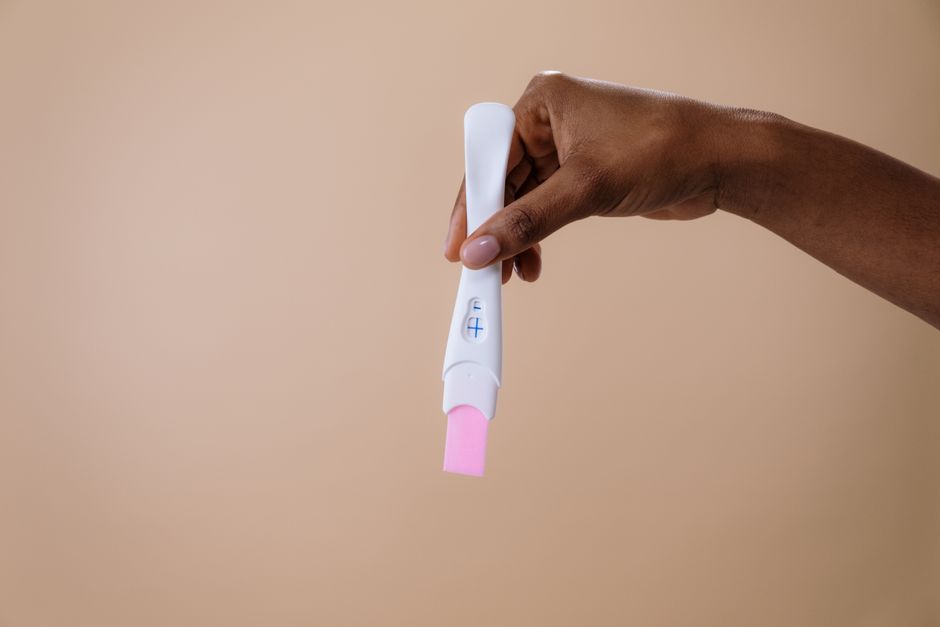
A pregnancy test can be one of the most anxiety-filled purchases you will ever make. You wait the required minutes, check the result window, and see a faint line. Is it positive? Is it negative? Or is it something else entirely? That faint mark is often an evaporation line, which is a common artifact of the test itself, not a sign of pregnancy. An evaporation line is a colorless or very light gray line that appears in the result window after the urine has dried, and it does not indicate a positive result.
What Is A Evaporation Line On Pregnancy Test? Explained
An evaporation line is a residue left behind when urine dries on the test strip. Pregnancy tests work by detecting the hormone human chorionic gonadotropin (hCG) in your urine. The test strip contains antibodies that bind to hCG, and a dye is released to make the binding visible. When urine evaporates from the strip, it can leave a faint shadow or line in the test area, even if no hCG was ever present.
The key difference is color. A true positive line is pink, red, or blue, depending on the test brand. An evaporation line is usually gray, colorless, or a very faint white. It often appears outside the recommended reading window, which is typically 3 to 10 minutes after you take the test. If you look at the test after that window closes, you are likely seeing an evaporation line, not a real result.
Why Do Evaporation Lines Happen?
Evaporation lines happen because pregnancy tests are designed to be read at a specific time. The test strip is made of porous material that wicks urine across the membrane. As the liquid moves, the dye travels with it. When you read the test within the recommended time, the dye is still moving and settling. If you wait too long, the urine dries, and the leftover salts and proteins in the urine can crystallize along the path where the liquid traveled. That dried residue creates the faint line you see.
Some tests are more prone to evaporation lines than others. Tests with a larger result window or those made with certain membrane materials may show more obvious evaporation artifacts. Digital tests, which display the words “Pregnant” or “Not Pregnant,” do not have this problem because they do not rely on visual line interpretation.
Dehydration can make evaporation lines more likely. When your urine is highly concentrated, it contains more dissolved solids. Those solids are what remain after evaporation, making the line more visible. Testing with very diluted urine can also cause issues, but for different reasons—diluted urine may not contain enough hCG to trigger a positive result even if you are pregnant.
How To Tell The Difference Between A Positive Line And An Evaporation Line
Timing is the most reliable way to tell the difference. Read the test exactly within the time frame printed in the instructions. Most tests require a reading between 3 and 5 minutes. If you read the test during that window and see a colored line, it is likely a true positive. If you read it after 10 minutes, any line you see should be considered invalid.
Color matters. A true positive line will match the color of the control line. If the control line is pink, a positive test line will also be pink. An evaporation line is typically gray or colorless. It will not have the same intensity as the control line, even in early pregnancy when hCG levels are low.
Location matters less than people think. A true positive can be lighter than the control line, especially early in pregnancy. The line’s position in the result window does not determine whether it is valid. What matters is whether the line appeared within the reading window and whether it has color.
If you are unsure, take another test. Wait 48 hours before retesting. In early pregnancy, hCG levels typically double every 48 to 72 hours. A test taken two days later will show a darker line if you are pregnant. If the new test is clearly negative, the first faint line was likely an evaporation artifact.





Common Mistakes That Lead To False Readings
Reading the test too late is the most common mistake. Many people take the test, set it down, and check it again later. By then, the test is no longer valid. The instructions on the package are not suggestions—they are the test’s operating parameters. Follow them exactly.
Testing too early is another frequent error. Home pregnancy tests detect hCG, but your body does not produce detectable levels of hCG until after implantation. Implantation typically occurs 6 to 10 days after ovulation. Testing before that point can give a false negative, which then causes you to test again later and potentially misinterpret an evaporation line as a late positive.
Using diluted urine can also cause problems. First-morning urine contains the highest concentration of hCG. Testing later in the day after drinking fluids can dilute the hCG below the test’s detection threshold. This does not cause an evaporation line, but it can create confusion when you retest and see different results.
Some people dip the test incorrectly or leave it in the urine stream for too long. Over-saturating the test can wash out the dye and make the result difficult to read. Under-saturating it can prevent the test from working at all. Follow the package instructions for how long to hold the test in the urine stream or how many drops to use.
What To Do If You See A Faint Line
First, check the time. If you are still within the reading window, look at the line’s color. A colored line, even a faint one, is more likely to be a true positive. A gray or colorless line is more likely to be an evaporation line.
If the line is faint but colored, consider it a possible positive and retest in 48 hours. Early pregnancy tests can show very faint lines because hCG levels are still low. A faint positive is still a positive—the test detects the hormone or it does not. There is no such thing as “a little bit pregnant.”
If the line appeared after the reading window, disregard it. Do not try to interpret a test that is outside its valid time frame. Throw it away and take a fresh test if you need clarification.
If you are testing before your missed period and get a negative result, wait until the day of your expected period and test again. If your period is late and you are still getting negative results, contact a healthcare provider. Some medical conditions can cause irregular cycles, and a doctor can run a blood test that is more sensitive than a urine test.
When To Trust The Test Result
Trust a positive result that appears within the reading window. Home pregnancy tests are highly accurate when used correctly. Most tests claim over 99% accuracy when used on the day of your missed period. That accuracy drops if you test earlier, but a positive result is rarely wrong.
Trust a negative result only if you tested at the right time. If you tested before your missed period, a negative result might be a false negative. If you tested on the day of your missed period or later and got a negative result, that result is reliable for that cycle. If your period does not start within a week, test again or see a doctor.
Do not trust any result from a test that was read outside its time window. The test is no longer valid once the recommended reading time has passed. This applies to both positive and negative results. A test left sitting for an hour can develop lines, change color, or show artifacts that have nothing to do with your actual hCG levels.
Why Digital Tests Avoid This Problem
Digital pregnancy tests eliminate the guesswork of line interpretation. Instead of showing lines, they display the words “Pregnant” or “Not Pregnant.” The test still uses the same underlying technology to detect hCG, but the result is processed electronically and displayed as text.
Digital tests are not more accurate than line tests. They use the same detection thresholds and the same antibodies. What they offer is clarity. There is no faint line to misinterpret and no evaporation line to second-guess. The trade-off is cost—digital tests are typically more expensive than traditional strip tests.
Digital tests can still show errors. If the test detects a problem with the sample or the test itself, it may display an error symbol instead of a result. This is different from an evaporation line and usually means the test did not work correctly.
Pregnancy Testing Basics You Should Know
Understanding how pregnancy tests work helps you interpret results correctly. The test detects hCG, a hormone produced by the placenta shortly after implantation. hCG is present in urine and blood, and its levels rise rapidly in early pregnancy.
Testing too early is the most common reason for false negatives. The best time to test is the day of your missed period or later. If you have irregular cycles, wait at least 21 days after unprotected sex before testing. This allows enough time for implantation to occur and hCG levels to rise to detectable amounts.
If you get a positive result, confirm it with a healthcare provider. Blood tests can measure exact hCG levels and confirm the pregnancy. Early prenatal care is important for a healthy pregnancy, so do not delay scheduling an appointment.
Frequently Asked Questions
Can an evaporation line appear within the testing window?
Yes, but it is rare. Most evaporation lines appear after the recommended reading time, but highly concentrated urine or certain test brands can produce a faint line even within the window. If the line has no color, treat it as an evaporation line and retest.
How long should I wait before reading a pregnancy test?
Read the test exactly within the time printed in the instructions, usually 3 to 5 minutes. Results read after 10 minutes are invalid and should not be interpreted.
Is a faint pink line a positive pregnancy test?
Yes. A faint line that has pink or blue color is a positive result, even if it is lighter than the control line. The test detects hCG or it does not, and color indicates the dye has bound to the hormone.
Should I take another test if I see an evaporation line?
Yes. If you are unsure whether a line is a true positive or an evaporation artifact, take a fresh test. Wait 48 hours to allow hCG levels to rise if you are pregnant, and read the new test within the recommended time window.
