
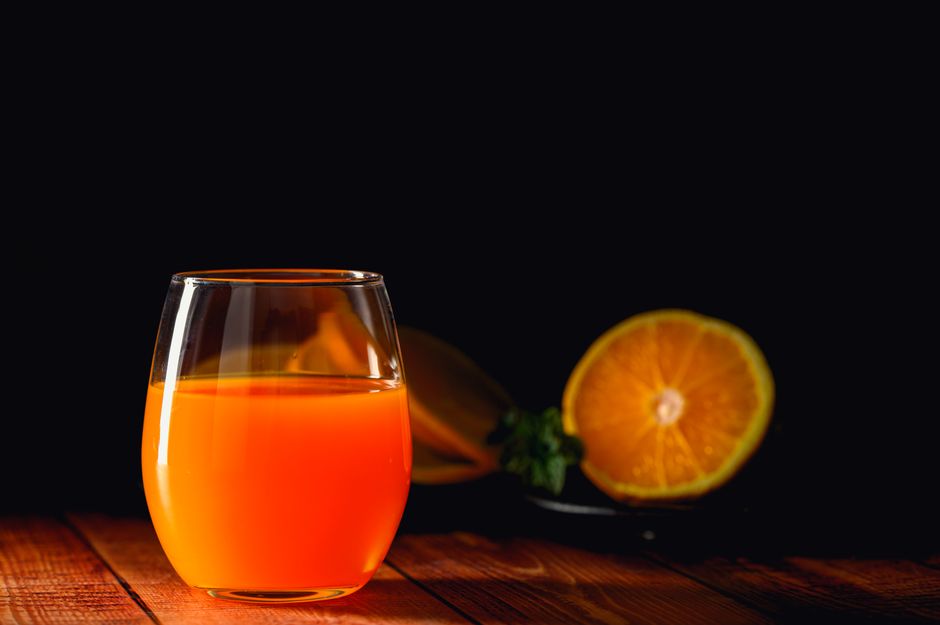
A concentrate juice is a juice that has had most of its water removed, leaving a thicker liquid that is later reconstituted with water before it is sold or consumed. The process is used to cut shipping and storage costs, extend shelf life, and let manufacturers standardize flavor from batch to batch. It is not the same thing as fresh-squeezed juice, and it is not automatically the same as “juice from concentrate” on a label — though the two are closely related.
What Is A Concentrate Juice and How Is It Made?
Concentrate juice starts as regular pressed juice. That juice is then heated and passed through a vacuum evaporator, which boils off water at a lower temperature than normal boiling. The result is a syrup-like liquid that may be only a fraction of its original volume.
Removing water does two things. It makes the product cheaper to ship, because you are no longer paying to move water around. It also makes the juice far more stable in storage, since microbes need water to grow.
The catch is that heat and evaporation strip out some of the compounds that give fresh juice its aroma and character. To fix this, manufacturers often capture volatile flavor compounds during evaporation and add them back later. This is a standard part of industrial juice production, not a sign of something being faked.
When the concentrate is ready for sale, water is added back. The finished product is usually labeled “juice from concentrate” or “reconstituted juice.”
Is Concentrate Juice Less Healthy Than Fresh Juice?
For most people, the difference between concentrate juice and not-from-concentrate juice is smaller than the marketing around it suggests. Both are fruit juice. Both contain sugar. Both lack most of the fiber found in whole fruit.
Here is where the honest picture gets more nuanced. Vitamin C is heat-sensitive, and some is lost during concentration. Many manufacturers add vitamin C back, so the final label often shows levels similar to fresh juice. Other nutrients, including certain polyphenols and antioxidants, can also be reduced by the heating and evaporation steps. How much is lost varies widely by fruit, process, and storage time. There is no single number that applies across the category.
What matters more for most health outcomes is total sugar and total calories, and on those measures concentrate and not-from-concentrate juice are often close. A cup of reconstituted orange juice from concentrate and a cup of not-from-concentrate orange juice deliver similar amounts of sugar and calories.
The bigger comparison is juice versus whole fruit, not concentrate versus fresh juice. Whole fruit contains fiber, takes longer to eat, and is more filling. Juice — of any kind — delivers sugar quickly and is easy to overconsume.
What Is The Difference Between Concentrate, Not-From-Concentrate, and Fresh Juice?
These three terms describe how the juice was handled, not how healthy it is.
| Type | How it is made | Typical shelf life (unopened) |
|---|---|---|
| Concentrate (reconstituted) | Water removed, then added back before packaging | Long; often many months |
| Not-from-concentrate (NFC) | Pressed and pasteurized, never concentrated | Shorter than concentrate; often weeks to a few months |
| Fresh-squeezed | Pressed and sold with minimal processing | Days; must be refrigerated |
Not-from-concentrate juice is pasteurized too. It is not raw. The difference is that its water was never removed, so it tends to taste closer to fresh-pressed fruit.
Fresh-squeezed juice sold in stores is usually unpasteurized or lightly pasteurized, and it carries a shorter shelf life and a higher risk of foodborne illness for people with weakened immune systems.





Does “100% Juice” Mean It Is Concentrate-Free?
No. “100% juice” means the product contains only juice and no added sugar, but that juice can absolutely be from concentrate. A bottle can say “100% juice” and “from concentrate” on the same label without any conflict.
This is one of the most common points of confusion. The “100%” claim is about what is in the bottle, not how it was processed.
What to look for instead:
- Ingredients list: “100% juice” or a single fruit juice means no added sugar. “Juice cocktail,” “juice drink,” or “fruit punch” usually means added sugar or water.
- Added sugar: Check the ingredients for cane sugar, corn syrup, or similar. If it is there, it is not 100% juice.
- From concentrate: This tells you the juice was reconstituted. It says nothing about nutrition on its own.
Does Concentrate Juice Have Added Sugar?
Plain concentrate juice does not have added sugar. The sugar in it is the natural sugar from the fruit. Reconstituting with water does not add sugar.
Problems start when concentrate is used as a base for sweetened drinks. Many juice cocktails, fruit drinks, and flavored beverages start with concentrate and then add sugar, high-fructose corn syrup, or artificial sweeteners. Those products are not the same as 100% juice, even if the front of the label shows fruit.
It is also worth knowing that some concentrated fruit juices are used as sweeteners in their own right. White grape juice concentrate and apple juice concentrate are common added sweeteners in packaged foods, because they are cheap and can be listed as “fruit juice concentrate” rather than “sugar.” Nutritionally, they still function as added sugar in the diet.
Is Juice Concentrate Used in Anything Else?
Yes, and this is where concentrate shows up in more places than most people realize. Fruit juice concentrate is used as a sweetener in cereals, granola bars, sauces, yogurt, and many “no added sugar” products. Because it is technically a fruit ingredient, it can appear on a label without being called sugar.
Concentrate is also used in winemaking, brewing, and the food industry as a flavoring and sweetening agent. Frozen juice concentrate sold in cans is the same basic product — you add water at home.
For someone watching sugar intake, this matters. A product sweetened with apple juice concentrate still raises blood sugar. The source is fruit, but the effect on the body is similar to other added sugars.
How Does Concentrate Juice Fit Into a Healthy Diet?
Fruit juice of any kind is not a substitute for whole fruit. Dietary guidance in the United States generally treats 100% juice as a limited part of the fruit group, not a free pass to drink unlimited amounts. Whole fruit is preferred because of its fiber and because it is more satiating.
If you drink juice, the form — concentrate or not — is a minor factor compared with how much you drink and what else is in your diet. A small glass of 100% juice can fit into a balanced eating pattern. A large bottle of sweetened juice drink is a different thing entirely.
For people with diabetes or prediabetes, juice sugar is absorbed quickly and can raise blood glucose. Whole fruit tends to have a gentler effect. Anyone managing blood sugar should talk with a clinician about how juice fits into their plan.
Does Concentrate Juice Contain the Same Vitamins as Fresh Juice?
It depends on the vitamin and the process. Vitamin C is the most studied, and it is sensitive to heat. In many commercial juices, vitamin C is added back after concentration so the final product meets a target level. That means the label may show vitamin C content similar to fresh juice.
Other nutrients are less predictable. B vitamins, certain polyphenols, and aroma compounds can be reduced by heating and evaporation. The amount lost varies by fruit, equipment, and storage conditions, and there is no single figure that applies across all products.
What this means practically: if you are choosing juice mainly for vitamin C, both concentrate and not-from-concentrate can be reasonable sources. If you are choosing it for a broad range of plant compounds, whole fruit is the better bet, because the fiber and the full nutrient package come with it.
Common Myths About Concentrate Juice
Myth: Concentrate juice is not real juice. It is real juice. Water was removed and then added back. The fruit content is still there.
Myth: Not-from-concentrate is always healthier. Not necessarily. Both are pasteurized, both contain similar sugar and calories, and the nutrient differences are often small. Marketing tends to lean heavily on this distinction.
Myth: “No added sugar” means low sugar. Fruit juice concentrate is a common sweetener that does not have to be labeled as added sugar in every case. A product can be high in total sugar without listing “sugar” as an ingredient.
Myth: Concentrate juice is a good way to get your daily fruit. It can count toward fruit intake in dietary guidance, but it does not replace the fiber and fullness of whole fruit. Most guidance treats juice as a limited part of the fruit group.
Frequently Asked Questions
Is concentrate juice bad for you?
No, it is not inherently bad, but it is not the same as whole fruit. It contains natural sugar, lacks most of the fiber of whole fruit, and should be consumed in moderation.
Is juice from concentrate the same as fresh juice?
No. Juice from concentrate has had its water removed and added back, while fresh juice has not. Both may be pasteurized, and their sugar and calorie content is often similar.
Does 100% juice mean it is not from concentrate?
No. “100% juice” means the product contains only juice with no added sugar, but that juice can be from concentrate. The two terms describe different things.
Does concentrate juice have added sugar?
Plain concentrate juice does not have added sugar — the sugar is natural fruit sugar. Sweetened juice drinks made with concentrate often do contain added sugar, so check the ingredients list.
