
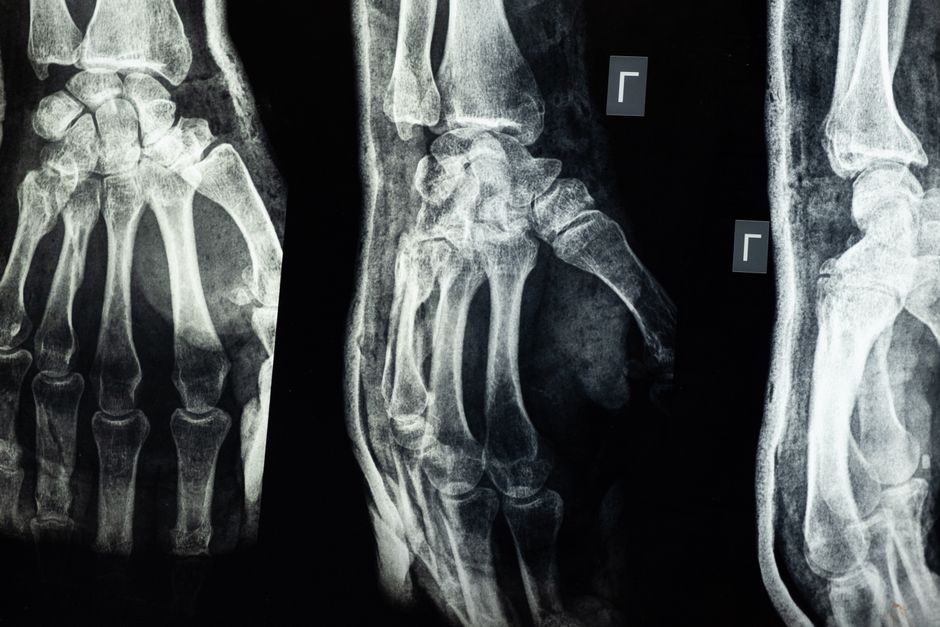
A buckle fracture is a common childhood bone injury where one side of the bone bends and buckles outward, like a compressed spring, without actually breaking all the way through. Unlike a typical break that snaps completely, the bone here just crumples on one side. These fractures are also called torus fractures, and they are the most common type of fracture in kids under ten.
What Exactly Is a Buckle Fracture?
A buckle fracture is a partial break. Think of a dry twig. If you try to bend it, it snaps. But a green, flexible branch will just bend and maybe crack on one side. A child’s bone is like that green branch. It is softer and more flexible than an adult bone. When too much force is applied, the bone compresses on one side, creating a little bulge or buckle.
This is different from a complete fracture, where the bone breaks into two pieces. It is also different from a greenstick fracture, where the bone bends and cracks on one side but does not fully break. In a buckle fracture, the bone does not crack at all. It just buckles. The outer layer of the bone, called the cortex, remains intact but has a visible bulge.
According to the American Academy of Orthopaedic Surgeons, buckle fractures are almost always stable. This means the bone fragments are not likely to move out of place. This stability is why treatment is often simpler than for other fractures.
How Do You Know If It Is a Buckle Fracture?
The most common sign is pain and swelling near the wrist or forearm. That is where most buckle fractures happen. The child will likely avoid using the injured arm. They may cry or complain when you try to move it. There may be some tenderness when you press on the spot.
A key detail is that the pain is usually mild to moderate. It is not the screaming, bone-sticking-out kind of pain you might expect from a serious break. The child might still move the arm a little, just not fully. This can sometimes trick parents into thinking it is just a sprain or a bad bruise.
If you suspect a buckle fracture, the only way to confirm it is with an X-ray. The doctor will look for that telltale bulge on one side of the bone. No bulge on the X-ray means it is not a buckle fracture. The X-ray is the gold standard for diagnosis. There is no home test that can tell you for sure.
What Causes a Buckle Fracture?
Buckle fractures happen when a child falls onto an outstretched hand. This is called a FOOSH injury. It is the classic playground injury. A child trips, sticks out a hand to catch themselves, and the force travels up through the wrist and forearm. The bone compresses on the side where the force hits.
These fractures are most common in kids aged five to ten. Why? Because their bones are still growing and are more porous. The bone has a higher water content and less mineral density than adult bone. This makes it compressible rather than brittle. Adults rarely get buckle fractures. If an adult falls the same way, they are more likely to get a complete wrist fracture.
Studies published in the Journal of Pediatric Orthopaedics have found that roughly one in three children will have at least one fracture before age 16. Buckle fractures account for about half of all childhood forearm fractures. They are that common.





How Is a Buckle Fracture Treated?
Treatment is straightforward and much less intense than for a full break. The standard approach is immobilization with a removable splint or a short arm cast. The goal is not to set the bone — it is already aligned — but to keep it still so the buckle can heal.
Research from the Children’s Hospital of Philadelphia shows that a simple removable wrist splint works just as well as a hard cast for most buckle fractures. Children heal faster and have less stiffness when they can take the splint off to wash or sleep. The splint is typically worn for three to four weeks.
Here is a comparison of typical treatment options:
| Treatment | Duration | Key Benefit |
|---|---|---|
| Removable splint | 3-4 weeks | Can be removed for bathing and sleep |
| Short arm cast | 3-4 weeks | Provides more protection for active kids |
| No treatment (not recommended) | N/A | Risk of displacement and delayed healing |
Pain management usually involves over-the-counter acetaminophen or ibuprofen. Ice packs can help with swelling for the first 48 hours. The splint or cast should be kept dry. If it gets wet, the skin can get irritated or infected.
Most children are back to normal activities within four to six weeks. Contact sports and rough play should be avoided until the doctor says it is safe. Follow-up X-rays are rarely needed unless the pain does not improve.
What Are the Common Misconceptions About Buckle Fractures?
One big myth is that a buckle fracture always needs a hard cast. That is not true. As mentioned, a removable splint works just as well for most cases. Some doctors still put on a full cast out of habit or caution, but the evidence does not support it being necessary.
Another misconception is that the bone will heal crooked. Buckle fractures are stable. The bone does not shift. It heals in its original position. There is no need for manipulation or setting. The body simply lays down new bone over the buckle, and the bulge smooths out over time.
A third myth is that a buckle fracture is the same as a greenstick fracture. They are different. A greenstick fracture has an actual crack on one side of the bone. A buckle fracture has no crack — just a compression bulge. They are treated differently too. Greenstick fractures sometimes need casting or even manipulation if the bone is bent.
Some people also believe that a child with a buckle fracture should avoid all activity for weeks. That is overly cautious. Light activity like walking, writing, and eating is fine. The main restriction is on rough play and sports that could re-injure the arm.
How Can You Prevent a Buckle Fracture?
You cannot prevent every fall. Kids fall. That is how they learn to move. But you can reduce the risk of a fracture when they do fall. One of the most effective ways is to make sure they wear wrist guards during activities like skateboarding, rollerblading, and biking. Wrist guards absorb some of the impact and spread the force away from the bone.
Another simple step is to keep playground surfaces soft. Rubber mulch, wood chips, and sand are much safer than concrete or packed dirt. The Consumer Product Safety Commission recommends a minimum depth of 12 inches of loose fill material under playground equipment.
Good nutrition also helps. Adequate calcium and vitamin D are essential for bone strength. The National Institutes of Health recommends children aged 4-8 get 1,000 mg of calcium per day. For kids 9-18, it is 1,300 mg. Milk, yogurt, cheese, and leafy greens are good sources. Vitamin D helps the body absorb calcium, so sun exposure or a supplement can help.
There is no evidence that any supplement or special diet can prevent a buckle fracture specifically. General bone health is what matters. A child with strong bones will still get a buckle fracture from a hard fall. But they are less likely to get a more serious break.
When Should You See a Doctor?
You should see a doctor if a child falls and has persistent pain, swelling, or trouble moving the arm. If the child refuses to use the arm for more than a few hours, get it checked. If there is any deformity — a bump that was not there before — see a doctor.
Do not try to pop the bone back in place yourself. You cannot. It is not dislocated. It is a compression injury. Manipulating it can make it worse. Just immobilize the arm with a pillow or a sling and go to an urgent care or pediatrician.
If the child has numbness, tingling, or pale skin in the fingers, that is a sign of nerve or blood vessel involvement. That is rare with buckle fractures but requires emergency care. Go to the ER.
Most buckle fractures heal without any issues. The splint comes off, the child goes back to playing, and the bone is as good as new. There is no long-term weakness or increased risk of re-fracture at the same spot. The body remodels the bone completely within a year.
Frequently Asked Questions
Can a buckle fracture heal without a cast?
Yes. Many buckle fractures heal well with just a removable splint. The splint keeps the bone still while allowing the child to remove it for bathing and sleeping.
How long does a buckle fracture take to heal?
Most buckle fractures heal in three to four weeks. Full return to normal activities usually happens within four to six weeks.
Is a buckle fracture the same as a greenstick fracture?
No. A buckle fracture is a compression bulge with no crack. A greenstick fracture has an actual crack on one side of the bone. They are different injuries.
Can adults get a buckle fracture?
It is very rare. Adult bones are more brittle and less compressible. An adult who falls on an outstretched hand is much more likely to get a complete wrist fracture.
