
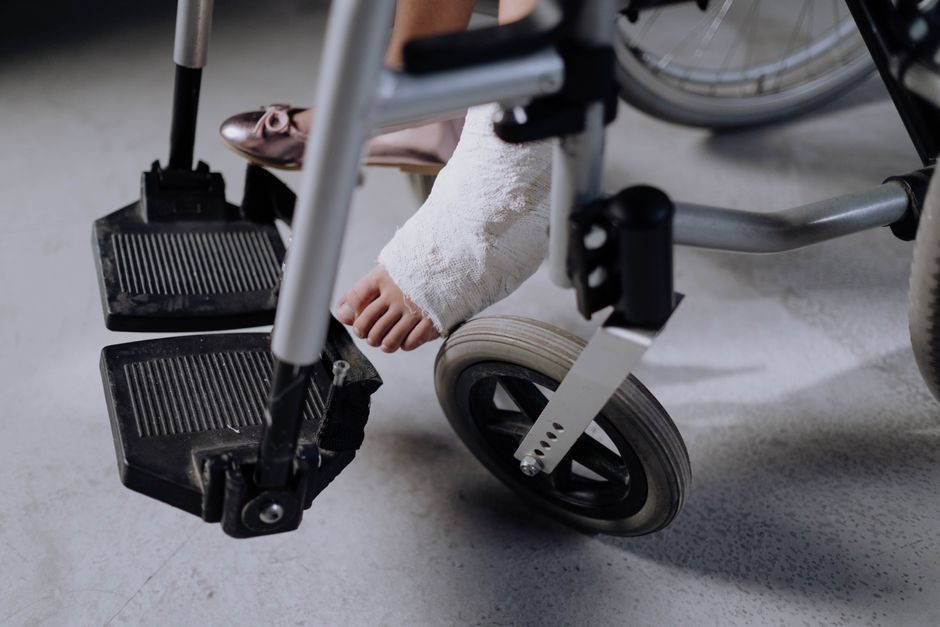
A buckle fracture is one of the most common bone injuries in children, and it is not as scary as it sounds. It happens when a child’s soft, growing bone gets compressed and bulges on one side, like a bent pipe. The good news is that these fractures are stable, heal quickly, and rarely need a cast for more than a few weeks. Treatment is straightforward, and most kids are back to normal activity within a month.
What Exactly Is a Buckle Fracture in Children?
A buckle fracture is a partial break in a child’s bone. Unlike a full break where the bone snaps into two pieces, a buckle fracture only happens on one side of the bone. The bone compresses and literally buckles, creating a small raised area.
Think of it like stepping on a plastic straw. The straw does not snap in half. It just gets a dent or a bulge on one side. That is what happens to a child’s bone with a buckle fracture. The medical term for this is a torus fracture, named after the Latin word for a bulge.
These fractures are unique to children because their bones are still growing and are softer than adult bones. An adult bone would likely snap completely under the same force. A child’s bone absorbs the impact by buckling instead. This is actually a protective feature of growing bones.
Buckle fractures most often occur in the wrist, forearm, and lower leg. The radius bone in the wrist is the most common site. According to the American Academy of Orthopaedic Surgeons, buckle fractures account for roughly 50 percent of all childhood fractures seen in emergency rooms.
What Causes Buckle Fractures in Kids?
The cause is almost always a fall onto an outstretched hand. Kids trip, slip, or tumble off playground equipment and instinctively put their hands out to catch themselves. The force travels up through the wrist and forearm, and the soft bone buckles under the pressure.
Common scenarios include falling off a bike, slipping on wet grass, falling from monkey bars, or tripping while running. The injury usually happens from a height of less than five feet. Higher falls or more violent impacts tend to cause complete fractures instead.
Sports are another common cause. Skateboarding, rollerblading, soccer, and gymnastics all involve falls that can lead to buckle fractures. The risk is highest in children between ages 5 and 10, when bones are still soft and coordination is still developing.
Buckle fractures are not caused by weak bones or nutritional deficiencies in otherwise healthy children. They are simply a result of normal childhood activity and the unique structure of growing bones. If your child gets multiple fractures from minor falls, that is a different conversation worth having with a pediatrician.
How Do Doctors Diagnose a Buckle Fracture?
The diagnosis starts with a physical exam. The child will have pain, swelling, and tenderness over the injured area. They may not want to move the arm or put weight on the leg. There is usually no visible deformity like you would see with a broken bone that is out of place.
An X-ray is the standard way to confirm a buckle fracture. On the X-ray, the doctor looks for a small bulge or raised area on one side of the bone. The other side of the bone remains intact. This is what separates a buckle fracture from a complete fracture or a greenstick fracture.
The American College of Radiology recommends X-rays for any suspected fracture in a child. There is no need for more advanced imaging like CT scans or MRIs unless there are unusual findings. X-rays are fast, low-radiation, and highly accurate for buckle fractures.
One important thing parents should know: the X-ray might look subtle. A buckle fracture can be easy to miss if the radiologist is not looking closely. If your child still has pain after a negative X-ray, a follow-up visit is reasonable. Some buckle fractures become more visible on X-ray after a week of healing.





What Is a Buckle Fracture in Kids Causes Treatment — How Is It Treated?
Treatment for a buckle fracture is simple and conservative. The standard approach is immobilization with a splint or a short cast. The goal is to keep the bone still so it can heal, not to realign the bone because there is no displacement to correct.
A removable wrist splint is often enough for a buckle fracture of the forearm or wrist. The child wears it for three to four weeks. They can take it off for bathing and sleeping, though most kids prefer to keep it on for comfort. The splint prevents the child from using the arm in a way that could worsen the injury.
For buckle fractures in the leg, a walking boot or a short leg cast may be used. The child can usually bear weight as tolerated. Complete immobilization is rarely needed. The bone is stable, and the intact side of the bone provides enough support for safe movement.
Pain management is straightforward. Over-the-counter acetaminophen or ibuprofen is usually enough. Ice packs applied for 15 minutes at a time can help with swelling. Prescription pain medications are almost never needed for a buckle fracture.
The table below compares common treatment approaches for buckle fractures at different sites:
| Fracture Location | Typical Immobilization | Duration | Follow-Up X-ray Needed? |
|---|---|---|---|
| Wrist (radius) | Removable splint | 3-4 weeks | Usually not |
| Forearm (both bones) | Short arm cast | 4 weeks | Sometimes |
| Lower leg (tibia) | Walking boot | 3-4 weeks | Usually not |
| Ankle (fibula) | Removable brace | 3 weeks | Usually not |
What Does Recovery Look Like for a Buckle Fracture?
Recovery is fast compared to other fractures. Most children are pain-free within a week. The swelling goes down quickly once the bone is immobilized. By the end of week two, most kids are using the injured limb for light activities without discomfort.
After three to four weeks, the splint or cast can be removed. The bone is usually healed enough for normal activity at this point. The child may have some stiffness in the joint, especially the wrist, but this resolves on its own within a few days.
Return to sports is typically allowed around four to six weeks after the injury. The exact timeline depends on the child’s age and the specific fracture site. Younger children heal faster than older ones. A five-year-old with a wrist buckle fracture may be ready for the playground in three weeks, while a ten-year-old might need four to five weeks.
Research published in the Journal of Pediatric Orthopaedics has shown that routine follow-up X-rays are not necessary for uncomplicated buckle fractures. The bone heals without any need for imaging confirmation. This saves children from unnecessary radiation exposure and saves families time and money.
Physical therapy is rarely needed. Children naturally regain full range of motion and strength as they return to normal activities. If your child avoids using the arm for more than a few weeks after the cast comes off, a quick check with the doctor is reasonable, but most kids do just fine on their own.
Some children develop a mild fear of re-injury after the cast comes off. This is normal. Gentle encouragement and gradual return to play works better than pushing them too hard. Most kids forget about the injury entirely within a month.
Common Misconceptions About Buckle Fractures
Many parents worry that a buckle fracture means the bone will heal crooked or cause long-term problems. This is not true. Because the bone is only buckled on one side and not displaced, it heals straight. There is no need for reduction or manipulation by a doctor.
Another myth is that buckle fractures need hard casts like complete fractures do. As discussed, a removable splint works just as well for most cases. A large study from the Emergency Medicine Journal found that children with wrist buckle fractures treated with a splint had the same healing outcomes as those treated with a cast, but with less discomfort and easier daily care.
Some parents also believe that their child should not move the injured limb at all. This is incorrect. Gentle movement of the fingers, elbow, or shoulder is fine and actually helps prevent stiffness. Only the specific injured bone needs to be kept still. A child with a wrist buckle fracture can still use their arm for eating, writing, and light play as long as the wrist is supported.
There is also a misconception that buckle fractures are a sign of brittle bones or rickets. This is rarely the case. Buckle fractures are an injury of normal childhood bone structure, not a sign of underlying disease. Only if your child has multiple fractures from very minor falls should you discuss bone health with a pediatrician.
What to Avoid During Treatment
Do not remove the splint or cast without checking with the doctor first. Even though the fracture is stable, removing the support too early can cause pain and slow healing. Stick to the recommended three to four weeks.
Avoid letting your child use the injured arm for heavy lifting or climbing during the healing period. Monkey bars, pull-ups, and carrying heavy backpacks should wait until after the splint is off and the doctor says it is safe. Pushing too hard too soon can turn a simple buckle fracture into a more complicated injury.
Do not ignore signs of complications. While buckle fractures rarely cause problems, you should call the doctor if your child has increasing pain, numbness, tingling, or fingers that turn blue or cold. These could indicate a tight cast or nerve irritation. Also call if the child develops a fever, which could signal an infection if the skin was broken.
Avoid using heat packs on the injury during the first week. Heat increases blood flow and can worsen swelling. Stick to ice packs for the first few days. After the swelling is gone, heat is fine for general comfort.
Finally, do not assume your child needs to avoid all activity. Let them be kids. They can still play, draw, read, and do most normal things. Just keep them away from rough play and high-impact sports until the bone is fully healed.
Frequently Asked Questions
How long does a buckle fracture take to heal in a child?
Most buckle fractures heal in three to four weeks. The splint or cast can usually be removed at that point, and normal activity can resume shortly after.
Does a buckle fracture need a cast or just a splint?
A removable splint is often enough for a buckle fracture. Research shows that splints work just as well as casts and are more comfortable for daily life.
Can a child go to school with a buckle fracture?
Yes, children can attend school normally with a buckle fracture. They just need to avoid gym class, recess sports, and heavy lifting until the splint is removed.
Will a buckle fracture affect my child’s growth or bone development?
No, a buckle fracture does not affect growth or long-term bone development. The bone heals completely and continues to grow normally.
