
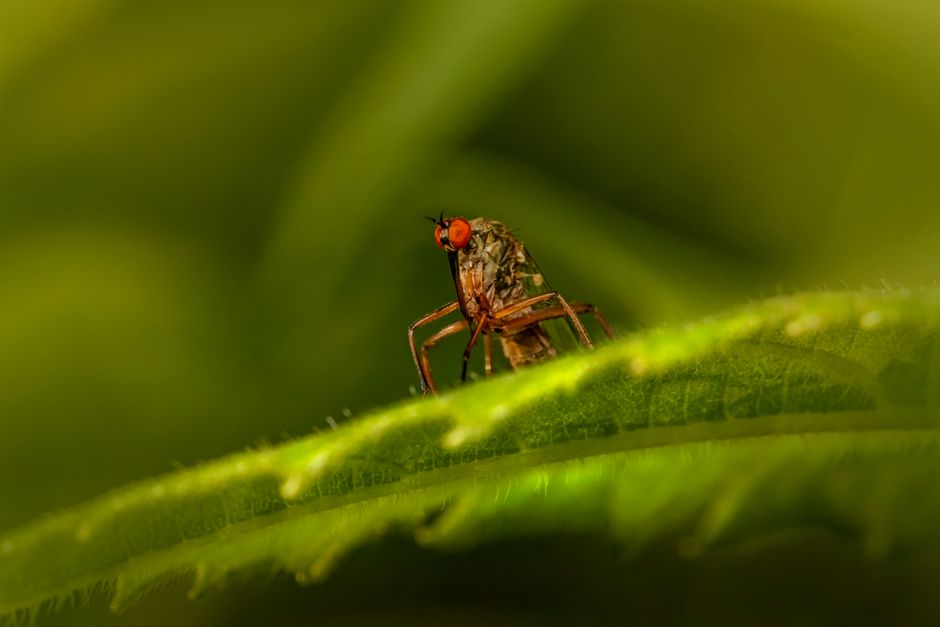
A biting midge is a tiny flying insect — often smaller than a grain of rice — that belongs to the family Ceratopogonidae. Only the females bite, and they do it to get the protein in blood they need to develop their eggs. The bite is not a sting. The midge slices the skin with mouthparts and laps up the blood, which is why the mark often itches long after the insect is gone.
If you have ever ended up with a cluster of red, maddening bumps after an evening outdoors and never saw or felt the culprit land, a biting midge is a strong candidate. They are widespread, they are active in specific conditions, and they are difficult to keep away from exposed skin.
What Is a Biting Midge and Why Do They Bite?
Biting midges are small flies in the family Ceratopogonidae. The group includes thousands of species worldwide. In North America, the ones that most often bite people are commonly called no-see-ums, punkies, or sand flies — though “sand fly” is also used for a different group of insects that spread disease in other parts of the world, so the name can be confusing.
Most biting midges are between roughly 1 and 3 millimeters long. That is small enough to pass through standard window screens and small enough that many people never see the insect that bit them. They are usually gray or dark, with mottled wings, and they hold their wings folded over their back when resting.
Only the female bites. She needs a blood meal to get the protein and nutrients required to produce a batch of eggs. Males feed on nectar and plant sugars and do not bite. After taking blood, the female develops her eggs and lays them in moist environments — damp soil, mud, decaying plant matter, tree holes, or standing water depending on the species.
This is the part most people do not realize: the bite itself is not a sting or a puncture in the way a mosquito feeds. A mosquito inserts a needle-like proboscis. A biting midge uses scissor-like mouthparts to cut a small wound in the skin, then feeds on the pool of blood that forms. That slicing action is part of why the bite can itch so intensely and why it sometimes bleeds a little.
Why Do Biting Midge Bites Itch So Much?
The itch is not caused by the insect’s saliva alone. It is caused by your immune system reacting to it.
When a biting midge feeds, it injects saliva into the wound. The saliva contains substances that keep blood flowing and prevent it from clotting. Your body recognizes these proteins as foreign. Immune cells release histamine and other chemical signals, which widen blood vessels and send fluid into the surrounding tissue. That response produces the swelling, redness, and itch.
Some people react much more strongly than others. Research on insect bite reactions has shown that repeated exposure can change how the immune system responds over time — some people become less reactive with repeated bites, and some become more reactive. This is why two people sitting in the same spot can end up with very different numbers of visible bites.
Because the reaction is immune-driven, the bump can appear minutes to hours after the bite and can last for days. Scratching makes it worse. Breaking the skin introduces bacteria and raises the risk of a secondary infection.
Where Are Biting Midges Found?
Biting midges live on every continent except Antarctica. They are most abundant in warm, humid environments near water or damp soil, which is where the larvae develop.
They are common in:
- Coastal salt marshes and tidal flats
- Freshwater swamps, ponds, and slow streams
- Damp forests and wooded areas with decaying vegetation
- Irrigated farmland and wet pasture
- Mangrove and wetland areas
Because the larvae need moisture, midge populations tend to peak near these habitats. But midges can travel. Some species fly only a short distance from where they hatched, while others can be carried by wind much farther. That means you do not have to be standing in a marsh to get bitten — being downwind of one is often enough.





When Are Biting Midges Most Active?
Biting midges are most active around dawn and dusk. This is when the air is calm, the temperature is moderate, and the humidity is higher. Many species are weak fliers, so they avoid strong wind and bright midday sun.
Activity also depends on the species and the climate. In warm regions, midges may be present year-round. In temperate areas, activity is seasonal and typically peaks in the warmer months. Overcast, humid, still days can bring them out at any hour.
Wind matters more than almost anything else. Even a light breeze reduces midge activity, which is why they tend to be worst on calm evenings and near still water.
How Do You Know If You Were Bitten by a Midge?
You usually will not see or feel the bite happen. The insect is small, its feeding is quick, and many people do not notice anything until the itch starts.
What people typically notice afterward:
- Small red bumps, often in clusters or lines
- Intense itching that can last for days
- A tiny central mark or a small amount of bleeding
- Swelling that is sometimes more noticeable than the bite itself
There is no reliable way to confirm a biting midge by looking at the bite alone. Mosquitoes, fleas, bed bugs, and other biting insects can produce similar reactions. Location, timing, and whether you were outdoors near damp habitat are often more useful clues than the appearance of the bite itself.
One detail worth knowing: biting midges can transmit certain pathogens to livestock and wildlife, and in some parts of the world they spread diseases to people. In the United States, the bites are primarily a nuisance and an allergy problem rather than a disease concern, but the public health picture varies by region and species.
What Helps With Biting Midge Bites?
Most bites resolve on their own. The goal of at-home care is to reduce itching and prevent infection.
General measures that are widely recommended:
- Wash the area with soap and water
- Apply a cold compress to reduce swelling and calm the itch
- Use an over-the-counter anti-itch cream or oral antihistamine if needed
- Keep fingernails short and avoid scratching
If a bite becomes increasingly painful, hot, or swollen, or if you develop a fever, that can point to a skin infection and warrants medical attention. This is not common, but it is the main complication to watch for.
The evidence for specific home remedies is limited. Some people find relief from calamine lotion, colloidal oatmeal, or a baking soda paste, but these are comfort measures rather than proven treatments. No clinical evidence currently confirms that any of them speeds healing.
How Do You Prevent Biting Midge Bites?
Prevention is the most effective approach, because once midges are biting, they are hard to stop.
Because midges are so small, standard window screens may not keep them out. Fine-mesh screening, sometimes called no-see-um netting, is designed for this. For outdoor protection, an EPA-registered insect repellent is the most reliable option. Products containing DEET or picaridin are widely used and have good evidence for repelling biting insects. The Centers for Disease Control and Prevention maintains current guidance on which repellent active ingredients are registered and how to use them safely, and that guidance is worth checking directly since recommendations can be updated.
Other measures that help:
- Wear long sleeves and long pants, especially at dawn and dusk
- Avoid calm, humid evenings near marshes, ponds, and wet ground
- Use fans — midges are weak fliers and moving air disrupts them
- Treat clothing and gear with permethrin where appropriate
- Keep screens in good repair and consider finer mesh
What does not work reliably: citronella candles, ultrasonic devices, and most “natural” sprays have weak or mixed evidence for repelling biting midges specifically. Some may offer brief, partial relief. None should be treated as a dependable substitute for an EPA-registered repellent when midges are thick.
Are Biting Midges Dangerous?
In the United States, biting midges are mostly a nuisance. The bites are uncomfortable and can itch for days, but they rarely cause serious harm on their own.
The main risks are secondary infection from scratching and, in rare cases, allergic reactions that are more severe than the typical itchy bump. People vary widely in how they respond.
The picture is different in some other parts of the world. Certain biting midge species in tropical regions can transmit diseases to humans. This is a regional concern, not a general one, and it depends on the specific species and location. Travelers heading to areas where midge-borne disease is a known issue should check current travel health guidance for that destination.
Frequently Asked Questions
What is a biting midge?
A biting midge is a very small fly in the family Ceratopogonidae, usually 1 to 3 millimeters long. Females bite to get blood protein for egg development, while males feed on nectar and do not bite.
Why do biting midges bite humans?
Only female biting midges bite, and they do it to obtain the blood protein they need to produce eggs. Humans are one of many possible blood sources, not a preferred target.
How long do biting midge bites itch?
Itching usually lasts from a few days up to about a week, depending on how strongly your immune system reacts. Reactions vary a lot between people, so there is no single timeline that applies to everyone.
Do biting midges carry disease?
Some biting midge species in certain tropical regions can transmit diseases to humans. In the United States, they are mainly a biting nuisance rather than a disease concern.
