
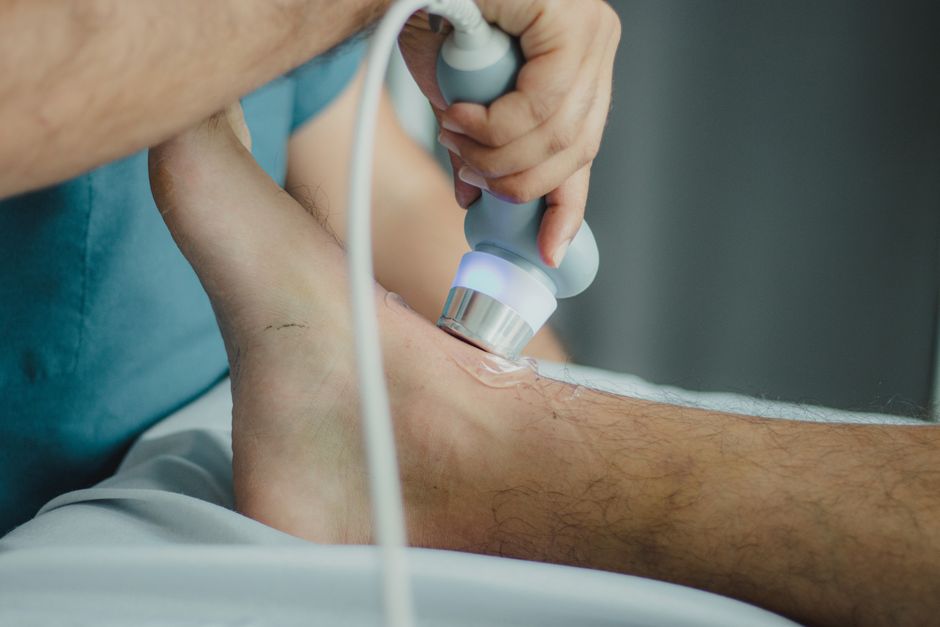
A bedside ultrasound is a small ultrasound machine a doctor brings to your bedside to get quick images of organs inside your body. It is also called point-of-care ultrasound or POCUS. The main goal is to answer a specific question fast, like whether fluid is around the heart or if the gallbladder looks inflamed. It is not a full replacement for a formal ultrasound done in the radiology department, but it serves a different purpose: immediate answers at the bedside.
How Does Bedside Ultrasound Work?
A bedside ultrasound uses sound waves to create real-time images. The doctor holds a small probe against your skin with gel on it. The probe sends sound waves into your body. These waves bounce off tissues and organs and return to the probe. A computer turns these echoes into a moving image on a small screen.
The machine itself is about the size of a laptop computer. Many newer models are smaller than a tablet. The image quality is good enough to answer urgent questions. It is not the same high-resolution image you get from a large machine in radiology. But it is fast. A full scan can take less than five minutes.
Doctors who use bedside ultrasound get special training. It is not part of every medical degree yet. Many emergency doctors, critical care doctors, and some surgeons learn it during residency. The training teaches them what to look for and what to ignore. A trained user can spot problems that an untrained person would miss entirely.
What Are the Main Uses of Bedside Ultrasound?
Bedside ultrasound has many uses in emergency and hospital settings. The most common use is the FAST exam, which stands for Focused Assessment with Sonography in Trauma. This scan checks for internal bleeding after an injury. It looks at four areas: around the heart, the right upper belly, the left upper belly, and the pelvis. Research published in the Journal of Trauma and Acute Care Surgery found that a FAST exam can detect bleeding with about 90 percent accuracy in certain patients.
Another major use is looking at the heart. A bedside cardiac ultrasound can tell if the heart is pumping well. It can spot fluid around the heart, called pericardial effusion, which can be life-threatening. It can also show if the heart chambers are too big or too small. This helps doctors decide what to do next without waiting for a full echocardiogram.
Lung ultrasound is also common. It can detect a collapsed lung, called pneumothorax, faster than a chest X-ray in some cases. It can also show fluid in the lungs from heart failure. One study in Chest found that lung ultrasound was more sensitive than chest X-ray for detecting certain lung problems in critically ill patients.
Other uses include checking the gallbladder for stones, looking for kidney stones or blockages, and finding fluid collections in the belly. Some doctors use it to guide procedures like placing a central line or draining fluid from around the lungs. The table below summarizes the main uses.
| Body Area | What It Checks | How Fast |
|---|---|---|
| Abdomen | Internal bleeding, gallbladder stones, kidney blockages | 2-5 minutes |
| Heart | Pumping function, fluid around heart, chamber size | 3-6 minutes |
| Lungs | Collapsed lung, fluid in lungs, pneumonia | 1-3 minutes |
| Blood vessels | Guiding IV lines, checking for deep vein clots | 5-10 minutes |
What Are the Limitations of Bedside Ultrasound?
Bedside ultrasound has real limits that patients and doctors need to understand. The image quality is lower than a formal ultrasound. This means small or subtle findings can be missed. A bedside scan might not see a small kidney stone or a tiny gallstone. It is designed for big, obvious problems.
The person doing the scan matters a lot. A doctor with basic training might miss something that a specialist would catch. Research from the Annals of Emergency Medicine shows that accuracy varies widely based on the operator’s experience. A beginner might have 70 percent accuracy for certain findings. An expert might reach 95 percent. This is a big range.
Bedside ultrasound cannot see through bone or air. This limits what it can show. You cannot see inside the lungs directly because air blocks the sound waves. You cannot see through the ribs well. The scan also cannot see deep into obese patients. Sound waves do not travel well through thick fat layers. This can make the images useless in some patients.
Another limit is that bedside ultrasound does not replace formal imaging. If a bedside scan finds something abnormal, you still need a full ultrasound or CT scan to get more detail. If a bedside scan finds nothing, but symptoms suggest a problem, you still need more tests. The bedside scan is a screening tool, not a final answer.





What Does Research Say About Bedside Ultrasound Accuracy?
Research on bedside ultrasound is extensive but mixed. The evidence is strongest for the FAST exam in trauma. A 2020 review in the Cochrane Database of Systematic Reviews looked at 13 studies. It found that a positive FAST exam is very good at confirming internal bleeding. But a negative FAST exam does not rule out bleeding completely. About 10 to 15 percent of people with bleeding will have a negative FAST exam.
For heart ultrasound, the evidence is also strong but limited. A study in Critical Care Medicine found that bedside heart ultrasound by emergency doctors could accurately estimate heart function. But it was less accurate than a formal echocardiogram done by a cardiologist. The bedside version was good at spotting severe problems. It was less good at catching mild ones.
Lung ultrasound has good evidence for detecting pneumothorax. A meta-analysis in Chest found that lung ultrasound was 91 percent sensitive and 99 percent specific for pneumothorax. That means it rarely misses a collapsed lung and rarely says there is one when there is not. But the same study noted that operator skill mattered. Experienced users got better results.
Some uses have weaker evidence. Using bedside ultrasound to diagnose pneumonia has mixed results. Some studies show it works well. Others show it misses many cases. The same is true for using it to check for kidney stones. It can find large stones but often misses small ones. The evidence does not support using bedside ultrasound alone to rule out these conditions.
What Are the Pros and Cons for Patients?
The biggest pro for patients is speed. A bedside ultrasound can give answers in minutes instead of hours. If you come to the emergency room with chest pain or belly pain, a quick scan can tell the doctor whether the problem is urgent or not. This can save time and reduce anxiety.
Another pro is that bedside ultrasound does not use radiation. X-rays and CT scans use ionizing radiation. Ultrasound uses sound waves. This makes it safe for pregnant women and children. It can be repeated as often as needed without harm. The American College of Emergency Physicians says bedside ultrasound is safe when used correctly.
There are cons too. A normal bedside scan can give false reassurance. If the scan looks normal but you still have symptoms, you might think everything is fine. The doctor knows better, but patients sometimes hear “normal” and stop worrying. This can delay needed tests. A study in the Journal of Emergency Medicine found that about 8 percent of patients with a negative bedside scan actually had a serious condition that was missed.
Another con is that bedside ultrasound can find things that are not problems. This is called an incidental finding. For example, a scan might show a small cyst on your kidney that means nothing. But now you know about it. This can lead to more tests, more anxiety, and sometimes unnecessary procedures. The doctor has to decide what to follow up and what to ignore.
What to Avoid When Using Bedside Ultrasound
Do not assume a normal bedside scan means you are fine. This is the most common mistake patients make. A normal scan only means the doctor did not see the specific thing they were looking for. It does not mean nothing is wrong. If your symptoms continue, tell your doctor. More tests may be needed.
Do not think bedside ultrasound replaces a full workup. Some people believe that if the bedside scan is normal, they can skip the formal ultrasound or CT scan. That is not true. The bedside scan is a triage tool. It helps the doctor decide how urgent the problem is. It does not give a final diagnosis. The American Institute of Ultrasound in Medicine states clearly that bedside ultrasound is not a substitute for comprehensive imaging.
Avoid using bedside ultrasound for things it cannot do well. Some clinics offer bedside ultrasound for checking the ovaries or prostate. This is not standard practice. The evidence does not support using bedside ultrasound for these purposes. If a doctor offers you a bedside scan for a non-emergency reason, ask why they are not using a full ultrasound machine instead.
Do not ignore the person doing the scan. A scan by a doctor with minimal training is less reliable than one by an expert. If you are in a small clinic or a rural emergency room, the person using the machine may have only basic training. This does not mean the scan is worthless. It means you should understand its limits. Ask your doctor how much training they have in bedside ultrasound. A good doctor will answer honestly.
Frequently Asked Questions
Is bedside ultrasound the same as a regular ultrasound?
No. Bedside ultrasound uses a smaller machine and gives lower quality images. It is designed for quick answers at the bedside, not for detailed diagnosis.
Can bedside ultrasound detect all internal injuries?
No. It is good at finding large amounts of bleeding or fluid. It often misses small injuries or injuries in hard-to-see areas like the bowel or pancreas.
Is bedside ultrasound safe during pregnancy?
Yes. Ultrasound uses sound waves, not radiation. It is safe for both mother and baby. It is commonly used in emergency rooms for pregnant patients.
How long does a bedside ultrasound take?
Most scans take 2 to 5 minutes. A full FAST exam might take 3 to 6 minutes. The doctor can tell you results immediately.
